
Classic Creme Brulee Recipe: 4 Easy Steps to Silky French Perfection
There is perhaps no sensory ritual in classical pastry more universally adored than the gentle tap of a dessert spoon shattering the brittle, glass-like sugar shell of a pristine crème brûlée. The Creme Brulee Recipe stands as a towering testament to the elegance of French pastry: a dessert that relies on a mere five humble ingredients yet demands total command of temperature, fat ratios, and caramelization dynamics. Beneath that amber, mahogany crust lies a pool of rich, cool, velvety custard fragrant with the floral musk of authentic vanilla bean. When warm caramel shards mingle on your tongue with chilled, melting custard cream, culinary perfection is realized.
Table of Contents
Why This Classic Creme Brulee Recipe Outclasses Every Bistro Dessert
Many restaurant iterations of crème brûlée disappoint through shortcuts. Commercial kitchens frequently thicken their creams with cornstarch, gelatin, or powdered custard bases to withstand rough holding temperatures, yielding a dense, pasty pudding that lacks ethereal delicacy. Others serve custard that has curdled into scrambled eggs due to aggressive baking heat, or present a limp, sticky sugar topping torched hours beforehand that has dissolved under ambient humidity.
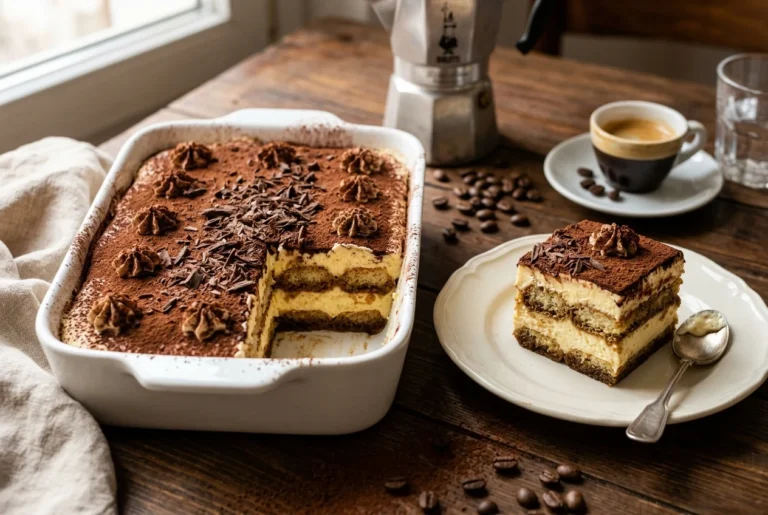
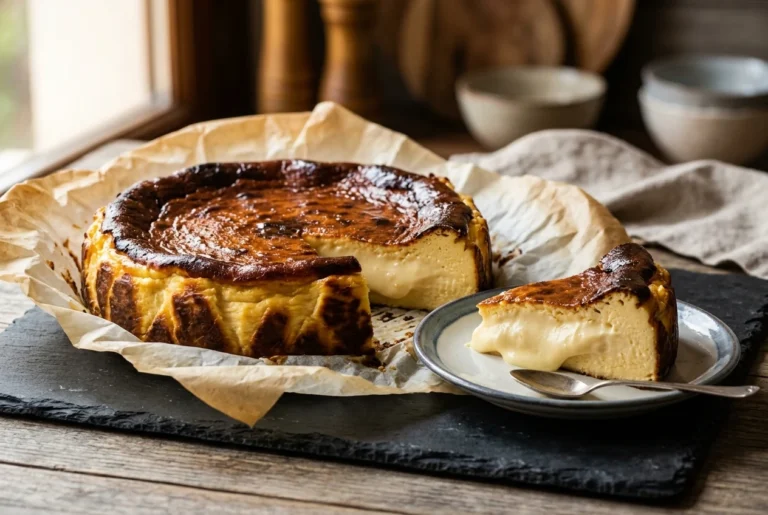
This authentic recipe adheres strictly to classical French culinary principles. By utilizing solely pure heavy cream, farm-fresh egg yolks, high-grade whole vanilla beans, and slow water-bath baking (bain-marie), the custard sets into a suspended protein-fat emulsion of breathtaking silkiness. Much like our showstopping Basque Burnt Cheesecake Recipe and authentic Tiramisu Recipe, this masterclass demystifies the exact thermodynamics required to replicate luxury Parisian patisserie standards effortlessly in your own home kitchen.
The Centuries-Old Heritage of Burnt Cream
The origins of crème brûlée (literally “burnt cream” in French) represent a fascinating historical rivalry spanning France, England, and Spain. The earliest known printed recipe for crème brûlée appeared in the 1691 French culinary compendium Le Cuisinier Royal et Bourgeois, authored by François Massialot, the head chef to Philippe I, Duke of Orléans. Massialot described a sweetened egg yolk and cream custard topped with caramelized sugar created by holding a red-hot iron shovel over the surface.
Simultaneously, Trinity College in Cambridge, England, laid claim to an identical delicacy known as “Trinity Cream” or “Cambridge Burnt Cream”, where the college coat of arms was branded into a hardened sugar crust atop baked custard. In Catalonia, Spain, Crema Catalana has been prepared since medieval times, traditionally thickened with milk and cornstarch and scented with lemon zest and cinnamon. While debated for centuries, it was the French refined formula of rich heavy whipping cream and real vanilla bean that captured the culinary imagination of the modern world.
The Delicate Food Chemistry of Custard Coagulation
To produce a custard that quivers like soft jelly without weeping liquid or turning rubbery, one must respect the molecular mechanics of yolk proteins and lipid emulsification. Understanding the thermal boundaries of this process eliminates guesswork forever:
First, consider yolk protein denaturation. Egg yolks consist of approximately 50 percent water, 30 percent lipids (chiefly lecithin and triglycerides), and 16 percent proteins. In isolation, egg yolk proteins begin to unfold and cross-link between 65 degrees Celsius (149 degrees Fahrenheit) and 70 degrees Celsius (158 degrees Fahrenheit). If heated beyond 75 degrees Celsius (167 degrees Fahrenheit), the protein network contracts tightly, expelling trapped water and squeezing out grainy curd clusters.
Second, the buffering effect of sucrose and milkfat is crucial. When sugar and heavy cream (containing 36 to 40 percent butterfat) are whisked with the yolks, the sugar molecules form protective hydrogen bonds with the yolk proteins, while fat globules physically separate protein chains. This molecular dilution raises the coagulation temperature threshold to between 80 degrees Celsius (176 degrees Fahrenheit) and 83 degrees Celsius (181 degrees Fahrenheit). This widened safety buffer allows the custard to thicken gently into a cohesive, velvety gel without curdling.
Third, the lipid matrix of heavy cream acts as an extraordinary flavor trap. Natural vanillin and secondary aromatic phenols found inside real cured vanilla pods are fat-soluble (lipophilic). By steeping the scraped seeds and empty pod in warm cream before blending with the yolks, the microscopic milkfat droplets absorb and preserve these fragile aroma compounds. When you savor the finished dessert, body heat in your mouth melts the milkfat, releasing a multi-layered explosion of floral vanilla perfume across your retronasal passages.
Fourth, the water bath (bain-marie) acts as a physical thermal regulator. Water boiling point is physically capped at 100 degrees Celsius (212 degrees Fahrenheit) under standard atmospheric pressure. By immersing the ceramic ramekins halfway in hot water inside a roasting pan, the surrounding water absorbs excess heat from the oven, preventing the edges of the ramekins from exceeding 85 degrees Celsius. Convection steam inside the covered pan further ensures slow, uniform heat penetration from rim to center.

The 5 Noble Ingredients of Authentic Creme Brulee
Because classic crème brûlée contains no artificial thickeners, leaveners, or starches, the quality of your raw materials dictates 100 percent of the finished flavor. Here are the five foundational components:
- Heavy Whipping Cream (36% to 40% Butterfat): Do not use light cream, half-and-half, or milk. High milkfat is non-negotiable; it coats the palate, delivers luxurious mouthfeel, and holds delicate vanilla aromatics in lipid suspension.
- Large Fresh Egg Yolks: Use fresh, organic, pasture-raised egg yolks with vibrant golden or orange pigmentation. Yolks provide lecithin emulsifiers and protein structure without the watery albumen of egg whites that can cause weeping.
- Granulated White Sugar: Pure granulated cane sugar dissolves smoothly into the yolks without graininess and caramelizes evenly under the flame without premature burning.
- Whole Grade-A Vanilla Bean: A plump, fragrant Madagascar Bourbon or Tahitian vanilla pod split and scraped releases hundreds of thousands of microscopic seeds. Vanilla bean extract can be substituted, but real pod caviar provides unmatched floral depth and visual elegance.
- Fine Sea Salt: A tiny, precise pinch (1/8 teaspoon) cuts through the rich dairy fats and heightens our perception of vanilla and caramel sweetness.
Custard Dairy and Fat Ratio Matrix
Understanding how different dairy compositions impact coagulation temperatures and finished texture helps explain why substitutions fail or succeed in custard confectionery:
| Dairy Product Used | Butterfat Percentage (%) | Water Percentage (%) | Coagulation Safety Zone | Finished Custard Texture | Pastry Suitability |
|---|---|---|---|---|---|
| Heavy Cream / Double Cream | 36% to 40% | 54% to 58% | 80°C to 84°C | Ultra-silky, rich, luxurious, holds shape | Ideal & Authentic Standard |
| Whipping Cream | 30% to 35% | 60% to 64% | 78°C to 82°C | Smooth, slightly softer set | Acceptable alternative |
| Half-and-Half | 10.5% to 18% | 75% to 80% | 74°C to 78°C | Soft, watery, prone to syneresis (weeping) | Not recommended for crème brûlée |
| Whole Milk (Pasteurized) | 3.25% to 3.5% | 87% to 88% | 70°C to 74°C | Liquid center, high risk of scrambled egg curd | Requires cornstarch (Flan style) |
| Full-Fat Coconut Milk | 18% to 22% (Plant fat) | 70% to 75% | 76°C to 80°C | Velvety, distinct tropical coconut notes | Excellent dairy-free alternative |
The 4 Master Steps to Flawless Creme Brulee
Executing an authentic French crème brûlée requires executing four straightforward phases with patience and thermal discipline:
Step 1: Infuse the Vanilla Cream Gently. Pour 2 cups (480 ml) of heavy cream into a heavy-bottomed medium saucepan. Using a sharp paring knife, slit 1 whole vanilla bean lengthwise down the center. Use the dull spine of the knife to scrape out the dense caviar of black seeds, adding both the seeds and the empty pod into the cream. Add a tiny pinch of fine sea salt. Set the saucepan over medium-low heat and warm gently until small bubbles form along the rim (approx. 75 degrees Celsius to 80 degrees Celsius), but do not let it boil vigorously. Remove from the heat, cover with a lid, and allow the vanilla to steep in the hot cream for 15 minutes to extract maximum volatile aromatic vanillin.
Step 2: Whisk the Yolks and Temper the Base. While the cream steeps, place 5 large egg yolks and 1/3 cup (70 grams) of granulated white sugar in a medium heatproof bowl. Whisk gently by hand for 60 to 90 seconds until the mixture turns pale yellow and slightly ribbon-like. Do not whip aggressively, as excessive air bubbles will create an unattractive foamy crust on the baked custards. Discard the vanilla bean pod from the warm cream. While whisking the egg mixture continuously, slowly drizzle in about 1/2 cup of the warm cream in a thin stream to gently temper the yolks. Once acclimated, pour in the remaining cream in a steady stream until completely blended.
Step 3: Strain, Pour, and Water-Bath Bake. Pour the custard mixture through a fine-mesh conical sieve into a large glass measuring pitcher with a spout. Straining catches any chalaza or stray egg fibers, ensuring a flawless, mirror-like consistency. Arrange 4 to 6 shallow, wide ceramic ramekins (4 to 5 ounces each) inside a large roasting pan lined with a kitchen towel (the towel prevents ramekins from sliding or scorching against the pan floor). Divide the strained custard evenly among the ramekins. If any small bubbles appear on the surface, quickly run a culinary torch flame across the top to pop them instantly. Transfer the roasting pan to the middle rack of an oven preheated to 150 degrees Celsius (300 degrees Fahrenheit). Carefully pour boiling water into the roasting pan until it reaches halfway up the exterior sides of the ramekins. Bake for 30 to 35 minutes for shallow ramekins (or 40 to 45 minutes for deep ramekins), until the edges are set but the center 1-inch circle still jiggles gently like firm gelatin when nudged. Transfer ramekins to a wire rack to cool completely to room temperature, then refrigerate uncovered for at least 4 hours (or up to 3 days covered).
Step 4: Torch the Glass-Like Sugar Shell. Just before serving, remove the chilled custards from the refrigerator and dab the surface very gently with a dry paper towel if any condensation droplets have accumulated. Sprinkle 1 level teaspoon of superfine granulated sugar evenly across the surface of each custard, tilting and rotating the ramekin so the sugar coats the custard from edge to edge in a paper-thin layer. Tap out any excess loose sugar. Ignite your culinary blowtorch to a moderate, steady blue flame. Hold the flame about 2 to 3 inches away from the sugar, moving it in slow, sweeping concentric circles. The sugar will first liquefy, then bubble vigorously, and finally caramelize into a shimmering, golden-amber crust with dark mahogany patches. Let the ramekins rest undisturbed for 2 to 3 minutes; as the molten sugar cools, it solidifies into a brittle, glass-like shell. Serve immediately while the crust is crackling hot and the custard beneath remains refreshingly chilled!

Sugar Selection and Torch Caramelization Science
The caramel shell (le brûlé) is half the magic of this dessert. Achieving that iconic shatter requires understanding the thermal breakdown of sucrose. Granulated sucrose begins melting at 160 degrees Celsius (320 degrees Fahrenheit) and caramelizes between 170 degrees Celsius (338 degrees Fahrenheit) and 180 degrees Celsius (356 degrees Fahrenheit), undergoing pyrolysis that generates hundreds of new aromatic compounds including diacetyl, furans, and maltol that produce buttery, nutty, bitter-sweet complexity.
| Sugar Variety | Grain Size & Melting Profile | Caramelization Speed | Moisture Absorption | Crust Characteristics |
|---|---|---|---|---|
| Superfine White Sugar (Caster) | Very fine, rapid even melting | Fast & highly controllable | Very low (stays crisp longest) | Thin, brittle, glass-like, clean shatter |
| Standard Granulated Sugar | Medium crystalline grain | Moderate; requires steady flame | Low | Crisp, slightly thicker shell, great amber color |
| Turbinado / Demerara Sugar | Coarse, large brown crystals | Slow; crystals may burn before base melts | Moderate | Hearty, crunchy, molasses-forward, rustic |
| Brown Sugar (Light or Dark) | Fine crystals coated in molasses | Extremely fast; burns easily | Very high (softens within minutes) | Soft, sticky, chewy; not recommended |
| Confectioners / Powdered Sugar | Ultra-fine with cornstarch | Scorches instantly into bitter ash | High | Unusable; burns before caramelizing |
Common Creme Brulee Mistakes and How to Avoid Them
Even seasoned home bakers encounter challenges when working with delicate egg custards. Keep these troubleshooting remedies at hand to guarantee effortless success:
Mistake 1: Grainy, curdled custard texture. If your custard resembles scrambled eggs or feels gritty on the tongue, the baking temperature was too high or the oven ran hot. Remedy: Always bake at 150 degrees Celsius (300 degrees Fahrenheit) with boiling water in the bain-marie. Remove the custards when the outer rim is set but the center still wobbles like gelatin. Residual heat will finish cooking the interior as it rests.
Mistake 2: Soggy, soft caramel crust. Sugar is hygroscopic, meaning it greedily absorbs moisture from both the humid air and the underlying custard. Remedy: Never torch crème brûlée in advance. Always torch within 10 to 15 minutes of serving. If custards have condensation on top when removed from the fridge, dab them dry with a clean paper towel before sprinkling sugar.
Mistake 3: Air bubbles and scorched foam on the surface. Whisking eggs vigorously incorporates micro air bubbles that float to the surface during baking and burn into an unsightly foam crust. Remedy: Whisk gently just until combined. Strain the batter through a fine-mesh sieve, and pass your blowtorch flame rapidly over the filled ramekins before baking to pop any remaining bubbles.
Mistake 4: Deep ramekins with raw centers. Deep, narrow ramekins require extended bake times, which inevitably overcooks the outer edges before heat can penetrate the core. Remedy: Always use wide, shallow ceramic ramekins (approx. 1 inch to 1.25 inches deep). Shallow ramekins maximize the surface-area-to-volume ratio, providing an ideal 1:1 balance of crunchy caramel to creamy custard in every single spoonful.

Creative Flavor Infusions and Elegant Garnishes
While classic Madagascar Bourbon vanilla remains the gold standard, crème brûlée provides a magnificent blank canvas for artisanal flavor variations:
1. Earl Grey or Chai Spice: Steep 2 tablespoons of loose Earl Grey tea leaves or 3 crushed chai spice pods in the hot cream for 20 minutes before straining. The citrusy bergamot notes cut through the rich dairy fats with sophisticated elegance.
2. Espresso and Dark Chocolate: Dissolve 1 tablespoon of premium espresso powder into the warm cream, or place a thin disc of dark melted chocolate at the bottom of each ramekin before pouring the custard. Perfect for coffee and mocha enthusiasts.
3. Grand Marnier or Bourbon: Whisk 1 tablespoon of orange liqueur (Grand Marnier or Cointreau) or Kentucky bourbon into the tempered yolk mixture. The subtle warmth of alcohol enhances the caramel notes of the torched shell.
4. Lavender Honey: Replace 2 tablespoons of granulated sugar in the custard with fragrant raw lavender honey, infusing subtle floral undertones that evoke the sunny hillsides of Provence.
5. Japanese Ceremonial Matcha: Whisk 1 tablespoon of sieved ceremonial green tea matcha powder into the warm cream base. The vegetal astringency of stone-ground matcha creates an astonishing harmony against the sweet, caramelized brittle sugar crust.
Comprehensive Nutritional Breakdown and Macro Profile
From a dietary perspective, crème brûlée is an indulgent, high-fat, satisfying dessert that delivers natural nutrients from real eggs and dairy. According to verified nutrient profiles from the USDA FoodData Central, pasture-raised egg yolks and dairy cream provide high concentrations of fat-soluble vitamins (A, D, E, K2), calcium, and dietary choline, offering lasting satiety without the ultra-processed preservatives or hydrogenated oils found in commercial desserts.
| Nutrient | Amount per Serving (1 Ramekin / 120g) | Daily Value Percentage (% DV) | Primary Dietary Role |
|---|---|---|---|
| Calories | 385 kcal | 19% | Rich caloric density delivering supreme dessert satiety |
| Protein | 5.2 g | 10% | High biological value egg yolk proteins and milk whey |
| Total Fat | 32.4 g | 42% | Wholesome dairy butterfat and egg lecithin |
| Saturated Fat | 18.6 g | 93% | Naturally occurring short- and medium-chain dairy lipids |
| Total Carbohydrates | 21.8 g | 8% | Derived from pure sucrose and natural milk lactose |
| Dietary Fiber | 0.0 g | 0% | Smooth dairy custard base with zero plant fiber |
| Sugars | 21.2 g | N/A | Includes custard sugar and torched caramelized shell |
| Cholesterol | 245 mg | 82% | Essential lipid precursor supplied by fresh egg yolks |
| Sodium | 75 mg | 3% | Naturally low sodium balanced by a pinch of sea salt |
| Vitamin A | 320 mcg | 35% | Crucial fat-soluble vitamin supporting vision and immune health |
| Calcium | 110 mg | 8% | Bioavailable mineral supporting skeletal health |
Frequently Asked Questions About Creme Brulee
Can I make crème brûlée without a blowtorch?
While a kitchen culinary blowtorch yields the most precise, shatteringly crisp crust, you can use your oven broiler in an emergency. Chill the baked custards until very cold (at least 6 hours). Move your oven rack to the highest position directly beneath the broiler element and preheat on High. Sprinkle the sugar on the custards, place the ramekins on a baking sheet surrounded by ice cubes (to prevent the custard from heating up), and broil for 2 to 3 minutes, rotating frequently until caramelized. A blowtorch remains vastly superior because it caramelizes the sugar in 30 seconds without warming the delicate custard underneath.
How far in advance can I make crème brûlée?
You can bake the custards up to 3 days in advance! Keep them chilled in the refrigerator, covered loosely with plastic wrap once fully cooled. However, never caramelize the sugar until 5 to 10 minutes before you plan to serve them.
Why is my custard still liquid in the center after baking?
Custards continue to set as they cool. When you remove them from the oven, the center should still exhibit a gentle wobble similar to set gelatin. If the custard is still completely liquid like milk, it requires an additional 5 to 8 minutes in the water bath. Ensure your water bath water was boiling when poured into the pan.
What can I do with the leftover egg whites?
Never discard your egg whites! Store them in an airtight container in the refrigerator for up to 4 days, or freeze them for up to 3 months. They are ideal for making our light and airy Fluffy Japanese Souffle Pancakes, delicate French macarons, or crispy pavlova!
Can I freeze crème brûlée?
Freezing is not recommended for egg-yolk custards. Freezing causes ice crystals to puncture the delicate protein-fat emulsion, resulting in watery separation (syneresis) upon thawing. Enjoy your custards fresh within 3 to 4 days of baking.
Classic French Creme Brulee (Vanilla Bean Custard)
- Total Time: 55 mins
- Yield: 4 to 6 servings 1x
Description
Master authentic French crème brûlée with ultra-silky vanilla bean custard cream and a brittle, glass-like caramelized sugar crust. Simple 5-ingredient classic made foolproof with a water bath.
Ingredients
- 2 cups (480ml) heavy whipping cream (minimum 36% butterfat)
- 1 whole Grade-A Madagascar Bourbon vanilla bean, split lengthwise and seeds scraped (or 1 tbsp pure vanilla bean paste)
- 5 large fresh egg yolks, room temperature
- 1/3 cup (70g) granulated white sugar (for custard base)
- 1/8 teaspoon fine sea salt
- 4 to 6 teaspoons superfine granulated white sugar (for torching caramel crust)
- Fresh raspberries and mint sprigs, for garnish
Instructions
- Infuse the Vanilla Cream: Pour heavy cream into a saucepan. Add scraped vanilla bean seeds, the empty pod, and sea salt. Warm gently over medium-low heat until small bubbles form around the edge (approx. 75°C to 80°C). Remove from heat, cover with a lid, and steep for 15 minutes. Discard the pod.
- Whisk & Temper Yolks: In a medium heatproof bowl, gently whisk egg yolks and 1/3 cup granulated sugar for 60 to 90 seconds until pale and smooth. While whisking continuously, slowly drizzle in 1/2 cup of warm cream to temper the yolks. Gradually pour in the remaining cream in a steady stream until completely blended.
- Strain & Water-Bath Bake: Pour mixture through a fine-mesh conical sieve into a spouted measuring pitcher. Arrange 4 to 6 shallow ceramic ramekins inside a roasting pan lined with a kitchen towel. Divide custard among ramekins. Pop any surface bubbles with a quick torch pass. Place pan on middle oven rack preheated to 150°C (300°F). Carefully pour boiling water into the pan halfway up the ramekin sides. Bake for 30 to 35 minutes until edges are set but the center still jiggles gently.
- Chill & Torch: Cool completely on a wire rack at room temperature, then refrigerate uncovered for at least 4 hours (or up to 3 days). Just before serving, dab surface dry, sprinkle 1 teaspoon superfine sugar evenly over each custard, and torch with a culinary blowtorch in concentric circles until bubbly and golden-amber. Let stand 3 minutes to harden, garnish with fresh raspberries and mint, and serve immediately!
Notes
Always use shallow, wide ramekins for the perfect 1:1 ratio of crunchy caramel to creamy custard. Never torch the sugar until just before serving as humidity softens the crust.
- Prep Time: 20 mins
- Cook Time: 35 mins
- Category: Dessert
- Cuisine: French / Pastry / Dessert