
Tiramisu Recipe: 5 Easy Steps to Classic Italian Perfection
Few desserts in international pastry arts command the universal adoration and romantic mystique of an authentic Italian tiramisu recipe. Literally translating from Italian as “pick-me-up” or “lift-me-up” (referencing the invigorating boost from rich espresso and wholesome eggs), this classic Veneto masterpiece represents the pinnacle of no-bake confectionery sophistication. When crafted according to traditional Italian standards, tiramisu is neither heavy nor overly sugary; it is an ethereal harmony of bitter, aromatic roasted coffee, velvety sweet mascarpone cream, and delicate sponge cake soaked to tender perfection.
Whether you are recreating nostalgic memories of Roman trattorias or preparing an unforgettable showstopper for a special celebration alongside our Basque Burnt Cheesecake or viral Viral Dubai Chocolate Bar, mastering a classic tiramisu recipe without shortcuts or gelatin will establish you as a master home baker. In our kitchen on Felis Recipes, we honor foundational culinary heritage while optimizing technique for modern home cooks in our dedicated Dessert Recipes Collection. Let us dive into the history, food science, and step-by-step mastery of this world-famous Italian dessert.
Table of Contents
- The True Origin and Cultural Heritage of Authentic Italian Tiramisu
- The Essential Ingredients of a Classic Tiramisu Recipe
- Mascarpone Chemistry: Fat Content, Emulsion, and Preventing Curdling
- Egg Safety and the Bain-Marie Sabayon (Zabaglione) Technique
- Savoiardi Ladyfingers vs Soft Sponge: The Science of the Flash Dunk
- Espresso Selection and Alcohol Infusions: Marsala, Rum, and Kahlua
- Step-by-Step Culinary Walkthrough: How to Make Authentic Tiramisu
- The Chilling Phase: Why Resting for 12 Hours is Mandatory
- Dutch-Process Cocoa Powder: The Crucial Bittersweet Finish
- Expert Troubleshooting Guide: Fixing Runny Cream and Soggy Layers
- Storage, Make-Ahead Guidelines, and Freezing Instructions
- Frequently Asked Questions About Classic Tiramisu
- Conclusion: Elevate Your Dessert Repertoire
The True Origin and Cultural Heritage of Authentic Italian Tiramisu
While centuries of folklore surround this beloved dessert, culinary historians trace the modern tiramisu recipe to the northern Italian region of Veneto, specifically the charming city of Treviso in the late 1960s. Historical documentation preserved by the Italian Academy of Cuisine and Treviso culinary records credits restaurateur Ado Campeol and chef Roberto Linguanotto of the celebrated restaurant Le Beccherie with inventing the modern formulation.
The dessert drew direct inspiration from sbatudin, a traditional Venetian restorative tonic made by whipping raw egg yolks with sugar, traditionally fed to nursing mothers, convalescents, and children for vital energy. By marrying this nutrient-dense whipped yolk cream with indigenous Lombardian mascarpone cheese, high-grade espresso, and Piedmontese Savoiardi ladyfinger biscuits, the chefs invented a dessert so transcendent that it rapidly captured the palate of all of Italy before conquering menus across the globe.
In authentic Italian tradition, tiramisu never contains gelatin, cornstarch, pudding mix, or cream cheese. True Italian pastry chefs rely strictly on the natural emulsifying power of egg yolks and the structural stability of cold mascarpone butterfat to achieve that cloud-like, sliceable consistency. Understanding these traditional roots ensures your homemade tiramisu recipe delivers the authentic texture that has delighted diners for generations.

The Essential Ingredients of a Classic Tiramisu Recipe
Because an authentic tiramisu recipe requires no baking, the purity and quality of each individual ingredient dictates the final flavor profile. Let us examine the functional anatomy of the ingredients:
- Fresh Pasture-Raised Egg Yolks: Egg yolks serve as the structural and flavor foundation, delivering rich carotenoid color, luxurious mouthfeel, and natural lecithin emulsifiers that bind fat and moisture into an airy suspension.
- Granulated White Sugar: Dissolved gently into the egg yolks over heat, sugar stabilizes egg proteins into a glossy ribbon stage and counterbalances the bold bitterness of dark espresso and cocoa.
- Authentic Italian Mascarpone Cheese: A thick, buttery cultured cream cheese originating from Lombardy. True mascarpone contains at least 70 to 75 percent milkfat, providing unmatched silkiness that cannot be matched by standard cream cheese.
- Chilled Heavy Whipping Cream: While the earliest historical iterations used whipped egg whites, modern Italian pastry chefs incorporate whipped heavy cream (minimum 36 percent butterfat) to add stable lift, lightness, and clean dairy sweetness.
- Crisp Savoiardi Ladyfingers: Rigid, dry Italian sponge biscuits coated with granulated sugar. Their airy honeycomb structure is specifically designed to absorb liquid without disintegrating.
- Freshly Brewed Strong Espresso: High-pressure extracted dark espresso provides the unmistakable roasted, chocolatey aroma that gives tiramisu its soul.
- Dutch-Process Unsweetened Cocoa Powder: Alkalized dark cocoa powder dusted generously across the top cuts through dairy richness with deep, earthy chocolate notes.
- Optional Dark Rum or Marsala Wine: A small splash of aged dark rum, Sicilian Marsala Superiore, or coffee liqueur enhances roasted notes with aromatic warmth.
Mascarpone Chemistry: Fat Content, Emulsion, and Preventing Curdling
The hallmark of an unforgettable tiramisu recipe is its cream. To achieve that signature silkiness, home bakers must respect the delicate biochemistry of mascarpone. Unlike American cream cheese (which is made from whole milk and coagulated with lactic acid cultures and rennet), genuine Italian mascarpone is crafted by heating heavy cream to approximately 185°F (85°C) and acidifying it gently with tartaric or citric acid.
This process results in an extraordinarily high fat content of 70 to 75 percent, with milk proteins forming a very loose, delicate gel network. Because mascarpone is essentially a delicate suspension of butterfat and water droplets, it is highly sensitive to mechanical agitation and temperature. If you whip cold mascarpone vigorously with an electric hand mixer, you risk shearing the fat globules, causing the water to separate and turning the cream grainy or curdled.
To ensure a flawless emulsion in your tiramisu recipe, keep your mascarpone in the refrigerator until the exact moment you fold it into the cooled sabayon. Use a flexible silicone spatula or a balloon whisk on low speed to gently blend the cheese into the yolk base. Review the structural differences in cultured dairy bases below:
| Dairy Product | Milkfat Content | Flavor Profile | Structural Behavior | Suitability for Tiramisu Recipe |
|---|---|---|---|---|
| Authentic Italian Mascarpone | 70% – 75% | Sweet, buttery, milky, minimal acid tang | Silky, spreadable, melts at body temperature | Gold Standard; essential for authentic flavor and lift |
| American Cream Cheese | 33% – 35% | Pronounced lactic tang, salty undertone | Firm, dense, rubbery chew from stabilizers | Not recommended; alters flavor into cheesecake |
| Heavy Whipping Cream (36%-40%) | 36% – 40% | Clean, light, sweet dairy note | Whips into stable airy foam with soft peaks | Ideal folding agent to lighten rich mascarpone |
| Crème Fraîche | 30% – 45% | Sour, tangy, nutty, acidic | Fluid, slightly loose body | Unsuitable; excessive acidity overpowers coffee |
Egg Safety and the Bain-Marie Sabayon (Zabaglione) Technique
Many traditional Italian home recipes historically called for raw, uncooked egg yolks. However, contemporary culinary safety standards, particularly those established by the USDA Food Safety guidelines for eggs, recommend heating egg mixtures to at least 160°F (71°C) to eliminate any risk of foodborne bacteria such as Salmonella.
Fortunately, heating egg yolks and sugar over a gentle water bath (known in classical Italian cooking as a zabaglione or French sabayon) not only guarantees absolute safety; it significantly improves the culinary quality of your tiramisu recipe. Whisking egg yolks and sugar over steam melts the sugar crystals thoroughly, preventing any lingering grit in the cream.
Furthermore, heat gently denatures egg proteins (specifically vitellogenin and livetin), causing them to unravel and form a microscopic web that traps air bubbles. The resulting mixture transforms into an opulent, pale-yellow foam that coats the back of a spoon with velvety thickness. Once cooled to room temperature, this cooked sabayon incorporates effortlessly into the cold mascarpone without deflating, yielding a cream with superior structural integrity and longevity.

Savoiardi Ladyfingers vs Soft Sponge: The Science of the Flash Dunk
The biscuit foundation of an authentic tiramisu recipe is not negotiable: you must use crisp Italian Savoiardi ladyfingers. Named after the historic Duchy of Savoy where they were created in the 15th century to celebrate a visit by the King of France, Savoiardi are dry, crunchy, sugar-crusted sponge fingers with an exceptionally porous internal architecture.
Many novice bakers mistakenly substitute soft, cake-like American bakery ladyfingers. Soft ladyfingers act like wet paper towels: the moment they touch liquid, they absorb massive quantities of water and dissolve into soggy porridge. In contrast, dry Savoiardi act like microscopic sponges. Their dry, crystalline sugar crust forms a protective barrier that allows liquid to enter gradually.
The golden technique is the one-second flash dunk: hold the ladyfinger by its ends, submerge it completely into room-temperature espresso for exactly one to two seconds (roll it once), and lift it out immediately. When you place it into the baking dish, the biscuit will still feel slightly firm to the touch. Do not worry; as the tiramisu rests in the refrigerator for 12 to 24 hours, the biscuit will draw moisture from the surrounding mascarpone cream, transforming into a moist, cakey, tender crumb that holds neat, clean slices when cut.
| Dipping Duration | Liquid Temperature | Initial Biscuit Feel | Texture After 12-Hour Chill | Verdict |
|---|---|---|---|---|
| Flash Dip (1 – 2 Seconds) | Room Temp (68°F – 72°F) | Coated exterior, firm interior core | Tender, cake-like, perfectly distinct layers | Perfection; sliceable without liquid pooling |
| Prolonged Soak (4 – 6 Seconds) | Room Temp | Heavy, dripping, soft | Mushy, wet, leaks liquid into bottom of dish | Too wet; causes cream to slide off base |
| Any Dip in Hot Espresso | Hot (140°F+) | Collapses and breaks in fingers | Disintegrated soggy paste | Ruined; melts mascarpone cream immediately |
Espresso Selection and Alcohol Infusions: Marsala, Rum, and Kahlua
The coffee component is the aromatic anchor of your tiramisu recipe. Watered-down drip coffee or instant granules will result in a flat, insipid dessert lacking depth. For optimal flavor, use freshly pulled shots of dark roast espresso from an espresso machine or freshly brewed coffee from a traditional Italian stovetop moka pot.
Espresso extracted under high pressure emulsifies coffee oils into a rich crema, concentrating aromatic pyrazines and polyphenols that deliver intense roasted notes, chocolate undertones, and clean acidity. Allow the coffee to cool completely to room temperature before assembling your dessert.
While traditional Treviso recipes for children omitted alcohol, modern Italian cuisine almost universally includes a touch of fortified wine or spirits to enhance complexity. You can tailor the aromatic profile to your personal preference:
- Aged Dark Rum: Imparts warm vanilla, molasses, and caramel notes that meld gorgeously with dark chocolate and rich dairy.
- Sicilian Marsala Superiore: The traditional Italian choice; introduces dried fig, raisin, and nutty oxidative warmth.
- Kahlúa or Tia Maria: Coffee-based liqueurs that amplify roasted espresso intensity while adding gentle sweetness.
- Amaretto di Saronno: A sweet almond liqueur that provides an exquisite marzipan aroma reminiscent of northern Italian pastries.
Step-by-Step Culinary Walkthrough: How to Make Authentic Tiramisu
Follow these 5 straightforward, foolproof steps to craft this show-stopping tiramisu recipe from start to finish:
Step 1: Brew the Espresso and Cool Completely
Brew 1 1/2 cups (360ml) of strong Italian espresso or dark moka pot coffee. Pour the hot coffee into a wide, shallow bowl or pie dish. Stir in 2 tablespoons of dark rum, Marsala wine, or coffee liqueur. Set the bowl aside on your counter and allow it to cool completely to room temperature (about 25 minutes). Never dip ladyfingers into warm coffee.
Step 2: Whisk the Sabayon Base Over a Bain-Marie
Fill a medium saucepan with 1 inch of water and bring to a gentle simmer over medium-low heat. In a heatproof bowl that fits snugly over the pot without touching the water, combine 6 large egg yolks and 3/4 cup (150g) of granulated sugar. Whisk continuously with a wire whisk for 6 to 8 minutes as the mixture heats. The yolks will lighten into a pale ivory color, thicken into a creamy ribbon stage, and reach 160°F (71°C). Remove the bowl from the steam and let it cool for 5 to 10 minutes.
Step 3: Whip the Cream and Fold the Mascarpone
In a chilled metal mixing bowl, whip 1 cup of cold heavy whipping cream and 1 teaspoon of vanilla extract with an electric mixer until stiff peaks form. In a separate bowl, briefly stir 16 oz (450g) of cold mascarpone with a silicone spatula to loosen it. Gently fold the cold mascarpone into the cooled sabayon base until smooth. Next, add the whipped cream in three equal additions, folding gently from the bottom upward in broad circular motions until a homogenous, cloud-like cream forms.
Step 4: Dunk Ladyfingers and Layer the Tiramisu
Take an 8×8-inch or 9×9-inch ceramic or glass baking dish. Take one crisp Savoiardi ladyfinger at a time and dunk it swiftly into the cooled espresso for exactly 1 to 2 seconds total, coating both sides. Arrange the soaked biscuits tightly across the bottom of the dish in an even single layer. Spread half of the mascarpone cream over the biscuits and smooth with an offset spatula. Repeat with a second layer of espresso-dunked ladyfingers placed in the opposite direction. Top with the remaining mascarpone cream and smooth the surface neatly, or pipe decorative rosettes using a pastry bag fitted with a round tip.
Step 5: Chill Overnight and Dust with Dark Cocoa
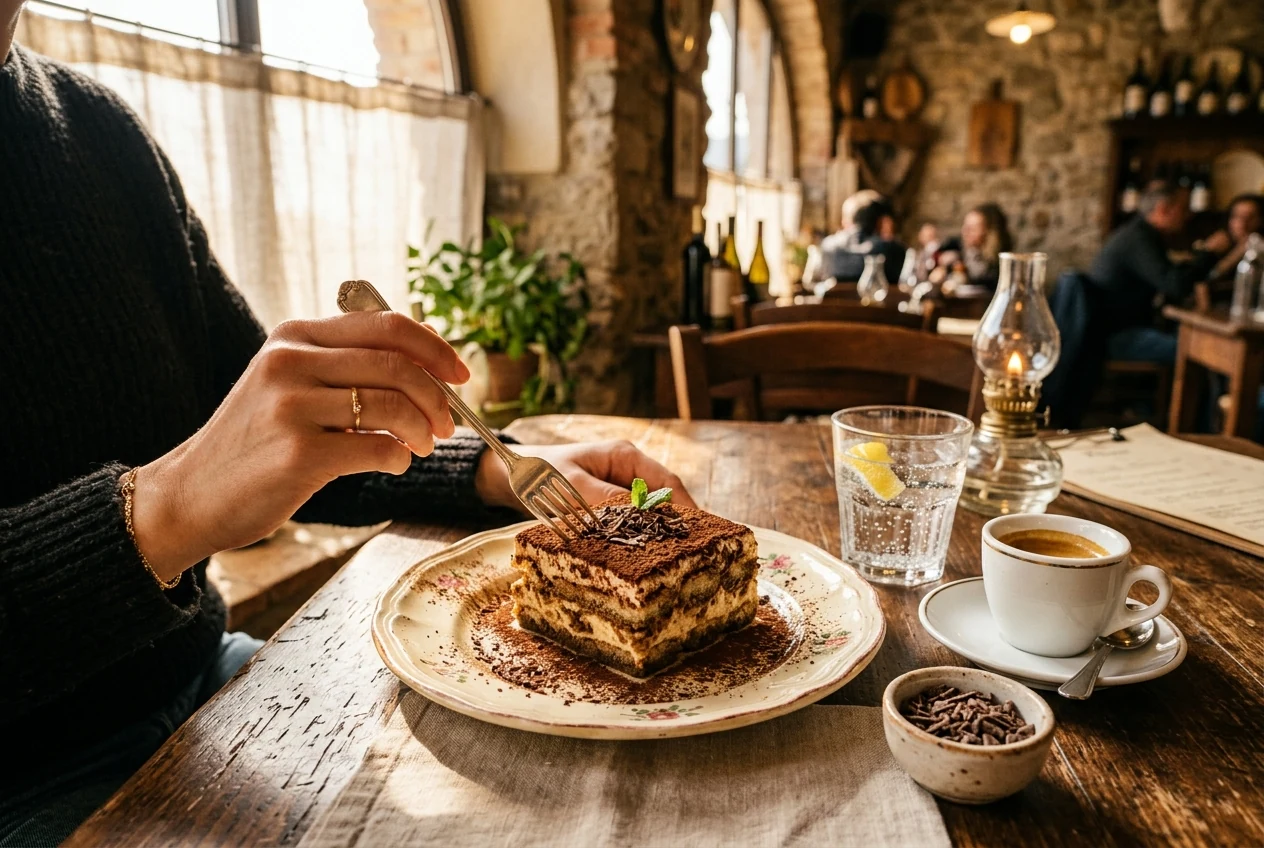
Cover the baking dish tightly with plastic wrap, taking care not to disturb the top cream. Transfer to the refrigerator to chill for at least 6 hours, ideally 12 to 24 hours. Right before serving, place 3 tablespoons of Dutch-process unsweetened dark cocoa powder into a fine-mesh tea strainer and dust a thick, velvety layer evenly across the entire surface. Garnish with freshly shaved dark chocolate curls. Slice cleanly with a knife wiped warm between cuts and serve cold!
The Chilling Phase: Why Resting for 12 Hours is Mandatory
In our modern world of instant gratification, resting a dessert for 12 to 24 hours can test any home baker patience. However, in this authentic tiramisu recipe, chilling is an active culinary cooking process without heat.
When initially assembled, the ladyfingers are still partially firm at their cores, and the mascarpone cream is relatively soft. During the extended resting period in the refrigerator (at 38°F / 3°C), two crucial physical transformations occur:
- Moisture Osmosis: The porous cellular starch in the Savoiardi ladyfingers slowly absorbs free moisture and coffee aroma from the surrounding cream. The biscuits soften uniformly into a tender, melt-in-your-mouth sponge cake consistency without leaking excess liquid.
- Fat Crystallization and Gel Stabilization: The butterfat molecules in the mascarpone and heavy cream recrystallize in the cold environment. This firming process sets the cream into a velvety, sliceable mousse that maintains clean, sharp geometric edges when cut with a pastry knife.
For best results, assemble your tiramisu the evening before your dinner party. A 24-hour chilled tiramisu tastes substantially richer, deeper, and more unified than one served only a few hours after assembly.
Dutch-Process Cocoa Powder: The Crucial Bittersweet Finish
A classic mistake made by novice cooks is dusting the cocoa powder onto the tiramisu before refrigerating. Over several hours in the refrigerator, the dry cocoa powder absorbs humidity from the cold air and moisture from the mascarpone cream, turning into a dark, gummy, muddy sludge.
Always dust your tiramisu recipe immediately before slicing and serving. Furthermore, choose alkalized Dutch-process cocoa powder rather than natural cocoa powder. Natural cocoa is acidic and astringent with a pale red-brown color. In contrast, Dutch-process cocoa has been treated with potassium carbonate to neutralize acidity to a balanced pH of 7.0. It delivers a deeply dark, almost black hue, a smooth, rounded chocolate flavor, and a fine velvet dusting that clings beautifully to the cream.
Expert Troubleshooting Guide: Fixing Runny Cream and Soggy Layers
Even seasoned pastry chefs occasionally encounter unexpected textural challenges. Review our tested troubleshooting solutions below to diagnose and remedy any issues effortlessly:
| Issue Encountered | Root Cause | Immediate Correction | Prevention for Next Time |
|---|---|---|---|
| Mascarpone Cream is Runny and Soupy | Cream overbeaten, or mascarpone was warm when folded | Chill in freezer for 30 minutes, then gently fold in 1/2 cup whipped cream | Keep mascarpone cold; fold gently with spatula; never use high-speed mixer |
| Watery Coffee Pool at Bottom of Dish | Ladyfingers soaked too long, or coffee was hot when dipped | Carefully tilt dish and absorb liquid with paper towel corner | Flash dunk for exactly 1-2 seconds; let coffee cool completely first |
| Mascarpone Cream Turned Grainy/Curdled | Mascarpone fat globules sheared from excessive mechanical beating | Gently whisk in 1 tbsp warm heavy cream to re-emulsify | Fold by hand with a silicone spatula just until incorporated |
| Dessert Collapses When Sliced | Chill time was too brief; butterfat did not fully set | Serve in dessert glasses or bowls as rustic parfait | Refrigerate for a minimum of 6 hours, ideally 12-24 hours before slicing |
Storage, Make-Ahead Guidelines, and Freezing Instructions
One of the greatest advantages of this authentic tiramisu recipe is its exceptional make-ahead convenience. In fact, tiramisu is one of the few desserts that actually tastes significantly better on days two and three than on day one.
- Refrigerator Storage: Keep the assembled tiramisu tightly covered with plastic wrap or in an airtight container in the refrigerator for up to 4 to 5 days. Ensure the container is sealed well, as dairy absorbs ambient refrigerator odors easily.
- Make-Ahead Timeline: Assemble the entire dessert 24 to 36 hours before your dinner party. Keep it refrigerated without cocoa powder. Dust the dark cocoa powder over the top just before guests sit down at the table.
- Freezer Friendly: Tiramisu freezes exceptionally well! Assemble the dish in a freezer-safe container without cocoa powder. Wrap tightly with two layers of plastic wrap and a layer of aluminum foil. Freeze for up to 2 to 3 months. To serve, transfer to the refrigerator and thaw slowly for 12 to 18 hours, then dust with cocoa powder before slicing.
Frequently Asked Questions About Classic Tiramisu
Can I make tiramisu without alcohol?
Yes, absolutely. Authentic Italian children versions often omit alcohol entirely. Simply omit the rum or Marsala wine and use 100 percent pure dark espresso. You can add 1/2 teaspoon of pure almond extract or vanilla extract to the cooled espresso for warm aromatic complexity without spirits.
Can I use raw eggs if I don’t want to make a sabayon?
While some traditional Italian home cooks use raw eggs, we strongly advise using the gentle bain-marie sabayon technique described in this recipe. Heating the yolks to 160°F (71°C) pasteurizes them against bacteria while producing a far richer, thicker, and more stable cream that holds clean slices effortlessly.
Can I substitute cream cheese for mascarpone?
We do not recommend substituting cream cheese for authentic mascarpone. American cream cheese contains only half the milkfat of mascarpone and carries a distinctive sharp lactic tang that alters the profile into coffee cheesecake. If imported mascarpone is unavailable, blend 8 oz of full-fat cream cheese with 1/4 cup heavy whipping cream and 2 tablespoons of unsalted butter to mimic mascarpone richness.
How do I get clean, picture-perfect slices of tiramisu?
Ensure the tiramisu has chilled for at least 12 hours. Fill a tall container with hot water. Dip a long, sharp chef knife into the hot water, wipe it completely dry with a clean kitchen towel, and slice through the dessert with a single confident downward stroke. Wipe and reheat the knife between every single cut for flawless, bakery-caliber squares.
Conclusion: Elevate Your Dessert Repertoire
Crafting this authentic Italian tiramisu recipe at home is an extraordinary culinary experience that connects you directly to the storied kitchens of northern Italy. With velvety sabayon cream, luxurious mascarpone, crisp Savoiardi biscuits infused with bold roasted espresso, and a cloud of dark cocoa, every forkful is pure confectionery bliss.
Gather your ingredients, brew a pot of fresh espresso, and prepare this iconic dessert for your loved ones this weekend. Explore our full collection of exquisite sweet creations across our Dessert Recipes Collection on Felis Recipes, and bring the authentic taste of Italy to your home table today.
PrintAuthentic Classic Italian Tiramisu
- Total Time: 6 hours 25 mins
- Yield: 9 large slices 1x
Description
Authentic classic Italian tiramisu recipe featuring rich zabaglione egg yolk cream, imported Italian mascarpone, espresso-soaked savoiardi ladyfingers, and a velvety dusting of dark Dutch cocoa powder. No gelatin required.
Ingredients
- 6 large pasture-raised egg yolks, at room temperature
- 3/4 cup (150g) granulated cane sugar
- 16 oz (450g) authentic Italian mascarpone cheese, cold
- 1 cup (240ml) heavy whipping cream (36% to 40% milkfat), chilled
- 1 1/2 cups (360ml) strong freshly brewed Italian espresso or dark moka pot coffee, cooled to room temperature
- 2 tablespoons dark rum, Marsala wine, or coffee liqueur (optional, for authentic aroma)
- 1 teaspoon pure Madagascar vanilla extract
- 1 package (approx. 24 to 30 cookies / 200g) authentic Italian Savoiardi ladyfingers (hard crisp variety)
- 3 tablespoons Dutch-process unsweetened dark cocoa powder, for dusting
- 2 oz (60g) dark bittersweet chocolate (70% cacao), finely shaved (optional garnish)
Instructions
- Brew and Flavor the Espresso Soak: Brew fresh Italian espresso using a moka pot or espresso machine. Pour into a wide, shallow bowl, stir in the dark rum or Marsala wine, and let cool completely to room temperature. Do not dip cookies into hot espresso, or they will turn soggy immediately.
- Whip the Silky Sabayon Base: In a heatproof glass or stainless steel bowl set over a pot of barely simmering water (bain-marie, ensuring the bowl does not touch water), whisk together the egg yolks and granulated sugar continuously for 6 to 8 minutes. The mixture should become pale yellow, doubled in volume, and reach 160°F (71°C) to safely pasteurize the yolks and dissolve the sugar granules completely. Remove from heat and allow to cool for 5 minutes.
- Incorporate Cold Mascarpone and Whipped Cream: In a separate chilled bowl, whip the heavy cream and vanilla extract to stiff peaks. Gently fold the cold mascarpone cheese into the cooled egg yolk sabayon until smooth and lump-free. Then, using a silicone spatula, gently fold in the whipped cream in three additions until a luscious, cloud-like cream forms. Do not overmix.
- Dip Ladyfingers and Assemble Layers: Quickly dip each savoiardi ladyfinger into the cooled espresso for exactly 1 to 2 seconds total (a swift roll on both sides). Arrange a single tight layer across the bottom of an 8×8-inch or 9×9-inch ceramic or glass baking dish. Spread half of the velvety mascarpone cream evenly over the ladyfinger layer. Repeat with a second layer of dipped ladyfingers, then top with the remaining mascarpone cream. Smooth the top with an offset spatula, or pipe elegant rosettes using a round pastry tip.
- Chill and Dust with Dark Cocoa: Cover the dish tightly with plastic wrap and refrigerate for at least 6 hours, preferably overnight (12 to 24 hours), to allow the ladyfingers to soften into a delicate cake-like texture and flavors to marry. Right before slicing and serving, generously dust the top through a fine-mesh sieve with unsweetened Dutch cocoa powder and garnish with dark chocolate shavings. Slice cleanly with a warm knife and serve cold!
Notes
Always use crisp, hard Italian Savoiardi ladyfingers rather than soft sponge ladyfingers. Soft ladyfingers absorb liquid too quickly and become mushy. Keep the mascarpone chilled until ready to fold; warm mascarpone can curdle when beaten.
- Prep Time: 25 mins
- Cook Time: 0 mins
- Category: Dessert
- Cuisine: Italian