Brown Butter Recipe: 4 Chef Secrets to Nutty Amber Perfection
Mastering this foolproof Brown Butter Recipe gives every kitchen cook five-star French depth in under eight minutes using a single ingredient already sitting in the refrigerator. Known in classic French culinary kitchens as beurre noisette for its uncanny toasted hazelnut aroma, gently toasted butter adds warm caramel complexity to pasta sauces, crisp cookies, roasted roots, and pan-seared meats alike.
Yet many home bakers avoid making brown butter because everything happens fast inside a hot saucepan: thirty seconds too short delivers plain melted fat, while twenty seconds too long leaves bitter scorched flakes floating in dark oil. Once you learn the exact sensory cues, visual color guide, and crucial moisture restoration math below, every batch pours out clean golden amber with zero guesswork.
Whether you fold cooled browned butter into chewy Salted Caramel Brown Butter Blondies Recipe batter or whisk warm spiced butter alongside savory Garlic Herb Compound Butter Recipe for weekend dinner entertaining, this master guide covers every ratio cleanly. Follow the four verified chef secrets, stage chart, and baking hydration table below for consistent results every single time.
Table of Contents
- Why This Brown Butter Recipe Elevates Sweet and Savory Cooking
- Essential Butter Selection and Skillet Equipment Guide
- 4 Chef Secrets for Nutty Golden Beurre Noisette Without Burning
- Visual and Aroma Progression Chart During Stovetop Browning
- Step-by-Step Brown Butter Recipe Instructions
- Milk Solids Maillard Science and Exact Baking Moisture Math
- Savory and Sweet Variations, Storage, and Freezing Tips
- Frequently Asked Questions About Making Brown Butter
Why This Brown Butter Recipe Elevates Sweet and Savory Cooking
Ordinary sweet-cream butter holds three natural components locked cleanly inside an emulsion: rich liquid butterfat at around 80 to 84 percent, clear water droplets around 15 to 18 percent, and delicate dairy proteins and lactose sugars around 1 to 2 percent. Under standard melting temperatures below 212 degrees Fahrenheit, butter tastes gently sweet and milky because those protein solids never brown.
As stovetop warmth pushes steam out of the pan, dry milk proteins sink gently downward to touch stainless steel above 250 degrees Fahrenheit and undergo intense nutty caramelization. According to nutrition profiles cataloged by USDA FoodData Central, converting sweet butter concentrates flavor compounds naturally with zero extra sugar or artificial additives while preserving identical vitamin A and butterfat richness per spoonful.
Key Takeaways Before You Turn On the Stove
- Total active stovetop time stays around 6 minutes: Two uniform cubed sticks melt quickly and toast cleanly before dinner finishes roasting.
- Use a pale silver stainless-steel or white enamel pan: Light metallic floors act like bright white canvas beneath cloudy foam so amber specks show instantly.
- Transfer immediately to a cool heatproof bowl: Carryover metal heat scorches settled solids dark brown in twenty seconds if left sitting in hot pans.
- Baking moisture restoration matters strictly: Standard butter loses roughly two tablespoons water per two sticks, so whisking back moisture prevents greasy cookies.
Essential Butter Selection and Skillet Equipment Guide
Even though this foundational pantry technique calls primarily for pure butter, small distinctions between European cultured butter, American unsalted sticks, clarified ghee, and dark nonstick skillets dramatically reshape how easily solids brown. Choosing uniform cold pats and bright reflective cookware eliminates blind spots before burner flames even click on.

Inspect how each dairy type and cookware material performs before measuring cold butter for sweet pastry batters or savory pan sauces below.
| Butter Type or Tool Choice | Composition and Behavior | Best Use Case and Kitchen Recommendation |
|---|---|---|
| European Unsalted Butter (82 to 85% Fat) | Lower water ratio, higher cultured tang and rich milk solids | Yields intensely aromatic nutty golden bits and fastest water evaporation cleanly |
| American Unsalted Butter (80% Fat) | Higher water fraction (roughly 17%), predictable gentle sizzle | Top reliable benchmark for cookies, cakes, blondies, and standard pastry hydration |
| Salted Dairy Butter | Foams taller and concentrates saltiness as liquid steams away | Use strictly for savory pasta sauces or steaks and hold added pinch salt back |
| Light-Colored Stainless Skillet | Reflects exact nutty chestnut color shift right against bright steel | Hands-down optimal choice for first-time cooks avoiding hidden scorching |
| White Enameled Cast Iron | Thick steady thermal buffer plus bright contrast floor | Pull 20 seconds earlier because heavy iron keeps radiating residual warmth |
| Dark Nonstick or Raw Cast Iron | Black interior hides color shift behind thick milk foam | Judge strictly by nutty hazelnut aroma and gentle crackling slowdown cues |
| Heatproof Silicone Spatula | Flexes flat along curved skillet bottoms without scratching metal | Keeps sticky milk proteins suspended evenly instead of burning onto pan corners |
Avoid using commercial margarines, whipped tub spreads, or light oil blends inside a hot browning skillet because added stabilizers, soy proteins, and extra water separate messily without creating authentic toasted dairy flavor. Similarly, never choose pre-clarified ghee expecting beurre noisette notes, because ghee manufacturers already strained away the toasted milk solids responsible for signature nutty crunch.
4 Chef Secrets for Nutty Golden Beurre Noisette Without Burning
Classic culinary advice frequently reduces brown butter to vague instructions like stir until amber, leaving beginners guessing while foam blocks view of everything below. Applying these four verified test-kitchen controls removes stress completely during the critical final sixty seconds.
1. Cube Cold Butter Evenly Before Heating
Tossing two whole intact sticks straight into a dry hot skillet leaves outer edges already steaming while solid icy centers remain frozen solid. Slicing cold sticks into equal one-tablespoon cubes expands total contact surface area dramatically so every gram melts, simmers, and evaporates water at the exact same pace. Uniform melting keeps early puddles from scorching dark while thick blocks catch up.
2. Cook Over True Medium Heat, Never High Sear
Cranking burners onto high rushes through boiling steam rapidly, leaving scarcely a ten-second margin between nutty golden butterfat and charcoal smoke. Holding steady medium warmth spreads milk-solid browning gently across a predictable 90-second window so both nose and eyes read exact amber progression smoothly. When cooking on responsive induction ranges, start at medium setting five out of ten and reduce one notch as foam thickens.
3. Track Sound Slowdown Before Foam Hides the Pan
Experienced pastry chefs actually listen to a Brown Butter Recipe just as closely as they watch it. While trapped dairy water escapes as steam, butter pops, crackles, and hisses loudly across the room. The exact instant crackling softens into a quiet gentle hush and tall pale foam builds upward across the surface, milk solids sit stripped dry of protective water and start darkening rapidly underneath.
4. Scrape Every Specked Solid Immediately Into a Room-Temperature Bowl
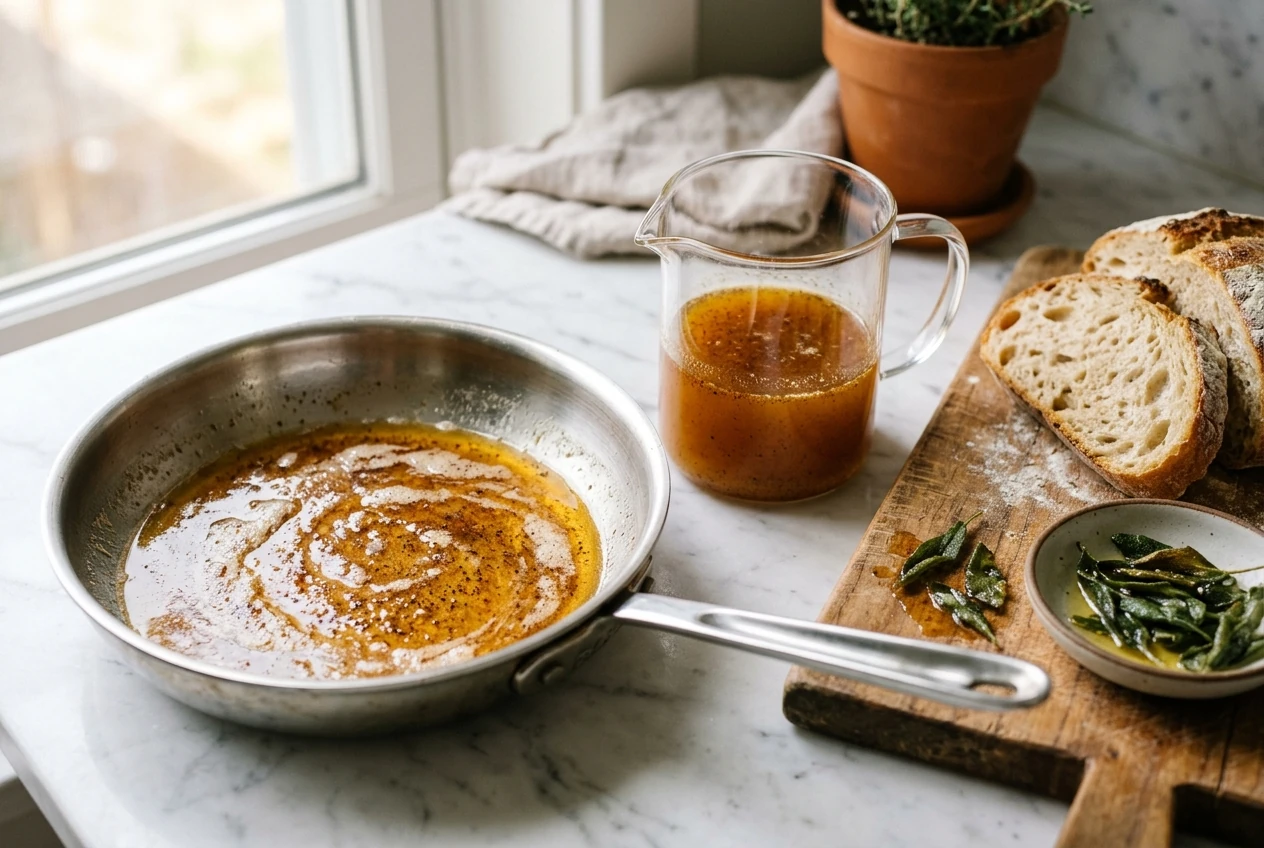
Heavy stainless steel bottoms store fierce thermal energy long after you click gas knobs off. Leaving finished butter sitting idle inside the cooking skillet keeps frying tiny protein granules past toasted amber into acrid espresso black within fifteen seconds. Always station a clear heatproof glass pitcher right next to your stove ahead of time and pour promptly, wiping every flavorful speckled crumb cleanly off the skillet corner with a silicone spatula.
Visual and Aroma Progression Chart During Stovetop Browning
Recognizing the distinct physical stages of melted butter guarantees fearless execution across single sticks or full holiday batches. As documented across baking guides like the King Arthur Baking, watching foam collapse briefly to expose toasted particles marks the exact pulling threshold.
| Stage and Elapsed Time | Visual and Acoustic Cue | Internal Temperature and Next Action |
|---|---|---|
| Stage 1: Smooth Melt (0:00 to 1:30) | Pale yellow liquid pools evenly; faint soft sizzle starts | 100 to 212 F; swirl cubes occasionally until completely liquid |
| Stage 2: Brisk Steam Boil (1:30 to 3:30) | Loud crackling bubbles spatter softly; milky cloudiness clears | 212 F steady; scrape pan base gently to loosen settling whey flecks |
| Stage 3: Dense Ivory Foam (3:30 to 5:00) | Crackling hushes quietly; velvety cream froth blankets skillet top | 230 to 255 F; part foam every 10 seconds with clean silicone spatula |
| Stage 4: Chestnut Beurre Noisette (5:00 to 6:15) | Deep golden oil glows amber; roasted walnut and hazelnut aroma peaks | 270 to 290 F; pull pan off stove at once and pour into cool glass bowl |
| Danger Zone: Burnt Black (Past 6:45) | Sharp acrid smoke rises; specks turn black and smell bitter | Past 320 F; discard burnt batch immediately and wipe pan clean cleanly |
Step-by-Step Brown Butter Recipe Instructions
Never start browning butter while checking phones, chopping carrots, or preheating distant mixing bowls across the room. The whole magic cycle lasts barely six minutes total, and uninterrupted attention next to the burner ensures zero bitter missteps.
Phase 1: Uniform Cubing and Station Setup
Unwrap two cold sticks of unsalted butter directly onto a piece of parchment paper or clean wooden board. Slice lengthwise and crosswise into neat equal cubes roughly three-quarters inch wide so each piece holds matching mass. Set a dry, spotless 10-inch or 12-inch bright stainless-steel skillet on your burner alongside a dry heatproof silicone spatula and a waiting room-temperature glass pouring pitcher within one step of the stove.
Phase 2: Even Melting and Water Evaporation
Turn the burner knob straight onto reliable medium flame and place all butter cubes evenly over the dry skillet surface. Within ninety seconds cubes soften and relax into bright golden liquid while small droplets bubble smoothly around swirling dairy fats. Stir slowly in calm figure-eight arcs with your spatula, keeping solids circulating cleanly without splashing drops across nearby burners.

Phase 3: Tracking Foam, Aroma, and Amber Flecks
Around minute three, rapid loud boiling quiets markedly as remaining water vapor escapes clear into kitchen air. Immediately afterward a thick, airy ivory blanket of sizzling foam puffs upward over the skillet surface, concealing lower butterfat from casual glances. Tilt or gently sweep your white spatula down across the gleaming steel bottom every ten seconds to peek directly underneath that bubbly layer.
Tiny milky specks along the skillet bottom shift swiftly from pale blonde toward warm toasted almond, then rich deep chestnut amber. Simultaneously your kitchen fills unmistakably with warm roasted hazelnuts, buttery caramel, and savory biscuit perfume. Do not pause waiting for thick foam to darken dark mahogany throughout, because deep golden flecks swimming under bright amber oil signify peak sweetness without bitterness.
Phase 4: Fast Off-Heat Pour and Optional Herbal Finishing
The exact second milk solids glow chestnut brown cleanly across your spatula tip, lift the skillet completely clear off warm iron grates and pour every shimmering golden drop promptly into your heatproof glass bowl. Sweep your silicone blade diligently around curved edges so zero flavorful dark bits stay abandoned in the scorching stainless steel. Should your recipe call for crisp savory herbs, drop dried fresh sage leaves, rosemary sprigs, or whole black peppercorns straight into the glass bowl during the first warm minute so leftover butter heat crisps herbs aromatic without scorching.
Milk Solids Maillard Science and Exact Baking Moisture Math
Behind simple skillet alchemy rests one of pastry cooking’s cleanest food chemistry transformations. Regular creamery butter traps dissolved milk casein proteins and natural lactose dairy sugars suspended inside tiny water spheres dispersed gently throughout clarified milkfat. Clarified butter and ghee boil off water completely and filter those protein curds out, yielding a pure mild high-heat cooking oil.
By leaving those protein and sugar droplets inside the warm skillet past 250 degrees Fahrenheit, intense Maillard browning links amino acids and reducing sugars into dozens of volatile furanones, pyrazines, and lactones mimicking roasted hazelnuts, toffee brittle, and browned pastry crusts. That explains why whisking just four spoonfuls of finished beurre noisette elevates gentle neutral cookie doughs cleanly beyond standard softened butter flavor.
Exact Water Restoration Formula for Strict Baking Recipes
Wait before substituting melted brown butter cup-for-cup straight into delicate cake or chewy cookie batters. Starting with one full cup (two sticks, 227 grams) raw butter produces slightly under three-quarters cup (about 185 grams) liquid brown butter once water boils into open air. Losing those 40 grams moisture removes vital hydration needed to hydrate wheat gluten, activate baking soda, and dissolve granulated cane sugar properly.
- For crisp-chewy cookies and fudgy blondies: Whisk back strictly 1 tablespoon (15 ml) cool filtered water or milk for every 1/2 cup (1 stick) starting butter once liquid cools comfortably warm, just as engineered inside our popular Chewy Brown Butter Chocolate Chip Cookies Recipe.
- For buttercream frostings and pound cakes needing aerated creaming: Measure back lost water first, mix thoroughly, chill inside an airtight bowl over ice water or refrigerator shelves until firm yet spreadable (around 65 degrees Fahrenheit), and whip smooth with an electric paddle until pale fluffy cream forms.
- For flaky biscuits or tender laminated pastry crusts: Chill rehydrated brown butter completely solid overnight, then grate cold blocks neatly into dry pastry flour without extra liquid losses altering crisp steam lift.
- The easy zero-math pastry cheat: Brown just half the recipe butter completely dark golden, then stir cooled unbrowned cubed butter directly inside the hot pour bowl so cool chunks melt gently while preserving creamy texture.
Savory and Sweet Variations, Storage, and Freezing Tips
Once comfortable whipping up fresh warm beurre noisette inside six quick minutes, keeping cooled golden jars tucked inside refrigerator butter shelves elevates spontaneous Tuesday suppers effortlessly.
Favorite Culinary Infusions Using One Master Base
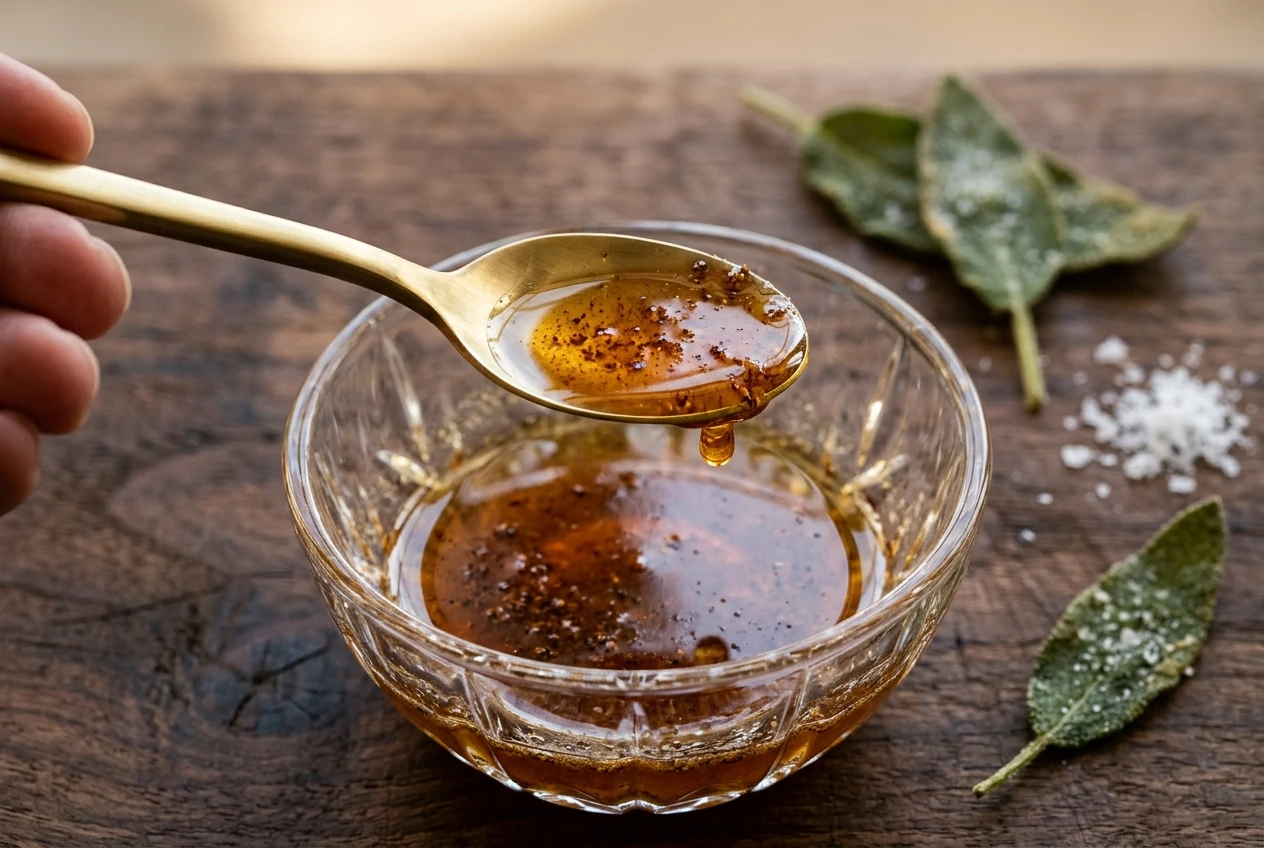
- Crispy Sage and Sea Salt Pasta Finish: Crisp twelve whole dried sage leaves right inside poured warm brown butter for 45 seconds, then toss immediately with potato gnocchi, butternut ravioli, or roasted squash ribbons plus shaved aged Parmigiano.
- Whipped Honey Cinnamon Spread: Chill plain cooled brown butter cleanly until spreadable, whip three minutes with flaky Maldon salt, dark wildflower honey, and ground Ceylon cinnamon for fluffy warm brioche spreads.
- Spicy Cajun Steakhouse Pour: Blend off-heat warm beurre noisette cleanly alongside lemon zest, smoked paprika, thyme, and crushed red pepper following our flavor profile in Cowboy Butter Recipe for blistering hot cast-iron ribeyes.
- Savory Miso Roasted Vegetable Glaze: Whisk one tablespoon mellow white shiro miso paste directly into warm cooled brown butter off flame before brushing cleanly across blistered carrots, winter squash, or pan-charred cauliflower florets.
- Nutty Maple Pecan Waffle Drizzle: Gently combine two tablespoons pure dark amber maple syrup into warm freshly poured brown butter over simmering whisk water for silky sweet-savory brunch drizzle.
Safe Refrigeration, Freezing Cubes, and Re-Emulsifying Solid Solids
Stir your cooled brown butter gently a couple times as it chills inside glass canning jars so dark nutty milk flecks remain suspended throughout pale beige cream rather than pooling solidly across the bottom base. Sealed tightly in sterilized Mason jars or glass snap-lid bowls, finished brown butter keeps crisp nutty freshness refrigerated up to 3 full weeks (slightly longer when chilled below 38 degrees Fahrenheit because cooking boils off unstable microbial moisture).
For effortless single-dish dinner portions all winter, pour cooled lightly whisked brown butter into clean 1-tablespoon silicone ice cube trays and freeze firm for four hours before transferring golden blocks into zippered freezer bags for up to 4 months. Drop frozen cubes straight into steaming rice, seared fish fillets, or cookie mixer bowls anytime nutty richness calls.
Frequently Asked Questions About Making Brown Butter
Should you strain brown butter through cheesecloth before using it?
Never throw away those dark toasted flecks sitting across the bottom of your skillet! Those crispy mahogany protein specks contain nearly 90 percent of the rich nutty hazelnut flavor inside a true Brown Butter Recipe. Strain clear butterfat through fine cheesecloth only if preparing ultra-delicate clear French madeleine shells requiring smooth speck-free batter, and stir those strained nutty crumbs right into yogurt parfaits or oatmeal instead.
Why did small white milky particles stay in my bowl instead of turning brown?
Pale ivory crumbs indicate you pulled the pan slightly early while tiny remnants of water vapor still buffered cooking temperatures below 250 degrees Fahrenheit. Simply slide that butter right back into your clean dry skillet over gentle medium heat for 45 additional seconds, swirling continuously until foamy crackle quiets and pale particles toast deeply golden chestnut amber.
Can I fix brown butter once the bottom flecks turn completely black?
Unfortunately, scorched acrid casein imparts overpowering burnt bitterness throughout the entire clear fat layer, and even straining cannot scrub dissolved bitter smoke aroma out of golden liquid butterfat cleanly. Pour dark overcooked batches into discard tins right away, wash the skillet cool with warm soapy water, and start fresh with gentler steady medium heat.
Can you brown salted butter or plant-based vegan butter cleanly?
Yes for salted dairy butter as long as you hold back extra finishing salt cleanly on savory dishes and watch tall milk foam closely around minute four. Pure plant-based vegetable oil spreads, however, contain zero dairy casein milk proteins needed for classic caramel Maillard specs; stir half a teaspoon toasted almond butter or fine oat flour gently into warm plant butter sticks for mimicking nutty brown butter notes in dairy-free bakes.
How much liquid brown butter does one cup of stick butter make?
Two standard cold butter sticks totaling 1 cup (8 ounces or 227 grams) reduce comfortably to roughly 3/4 cup plus 1 tablespoon (about 185 to 190 grams) warm brown butter after roughly three tablespoons steam away naturally. Keeping a kitchen scale beside your glass pouring bowl guarantees quick accurate baking hydration every batch.
Does brown butter freeze and whip well for cakes and frostings?
Yes, chilled brown butter freezes gracefully up to four months sealed tight against refrigerator freezer odors. To whip silky brown butter frosting, stir chilled solid paste with two tablespoons milk moisture first, rest twenty minutes until soft pliable dough gives cleanly under thumb pressure, then beat gradually on medium-high mixer speed until light ivory ribbons form.
Grab two chilled butter sticks and a clean stainless skillet tonight to master this essential Brown Butter Recipe in less time than boiling pasta water takes. Whether tossed with delicate pasta herbs or folded warm into weekend pastry batters, nutty homemade beurre noisette transforms simple home plates effortlessly every single week.
Print
Brown Butter Recipe (Beurre Noisette)
- Total Time: 8 minutes
- Yield: 1 cup liquid brown butter (about 16 tablespoons, adjusted for baking) 1x
- Diet: Vegetarian
Description
Classic French beurre noisette made in 6 minutes from cubed unsalted butter toasted gently in a light stainless skillet until golden amber and deeply hazelnut-fragrant.
Ingredients
- 1 cup (2 sticks / 227g) unsalted European-style or standard sweet-cream butter, cut into 16 uniform cubes
- 1 tablespoon cool filtered water or milk (ONLY if restoring lost moisture for strict baking recipes)
- 1 pinch flaky sea salt or 12 fresh sage leaves (optional savory finishing infusion)
Instructions
- Cut 2 cold sticks (227g) unsalted butter into even 1-tablespoon cubes so all pieces melt uniformly without overheating early puddle edges.
- Set a light-colored wide stainless-steel skillet or saucepan over steady medium heat and place the butter cubes across the dry bottom. Allow butter to melt smoothly while swirling occasionally with a heatproof silicone spatula.
- Listen as melted butter comes to a lively bubbly crackle for 2 to 3 minutes while internal water turns to steam and rises upward. Keep gently moving the spatula across the pan bottom so milk solids never paste onto hot spots.
- Watch closely as heavy crackle quiets down and dense creamy ivory foam blankets the top surface. Part the foam briefly every 10 seconds to track golden flecks appearing along the light steel base.
- The moment toasted milk solids turn deep chestnut amber and a rich toasted hazelnut perfume blooms from the pan (usually around minute 5 or 6), remove the skillet immediately off the heat source.
- Pour the entire batch at once into a room-temperature heatproof glass bowl or measuring pitcher, scraping every nutty brown fleck out with your silicone spatula so leftover pan warmth never burns delicate solids black.
- Use warm right away for savory pasta, roasted vegetables, or fish sauces, or cool completely (and whisk in 1 tablespoon water per browned stick if matching standard cake or cookie batter ratios).
Notes
Always pick a silver stainless-steel or white enamel pan so you see exact toasted color clearly beneath milk foam. For savory sage brown butter sauce, fry fresh sage leaves gently during the final 30 seconds off heat.
- Prep Time: 2 minutes
- Cook Time: 6 minutes
- Category: Sauce
- Method: Stovetop
- Cuisine: French
Nutrition
- Serving Size: 1 tablespoon (approx. 14g)
- Calories: 102 kcal
- Sugar: 0 g
- Sodium: 2 mg
- Fat: 11.5 g
- Saturated Fat: 7.2 g
- Unsaturated Fat: 3.8 g
- Trans Fat: 0 g
- Carbohydrates: 0 g
- Fiber: 0 g
- Protein: 0.1 g
- Cholesterol: 31 mg
If you want more cooking tips recipes, Explore now
Follow us on Facebook and Pinterest for cooking tips, delicious recipes, and more ideas.