
Caramelized Onions Recipe: 4 Easy Steps to Deep Golden Sweetness
In the vast landscape of culinary building blocks, few preparations possess the alchemy of a master Caramelized Onions Recipe. With nothing more than sharp yellow onions, a knob of good butter, a drizzle of olive oil, and patient heat, pungent and tear-inducing raw alliums surrender their harsh volatile sulfur compounds. Over forty-five minutes of gentle thermal transformation, they collapse into a silky, glistening, deep mahogany jam brimming with complex natural sweetness and intense savory umami. It is the secret weapon that elevates everyday burgers, steaks, pizzas, and pastas into restaurant-quality masterpieces.
Table of Contents
Why This Caramelized Onions Recipe Is the Ultimate Kitchen Superpower
If you have ever read a recipe that claimed you could caramelize onions in ten or fifteen minutes, you were misled by culinary wishful thinking. Rapid high heat merely browns the exterior of raw onion shreds, searing edges while leaving the interior raw, crunchy, and sharp. True caramelization is a slow, meditative process of moisture evaporation, cell-wall collapse, sugar thermal breakdown, and amino acid reorganization.
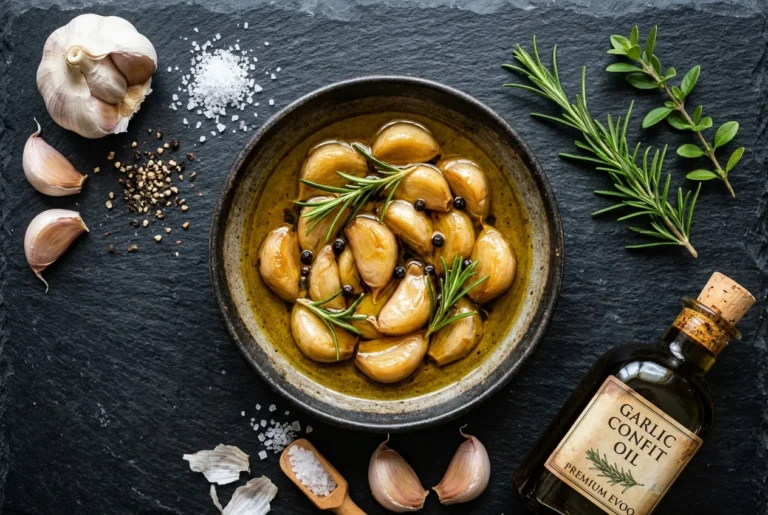
Like our foundational culinary staples such as Ultimate Garlic Confit and versatile Cowboy Butter, having a jar of deeply caramelized onions stashed in your refrigerator instantly upgrades weeknight cooking. A single spoonful folded into ground meat, spread across sourdough before melting sharp cheddar in a Garlic Bread Grilled Cheese, or swirled into sour cream for a vintage French onion dip produces fireworks of flavor that cannot be purchased from a supermarket jar.
Mastering this technique requires no fancy culinary gadgets, yet it demands an understanding of moisture control and pan fond management. Once you recognize the visual, olfactory, and auditory stages of allium caramelization, you will never rush the process again.
The Culinary Chemistry: Maillard Reaction vs True Caramelization
Most home cooks use the word caramelization as a broad catch-all phrase for any browning that occurs in a hot pan. However, as noted in the food science analyses from Serious Eats Culinary Science, what actually happens inside your skillet is a synchronized duet of two distinct biochemical processes: the Maillard reaction and true sugar pyrolysis.
Raw onions are composed of approximately 89 percent water, with the remainder consisting of simple sugars (fructose, glucose, and sucrose), sulfurous amino acids, and dietary cellulose. During the first fifteen minutes of cooking over gentle heat, water vaporizes from plant cells, causing the cellular structure to soften and become translucent. This initial sweating phase is critical because browning cannot initiate until excess surface moisture evaporates below 100 degrees Celsius (212 degrees Fahrenheit).
Once surface water dissipates and pan temperatures rise between 110 degrees and 150 degrees Celsius (230 to 300 degrees Fahrenheit), the Maillard reaction begins. Free amino acids react with reducing sugars, generating hundreds of brand-new volatile flavor molecules, including pyrazines, furans, and thiazoles that deliver rich, savory, roasted aromas. Simultaneously, as temperatures advance, true caramelization takes place: sucrose and fructose molecules undergo thermal decomposition without enzymes, yielding sweet, nutty, and slightly bitter maltol compounds that give caramelized onions their signature jam-like depth.
Crucially, because sulfur compounds are highly volatile, the prolonged gentle heat expels the harsh allicin precursors that irritate eyes and burn tongues. What remains in the pan is pure, concentrated, savory-sweet essence.

Onion Variety Matrix: Yellow vs Sweet vs Red vs Shallots
Walk into any produce aisle, and you will find an assortment of onions: yellow, Spanish, Vidalia, Walla Walla, white, red, and shallots. While all can be caramelized, their chemical composition determines how they behave under sustained heat.
Consult this culinary matrix to select the ideal allium for your desired flavor profile:
| Onion Variety | Natural Sugar Content | Sulfur Pungency Level | Caramelization Duration | Final Flavor Profile | Best Culinary Pairing |
|---|---|---|---|---|---|
| Standard Yellow Onions | Medium (approx. 4.2g / 100g) | High (sharp, tear-inducing) | 45 to 55 minutes | Balanced deep sweetness with intense savory umami | All-purpose: soups, burger toppings, gravies |
| Sweet Onions (Vidalia / Walla Walla) | High perceived (low sulfur) | Very Low (mild, watery) | 40 to 48 minutes | Pronounced candy sweetness, less savory backbone | Tarts, quiches, breakfast omelets |
| Red Onions | Medium-High (approx. 5.1g / 100g) | Medium (peppery kick) | 45 to 50 minutes | Tangy sweetness with earthy, wine-like fruitiness | Flatbreads, barbecue pork, goat cheese crostini |
| White Onions | Low-Medium (approx. 3.8g / 100g) | Very High (sharpest bite) | 50 to 60 minutes | Milder sweetness, clean savory finish | Mexican carnitas, Latin braises, patty melts |
| Artisanal French Shallots | High (approx. 8.0g / 100g) | Moderate (delicate garlic nuance) | 30 to 38 minutes | Intensely rich, gourmet sweetness with allium depth | Steak pan sauces, duck confit, wine reductions |
Standard yellow onions remain the gold standard. Sweet onions like Vidalia taste sweeter raw because they contain less sulfur, but standard yellow onions actually possess superior structural body and a more intricate balance of savory sulfur-derived umami when fully cooked down.
Cookware Selection: Dutch Oven vs Stainless Steel vs Cast Iron
The pan you place upon your stove is just as influential as the onions you slice. Different materials handle thermal conduction and fond accumulation in radically different ways:
| Cookware Material | Heat Retention & Spread | Fond Development Capacity | Deglazing Ease | Overall Chef Rating | Ideal Batch Volume |
|---|---|---|---|---|---|
| Enameled Cast Iron Dutch Oven | Exceptional thermal mass, even heat spread | Superb; fond builds gently without hot spots | Effortless; light enamel reveals browning color | 10 / 10 (Gold Standard) | Large batches (4 to 6 large onions) |
| Tri-Ply Stainless Steel Skillet | Rapid heat response, highly conductive | Intense fond creation; requires vigilant deglazing | Excellent with water, wine, or broth | 9.2 / 10 | Medium batches (2 to 4 onions) |
| Bare Seasoned Cast Iron | Heavy thermal inertia, slow to adjust temp | Good fond, but dark patina makes browning hard to judge | Requires gentle scraping; acid limits apply | 8.0 / 10 | Medium batches (3 to 4 onions) |
| Teflon / Ceramic Non-Stick | Even heat, but prevents fond adhesion | Poor; fond cannot cling to pan bottom to deepen flavor | N/A (liquids simply slide off) | 5.5 / 10 (Not Recommended) | Not suitable for deep mahogany results |
An enameled cast-iron Dutch oven (such as Le Creuset or Staub) or a heavy stainless steel saute pan provides the ultimate canvas. The wide cooking surface gives water vapor ample space to evaporate, while the white enamel or polished steel bottom lets you monitor the color of the fond with absolute clarity.
Essential Ingredients and Fat Pairings for Rich Fond
Simplicity is the soul of this recipe. You do not need artificial additives, brown sugar, or corn syrup to achieve luxurious sweetness. Here is what you need:
- Large Yellow Onions (3 to 4 lbs / 1.5 to 2 kg): Onions reduce by nearly 80 percent in volume as their water evaporates. Four large onions will cook down into roughly one to one-and-a-half cups of intensely concentrated jam.
- Extra Virgin Olive Oil (1 tablespoon): Olive oil has a higher smoke point than whole butter and creates an even heat-conducting layer across the pan bottom.
- European Unsalted Butter (2 tablespoons): Butter provides richness and milk solids that participate in Maillard browning, giving the onions a round, velvety mouthfeel.
- Fine Sea Salt (1/2 teaspoon): Added at the very beginning to draw out moisture through osmosis, accelerating the sweating stage and seasoning the alliums from within.
- Deglazing Liquid (Water, Beef Bone Broth, or Dry White Wine): A splash of liquid (approx. 2 to 3 tablespoons at a time) is essential to dissolve the fond off the pan bottom and glaze it back onto the onions.
- Fresh Thyme Sprigs & Freshly Cracked Black Pepper (Optional): Tying two fresh thyme sprigs into the pot during the final fifteen minutes imparts subtle herbal warmth without overpowering the natural caramelized sweetness.
- Aged Balsamic Vinegar or Sherry Vinegar (Optional, 1 teaspoon): A tiny splash added during the final deglaze adds bright, balancing acidity that cuts through rich butterfat.

The 4 Master Steps to Deep Mahogany Caramelized Onions
Follow these four chronological steps to achieve flawless, melt-in-your-mouth caramelized onions without scorching or bitterness:
Step 1: Slice from Pole to Pole. Cut off the stem end of each onion, slice in half from root to stem, and peel away the dry papery skins. Lay each half flat and slice along the grain (from pole to pole) into uniform 1/4-inch (6 mm) thick crescents. Slicing with the grain preserves the onion’s long structural fibers, allowing the strips to soften into tender ribbons rather than dissolving into watery mush.
Step 2: The Sweating and Moisture Release Phase (Minutes 0 to 12). Place your Dutch oven or heavy skillet over medium heat. Add the olive oil and butter. Once the butter is melted, dump in the massive pile of sliced onions and sprinkle evenly with fine sea salt. Toss thoroughly with a wooden spatula until every slice is coated in shimmering fat. Cover the pot with a tight-fitting lid for 5 to 7 minutes. Trapping steam accelerates the collapse of cellular walls, sweating out abundant moisture without color change.
Step 3: Moisture Evaporation and Softening (Minutes 12 to 25). Remove the lid and reduce stovetop heat to medium-low. The onions will look translucent, limp, and watery. Stir every 3 to 4 minutes as the released water steadily evaporates. As the steam subsides, you will notice the gentle sound transition from a wet bubbling stew into a gentle, sizzling hiss. The onions will gradually turn from pale white to a soft, warm buttery blonde.
Step 4: Fond Building, Deglazing, and Deep Caramelization (Minutes 25 to 50). Now comes the true magic. Stir every 2 to 3 minutes. A golden-brown glaze (the fond) will begin to coat the bottom of the pan. The moment the fond turns deep amber, pour in 2 tablespoons of water, bone broth, or dry white wine. Use your wooden spoon to scrape every scrap of rich brown glaze off the pan, folding it directly back into the onions. Repeat this build-and-deglaze cycle 4 to 6 times over the next 20 minutes until the onions collapse into an unctuous, mahogany-hued jam. Remove from heat and stir in fresh thyme and an optional dash of balsamic vinegar.
The Deglazing Technique: Unlocking Trapped Fond Flavor
The secret to uniform, deep golden color is not allowing onions to sit in high heat, but rather utilizing water as a flavor vehicle. In professional culinary kitchens, this technique is known as deglazing to build fond.
As sugars and amino acids caramelize against the hot metal of the skillet, they dehydrate and bond to the surface. If left undisturbed, this fond will eventually cross the thermal threshold past 175 degrees Celsius (350 degrees Fahrenheit), charring into bitter black carbon. By introducing a small splash of liquid precisely when the fond reaches rich amber, the boiling water instantly dissolves the caramelized solids into a rich syrup. As you scrape with your flat-edged wooden spoon, this syrup coats every strand of onion, ensuring that every single bite absorbs that deep roasted flavor evenly.
You can use plain tap water with magnificent results. However, if you are preparing onions for beef dishes, using rich beef bone broth adds savory gelatin and depth. If preparing for roast poultry or pork, dry French white wine or apple cider creates an exquisite flavor dimension.
Debunking Shortcuts: Why Baking Soda and Sugar Fall Short
Internet cooking hacks often suggest adding baking soda (sodium bicarbonate) or brown sugar to speed up onion caramelization. While these tricks do accelerate browning, they compromise culinary quality:
The Baking Soda Myth: Adding a pinch of alkaline baking soda raises the pH of the cooking environment, which chemically speeds up the Maillard reaction. However, high alkalinity severely weakens pectin, the structural glue that holds plant cells together. The result is not tender caramelized ribbons, but an unappealing, mushy onion puree with an off-putting chemical aftertaste.
The Added Sugar Myth: Tossing granulated sugar or brown sugar into the skillet early creates surface caramelization in fifteen minutes, but the sugar caramelizes independently of the onion starches. You end up with raw, crunchy onions coated in cloying candy syrup rather than the deep, complex, savory-sweet profile born of true allium breakdown. Trust the clock; authentic flavor cannot be rushed.

Versatile Culinary Applications: From Burgers to French Tarts
Once you possess a batch of master caramelized onions, endless culinary doors swing open. Here are the most delicious ways to incorporate them into your daily cooking:
1. Gourmet Burger & Patty Melt Crown: Pile a thick mound of warm caramelized onions over seared smash burgers, aged gruyère or sharp cheddar, and toasted brioche buns. Their silky jam texture replaces conventional condiments with pure luxury.
2. Classic French Onion Soup: Use these onions as the direct base for French onion soup. Add a splash of cognac, fresh beef stock, and simmer for twenty minutes before ladling into crocks, topping with toasted baguette and broiled Gruyère cheese.
3. Savory Puff Pastry Tarts: Roll out store-bought all-butter puff pastry, score a border, spread with caramelized onions, top with crumbled goat cheese or gorgonzola and fresh thyme, and bake at 200 degrees Celsius (400 degrees Fahrenheit) until puffed and golden.
4. Steak Pan Sauce Enhancer: After searing ribeye or strip steaks, add two tablespoons of caramelized onions to the pan drippings, deglaze with red wine and beef broth, and swirl in cold butter for an instantaneous bordelaise-style sauce.
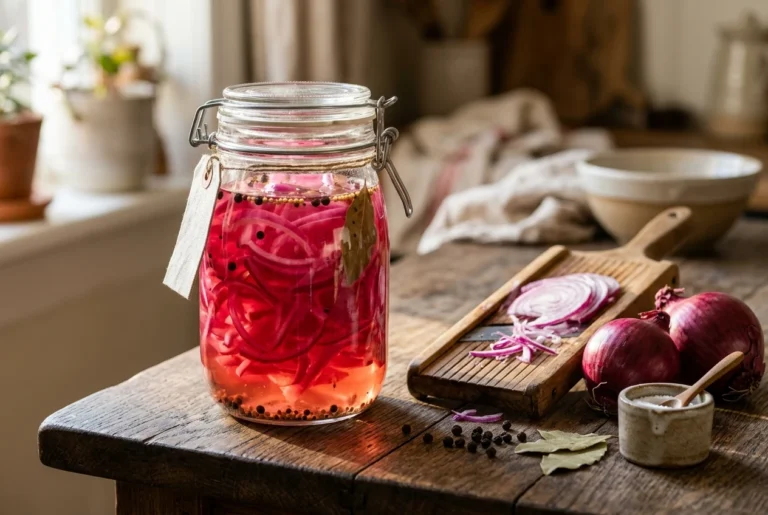
For a complete pantry condiment trio, pair these sweet jammy onions alongside crisp and tangy Quick Pickled Red Onions and velvety Ultimate Garlic Confit to master every dimension of allium flavor.
Comprehensive Troubleshooting Guide: Rescuing Scorched Onions
Because slow cooking requires attention during the latter half, use this diagnostic guide if your pan behavior drifts off course:
Problem: The onion edges are turning black and smell charred, but the center is still pale.
Root Cause: Heat is too high, or the skillet bottom is too thin, creating localized hot spots.
Immediate Fix: Pull the pan off the burner immediately. Pour in 1/4 cup of cool water to arrest browning. Use tongs to remove any severely charred black pieces so their bitterness does not taint the entire batch. Lower heat to low, return the pan to the stove, and stir more frequently.
Problem: The onions have been cooking for 30 minutes and are completely pale and watery.
Root Cause: Stove burner heat is set too low, or you overcrowded a small pot, trapping moisture that cannot evaporate.
Immediate Fix: Increase heat to medium until you hear an active, steady sizzle. Keep the pot completely uncovered and stir occasionally to drive off lingering moisture.
Problem: The fond on the pan bottom is dark and refusing to lift.
Root Cause: You waited too long between deglazings, allowing the fond to dehydrate excessively.
Immediate Fix: Add 3 to 4 tablespoons of hot broth or water and allow it to boil vigorously for 30 seconds. The boiling thermal shock combined with a flat wooden spatula will loosen the fond effortlessly.
Nutritional Profile and Health Benefits
Caramelized onions provide concentrated dietary flavor with remarkably low caloric density. Onions are rich in allium antioxidants, particularly quercetin, a potent flavonoid with powerful anti-inflammatory properties. Furthermore, onions are naturally loaded with inulin, an essential prebiotic dietary fiber that nourishes beneficial gut microbiota.
According to certified nutritional analyses from USDA FoodData Central, here is the nutritional breakdown for one standard culinary serving (approximately 2 tablespoons or 30 grams of cooked jam):
| Nutrient Breakdown | Amount per Serving (2 tbsp / 30g) | Daily Value Percentage (% DV) | Health & Culinary Benefit |
|---|---|---|---|
| Calories | 45 kcal | 2 % | Low-calorie flavor concentration |
| Total Carbohydrates | 5.2 g | 2 % | Complex allium starches and natural sugars |
| Dietary Fiber | 1.1 g | 4 % | Prebiotic inulin supporting gut microbiome |
| Natural Sugars | 3.6 g | — | Concentrated fructose and glucose from slow caramelization |
| Protein | 0.6 g | 1 % | Trace plant amino acids involved in Maillard reaction |
| Total Fat | 2.8 g | 4 % | Healthy monounsaturated olive oil and dairy butterfat |
| Saturated Fat | 1.2 g | 6 % | Rich European butter providing velvety mouthfeel |
| Cholesterol | 5 mg | 2 % | Trace amount from natural butter solids |
| Sodium | 85 mg | 4 % | Modest sodium accentuating natural sweetness |
| Potassium | 82 mg | 2 % | Essential cellular electrolyte |
| Quercetin Antioxidant | 12 mg | — | Potent anti-inflammatory polyphenol |
Batch Cooking, Freezing in Cubes, and Storage Best Practices
Because caramelizing onions takes forty-five minutes regardless of whether you cook two onions or eight onions, smart cooks always make massive batches. It requires virtually identical effort for quadrupled reward:
Refrigerator Storage: Allow caramelized onions to cool completely to room temperature. Transfer to an airtight glass mason jar. Pour a very thin film of olive oil over the surface to create an oxygen barrier. Store in the refrigerator for up to 10 to 12 days.
Freezer Cube Method (The Smartest Kitchen Hack): Spoon caramelized onions into standard silicone ice cube trays, packing each well tightly (approximately 2 tablespoons per cube). Freeze until completely solid, about 4 hours. Pop the frozen onion cubes out and store them in a labeled zip-top freezer bag for up to 6 months.
Thawing & Usage: Drop a frozen cube directly into hot soup broths, pasta sauces, or sizzling burger skillets; it will melt within sixty seconds, releasing its rich mahogany sweetness instantly without any advance thawing required!
Frequently Asked Questions About Caramelized Onions Recipe
Why do my onions turn bitter?
Bitterness occurs when the fond burns against the bottom of the pan rather than being deglazed with liquid. If pan residue turns dark brown or black, immediately splash water into the pan and scrape it up before it chars.
Can I make caramelized onions in a slow cooker?
Yes, but the flavor is different. A slow cooker traps all evaporating moisture, effectively stewing the onions in liquid. While they will turn brown and soft over 10 hours, they lack the deep roasted umami created by pan-fond contact and Maillard browning.
Do I need to add sugar to caramelize onions?
Never! Onions naturally contain abundant sugars. Adding granulated sugar creates a cloying, superficial sweetness rather than allowing the onions to develop complex, savory, caramelized depth naturally.
Can I make this recipe vegan?
Easily. Simply replace the butter with additional extra virgin olive oil or high-quality vegan cultured butter. Olive oil alone produces sensational, glossy, deeply savory caramelized onions.
How many onions should I cook at once?
Cook as many onions as can comfortably fit in your wide pot. As long as your pot has a wide base that allows steam to escape freely once uncovered, a 6-quart Dutch oven can comfortably handle 5 to 6 large onions (about 3 pounds).
Master Slow-Caramelized Onions (Golden Fond Method)
- Total Time: 55 mins
- Yield: 1.5 cups (approx. 12 servings) 1x
Description
Transform humble yellow onions into sweet, silky, deep mahogany culinary gold through gentle heat, moisture evaporation, and water-deglazing fond technique.
Ingredients
- 4 large yellow onions (approx. 3 lbs / 1.4 kg), peeled and sliced pole-to-pole into 1/4-inch crescents
- 1 tablespoon extra virgin olive oil
- 2 tablespoons European-style unsalted butter
- 1/2 teaspoon fine sea salt
- 1/2 cup water, beef bone broth, or dry white wine (divided, for deglazing fond)
- 2 fresh thyme sprigs (optional)
- 1 teaspoon aged balsamic vinegar (optional, for final flavor pop)
- Freshly cracked black pepper, to taste
Instructions
- Slice Onions Pole-to-Pole: Trim stem ends, halve onions through the root, peel, and slice along the grain into uniform 1/4-inch thick ribbons to preserve long structural cellulose fibers.
- Cover and Sweat (Minutes 0 to 10): Heat olive oil and butter in a heavy 6-quart enameled cast-iron Dutch oven over medium heat. Add onions and sea salt, tossing to coat. Cover tightly with lid for 7 minutes to trap steam, collapse cell walls, and rapidly expel intracellular moisture.
- Evaporate and Soften (Minutes 10 to 25): Remove lid and reduce heat to medium-low. Cook uncovered, stirring every 3 to 4 minutes as water evaporates and onions turn soft, translucent, and warm blonde.
- Build and Deglaze Fond (Minutes 25 to 50): As fond begins to form on the pan bottom, let it deepen to rich amber. Splash 2 tablespoons of water or broth, scrape up fond with a wooden spoon, and fold back into onions. Repeat deglazing 4 to 6 times over 25 minutes until onions collapse into an unctuous, mahogany-hued jam. Stir in thyme and balsamic vinegar, cook 1 minute more, and remove from heat!
Notes
Never add sugar or baking soda. Authentic sweetness develops naturally from onion starches through fond deglazing. Freeze leftovers in silicone ice cube trays for instant 2-tablespoon portions ready for soups, burgers, or sauces.
- Prep Time: 10 mins
- Cook Time: 45 mins
- Category: Cooking tips
- Cuisine: French / American Culinary Basics