Apple Crisp Recipe: Warm Cinnamon Apples & Buttery Golden Oat Streusel
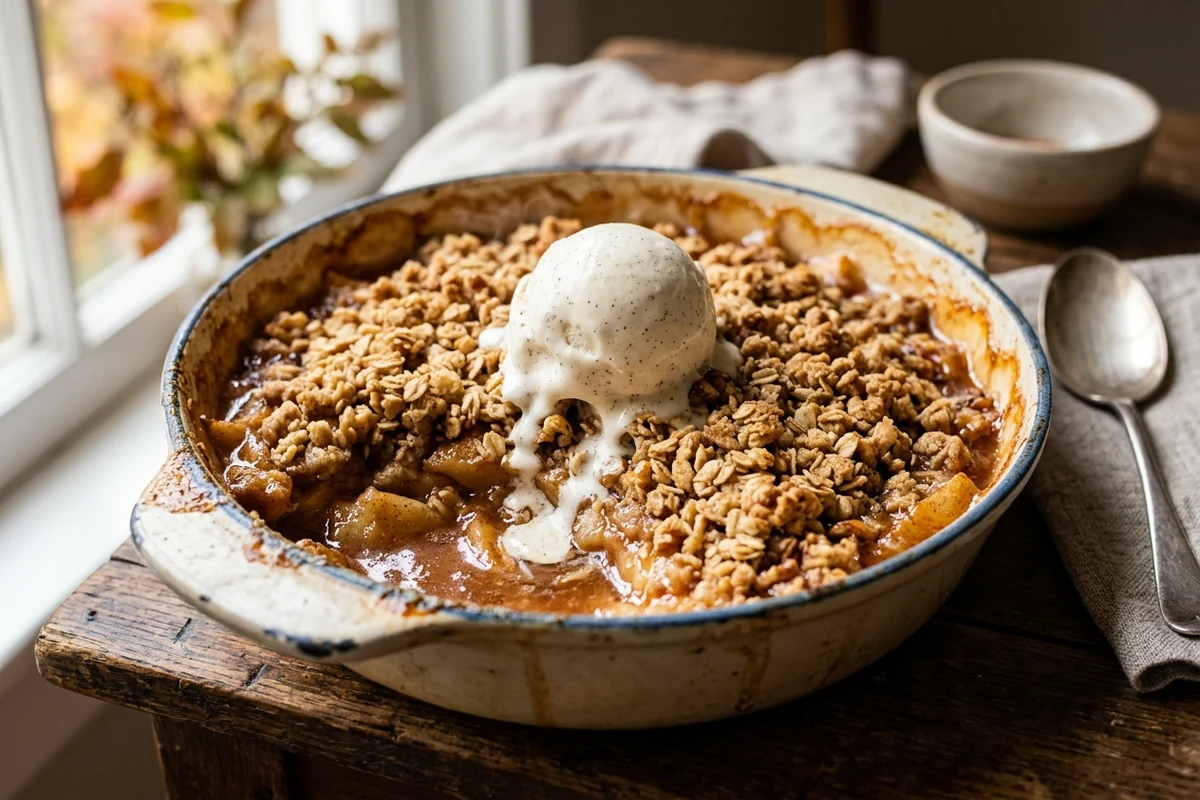
There is no aroma in home baking quite as intoxicating as the fragrance of warm caramelized apples, ground cinnamon, and toasted buttery oats drifting from a hot oven. This quintessential Apple Crisp Recipe delivers the ultimate harmony between tender, bubbling spiced fruit and a thick, shatteringly crisp golden streusel topping. While traditional apple pies demand tedious pastry rolling and blind-baking, a properly calibrated homemade apple crisp achieves superior textural contrast with effortless ease. Whether crowned with a melting scoop of artisanal vanilla bean ice cream or drizzled with warm salted caramel, this comforting dessert is an enduring triumph of rustic home baking.
Table of Contents
Why This Apple Crisp Recipe Is the Ultimate Warm Comfort Food
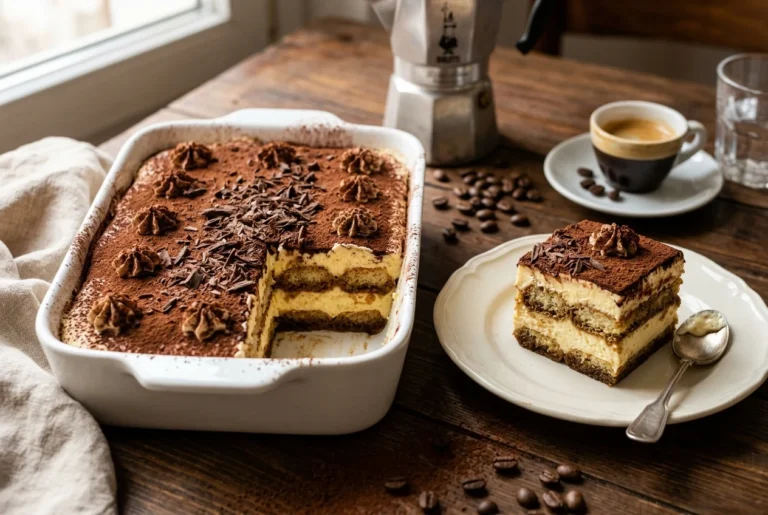
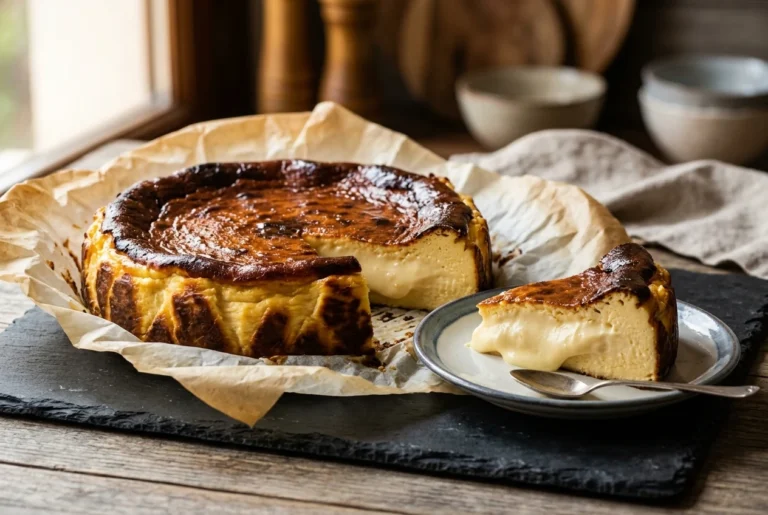
Rustic fruit crisps occupy a revered position across American and European culinary traditions. In our dessert repertoire at Felis Recipes, we celebrate technical masterpieces including decadent Fudgy Brownie Recipe, silky restaurant-style Classic Creme Brulee, authentic Italian Tiramisu Recipe, and molten Chocolate Lava Cake. Yet, this classic apple crisp recipe holds an unmatched emotional resonance because it captures the pure, unpretentious essence of farmhouse baking.
Many amateur bakers suffer through disappointing versions: soggy, waterlogged fruit pools beneath a gummy flour paste, or dry, powdery toppings that fail to caramelize. Our master recipe solves these persistent problems through precise botanical apple blending, calibrated cornstarch thickening, and a dual-textured oat streusel engineered with cold European-style butter. The result is a dessert where every spoonful yields toothsome spiced apple slices swathed in glossy amber syrup, offset by irresistible crunchy clusters.
The Chemistry of Baking Apples: Pectin, Acid, and Firmness
Achieving superior apple crisp texture requires understanding the cellular biology of apples (genus Malus domestica). The structural integrity of an apple during baking is dictated by insoluble protopectin present within the middle lamella of plant cell walls. As thermal energy penetrates the fruit above 85 degrees Celsius (185 degrees Fahrenheit), protopectin hydrolyzes into water-soluble pectin, causing cell walls to soften and release intracellular juice.
According to botanical food research documented by the USDA Agricultural Research Service, apple varieties vary drastically in their malic acid and pectin concentrations. Varieties high in malic acid (such as Granny Smith) maintain cellular firmness much longer during baking because acidic environments reinforce pectin cross-linking. Conversely, low-acid, sweet table apples (such as Red Delicious or Gala) collapse rapidly into mushy applesauce under prolonged heat.
The culinary solution is a deliberate 50/50 dual-apple matrix. Combining tart, firm Granny Smith apples with sweet, honey-scented Honeycrisp or Pink Lady apples produces a multidimensional filling that balances natural acidity, deep aromatic sweetness, and resilient structural bite.

Apple Varieties Comparison and Baking Matrix
Consult this comprehensive apple baking matrix to select the ideal fruit combination for your seasonal baking:
| Apple Variety | Tartness Level | Firmness Retention | Moisture Release | Flavor Profile | Baking Recommendation |
|---|---|---|---|---|---|
| Granny Smith | Very High (Sharp malic bite) | Exceptional (Zero collapsing) | Moderate | Bright, citrusy, grassy, zesty | Mandatory 50% Base: Provides structure and acid balance |
| Honeycrisp | Balanced Sweet-Tart | High (Retains crisp bite) | High (Juicy) | Floral honey, melon, crisp cider | Ideal 50% Partner: Imparts juicy sweetness and complex aroma |
| Pink Lady (Cripps Pink) | Moderate-High Tart | Very High | Moderate | Champagne sparkle, effervescent apple | Excellent standalone or blended option |
| Braeburn / Jonagold | Moderate Tart | High | Moderate | Spiced wine, nutmeg undertones | Classic traditional American heirloom choice |
| Gala / Fuji / McIntosh | Low (Very Sweet) | Poor (Turns to purée) | Extremely High | Mild floral, sugary, delicate | Avoid for Crisps: Cell walls dissolve too quickly |
Blending firm Granny Smith apples with aromatic Honeycrisp guarantees an unctuous, syrupy filling that holds its shape beneath the heavy streusel crust.
The Anatomy of the Perfect Oat Streusel: Rolled Oats vs Quick Oats
In pastry nomenclature, the distinction between a crisp, a crumble, and a cobbler lies squarely in the topping. A cobbler features a dropped biscuit dough, a crumble traditionally utilizes a simple flour-butter-sugar paste, while an authentic crisp is characterized by the generous incorporation of whole rolled oats and spices.
The choice of oat grain profoundly impacts the final texture. Old-fashioned rolled oats are steamed and pressed whole oat groats. Their robust husk structure provides chewy mechanical resistance, resists steam softening from the bubbling apples below, and toasts into nutty, golden clusters in the oven. Quick-cooking oats or instant oats, on the other hand, are finely chopped and pre-cooked; when exposed to butter and steam, they hydrate into a pasty porridge, ruining the desired crunch. For optimal results, select organic whole rolled oats, as highlighted in whole-grain nutritional analyses by Harvard T.H. Chan School of Public Health.
Butter Temperature Dynamics: Cold Cubed vs Melted Butter
One of the most consequential decisions when assembling your streusel is the physical state of the butter. Many expedited recipes call for pouring melted butter directly over dry oats, flour, and sugar. While convenient, melted butter coats dry flour particles immediately, forming a dense, uniform paste that bakes into a flat, greasy sheet rather than distinct, craggy clusters.
Culinary science studies shared by Serious Eats demonstrate that cutting cold, cubed butter into dry dry ingredients produces superior pastry flakiness. As the cold butter cubes are rubbed between fingertips, they flatten into thin sheets encased in starch and sugar. During baking, the water trapped inside the butter turns into steam, creating microscopic air pockets that expand before the butter fat melts and toasts the flour proteins. This produces irregular, crunchy nuggets ranging from tiny sandy granules to thumb-sized streusel clusters.

Streusel Texture and Moisture Control Matrix
Review the formulation matrix below to master the relationship between fat temperature, flour ratios, and textural output:
| Technique Variable | Streusel Formulation | Fat Distribution Method | Baked Texture Profile | Steam Resistance | Best Application |
|---|---|---|---|---|---|
| Cold Cubed Butter (Master Technique) | Equal parts Rolled Oats, All-Purpose Flour & Brown Sugar | Pinched and rubbed into pea-sized pebbles | Craggy, shattered crisp, distinct nutty clusters | Maximum: Stays crisp for 72 hours | Classic Heritage Warm Apple Crisp |
| Melted Butter Emulsion | High Flour, Low Oat Proportion | Poured warm and stirred with fork | Uniform, dense, cookie-like crumbly layer | Low: Softens within 12 hours | Shortbread-style fruit crumbles |
| Browned Butter (Beurre Noisette) | Rolled Oats, Almond Flour & Dark Muscovado | Chilled back to solid paste before cutting | Toasty hazelnut, intensely nutty, caramelized | High: Exceptional richness and aroma | Gourmet Dinner Party Plated Desserts |
| Cold Coconut Oil (Vegan) | Gluten-Free Oats, Oat Flour & Maple Sugar | Solid virgin coconut oil cut with pastry blender | Light, crispy, delicate crunch, subtle coconut | Medium-High | Plant-based dietary modifications |
Adhering to the cold-cubed master technique guarantees that every mouthful delivers a glorious crunch that contrasts with luscious fruit.
Aromatic Spice Alchemy: Ceylon Cinnamon, Nutmeg, and Bourbon Vanilla
Spices are the soul of an unforgettable apple crisp recipe. Ground cinnamon provides the dominant warm note, but relying solely on generic grocery store cassia cinnamon can lead to harsh, woody bitterness. We recommend utilizing true Ceylon cinnamon (often termed Mexican canela), which offers a softer, floral sweetness with delicate citrus undertones.
To construct aromatic depth, incorporate freshly grated whole nutmeg, ground allspice, and a discreet pinch of ground ginger or cardamom. Ground ginger contains gingerol, an aromatic compound that sharpens natural fruit acids without imparting overt heat. A generous splash of pure Madagascar bourbon vanilla extract and fresh lemon juice ties these spices together, transforming simple baked apples into a complex culinary symphony.

Step-by-Step Culinary Baking Guide
Follow these precise steps to bake the ultimate bakery-quality apple crisp in your home kitchen:
1. Fruit Preparation and Thickening: Peel, core, and slice 3 Granny Smith and 3 Honeycrisp apples into uniform quarter-inch crescents. Place in a large mixing bowl. Add fresh lemon juice, light brown sugar, granulated sugar, Ceylon cinnamon, ground nutmeg, vanilla extract, and cornstarch. Toss thoroughly until every apple slice is glazed in a glossy, spiced coat.
2. Crafting the Golden Streusel: In a separate bowl, whisk together whole rolled oats, all-purpose flour, brown sugar, cinnamon, and fine sea salt. Scatter cold, cubed unsalted butter across the dry mixture. Using your fingertips or a pastry blender, work the butter into the oats until clumps range from pea-sized to thumbnail-sized clusters. Place the bowl in the refrigerator for ten minutes to re-chill the butter fat.
3. Layering the Baking Vessel: Generously butter a ten-inch cast-iron skillet or two-quart ceramic baking dish. Transfer the seasoned apple slices and all accumulated bowl juices into the vessel, pressing down gently to create an even, compact bed. Scatter the chilled streusel topping generously over the fruit, ensuring edge-to-edge coverage with large clusters concentrated on top.
4. Convection Baking and Resting: Bake in a preheated oven at 175 degrees Celsius (350 degrees Fahrenheit) for 42 to 48 minutes, until the topping is a deep golden amber and spiced apple juices bubble vigorously around the skillet perimeter. Remove from heat and allow to rest for 15 minutes before serving; this resting window permits the bubbling pectin-starch syrup to thicken into a silky glaze.
Baking Vessels Compared: Cast Iron Skillet vs Ceramic Baking Dish
The thermal conductivity of your baking vessel dramatically influences heat transfer to the bottom layer of fruit:
Seasoned Cast-Iron Skillet: Cast iron boasts immense thermal mass and radiating heat capacity. As the skillet warms, it caramelizes the bottom apple layer rapidly, creating concentrated brown sugar glaze and rustic blistered edges. It is our preferred vessel for farmhouse-style presentation directly at the table.
Enameled Ceramic or Stoneware Dish: Ceramic heats more gently and uniformly, preventing localized scorching of delicate fruit sugars. It is ideal for elegant dinner party entertaining and delivers exceptionally tender, uniformly poached apple slices.
Certified Nutritional Profile and Caloric Comparison Matrix
Compare the nutritional advantages of our oat-streusel apple crisp against standard pastry desserts:
| Dessert Serving (175g Standard Portion) | Calories (kcal) | Dietary Fiber (g) | Total Sugars (g) | Total Fat (g) | Saturated Fat (g) | Whole-Grain Beta-Glucans |
|---|---|---|---|---|---|---|
| Gourmet Homemade Apple Crisp | 310 kcal | 5.2 g | 32 g | 12.5 g | 6.5 g | High: 1.4g soluble beta-glucan from rolled oats |
| Traditional Double-Crust Apple Pie | 440 kcal | 2.1 g | 38 g | 21.0 g | 11.0 g | Zero (Refined white pastry flour only) |
| Classic French Apple Tart (Tarte Tatin) | 410 kcal | 1.8 g | 44 g | 18.5 g | 10.5 g | Zero (Caramelized puff pastry base) |
| Dutch Apple Pie with Streusel Crumb | 480 kcal | 2.4 g | 46 g | 23.0 g | 12.0 g | Very Low (< 0.3g) |
Thanks to the substantial inclusion of unrefined rolled oats and fresh whole fruit, homemade apple crisp provides more than double the dietary fiber of traditional double-crust pie with significantly reduced saturated fat.
Troubleshooting Common Apple Crisp Baking Pitfalls
Avoid these common baking mistakes to ensure flawless results every time:
Pitfall 1: Streusel Topping Sinks and Turns Gummy: This happens when apples are sliced too thick or loosely packed, creating cavernous air gaps. As fruit collapses under heat, the streusel falls into liquid juice. Always slice apples uniformly to quarter-inch thickness and pack them firmly before topping.
Pitfall 2: Watery, Runny Fruit Filling: High-moisture apples release copious water during baking. If omitted, cornstarch or tapioca flour cannot gelatinize the juices. Always include one to two tablespoons of cornstarch tossed directly with the raw apples.
Pitfall 3: Topping Browns Before Apples Are Tender: If your streusel is browning too rapidly around minute 30, tent a sheet of aluminum foil loosely over the baking dish for the final 15 minutes. This allows fruit steam to complete cooking without scorching surface oat clusters.
Make-Ahead, Reheating, and Freezer Storage Guidelines
Make-Ahead Assembly: You can prepare the apple filling and the streusel topping up to 24 hours in advance. Store them in separate airtight containers in the refrigerator. Assemble just before baking so the dry streusel does not absorb apple moisture overnight.
Reheating to Restore Crunch: Never reheat apple crisp in a microwave; microwave radiation agitates water molecules within the fruit, steaming the crust into a soggy paste. Instead, reheat individual portions in an oven or toaster oven at 175 degrees Celsius (350 degrees Fahrenheit) for 8 to 10 minutes to re-crisp the buttery oats.
Freezer Storage: Baked apple crisp freezes remarkably well for up to three months. Cool completely, wrap the baking dish tightly in plastic wrap and aluminum foil, and freeze. Thaw overnight in the refrigerator and bake at 175 degrees Celsius for 20 minutes until piping hot and bubbling.
Frequently Asked Questions About Apple Crisp Recipe
What are the absolute best apples to use for apple crisp?
A 50/50 blend of tart Granny Smith and sweet Honeycrisp or Pink Lady apples yields the ultimate balance of flavor, acidity, and firm texture.
Can I make this apple crisp recipe gluten-free?
Yes, effortlessly! Substitute the all-purpose flour with certified gluten-free 1-to-1 baking flour or almond flour, and ensure your rolled oats are certified gluten-free.
Do I have to peel the apples before baking?
We strongly recommend peeling your apples. Baked apple skins become tough, papery, and detach from the soft fruit, creating an unpleasant texture on the tongue.
How do I prevent the oat topping from getting soggy the next day?
Store leftover apple crisp uncovered or loosely draped with a paper towel at room temperature for the first 24 hours. Reheat in a preheated oven at 175 degrees Celsius to instantly restore crunch.
Can I add nuts like pecans or walnuts to the topping?
Absolutely! Adding half a cup of roughly chopped raw pecans or walnuts to the oat streusel introduces wonderful toasty crunch and buttery aroma.