
Brioche French Toast Recipe: 5 Easy Steps to Golden Custard Perfection
There are weekend breakfasts that merely satisfy hunger, and then there are morning feasts that transform your entire day into an occasion of luxurious comfort. This master Brioche French Toast Recipe belongs indisputably to the latter category. Imagine thick, hand-carved slabs of rich, golden-buttery brioche soaked to their very core in a velvety spiced custard of farm-fresh eggs, heavy cream, whole milk, pure Madagascar vanilla bean paste, and fragrant cinnamon. Sizzled in clarified butter until the exterior develops a delicate caramelized crust, each slice yields to reveal a pillow-soft, cloud-like custardy center that practically melts on your tongue.
Table of Contents
Why This Brioche French Toast Recipe Reinvents Weekend Brunch
Too many home cooks have suffered through disappointing renditions of French toast: flimsy sandwich bread that collapses into a rubbery, egg-scented sponge, burnt on the edges while remaining cold and dry in the center. In traditional French cuisine, this dish is aptly known as pain perdu, meaning lost bread, created centuries ago as an ingenious method to salvage stale, hard loaves. However, when you deliberately elevate the technique using enriched artisanal brioche, the humble salvage operation ascends into a Michelin-level dessert disguised as breakfast.
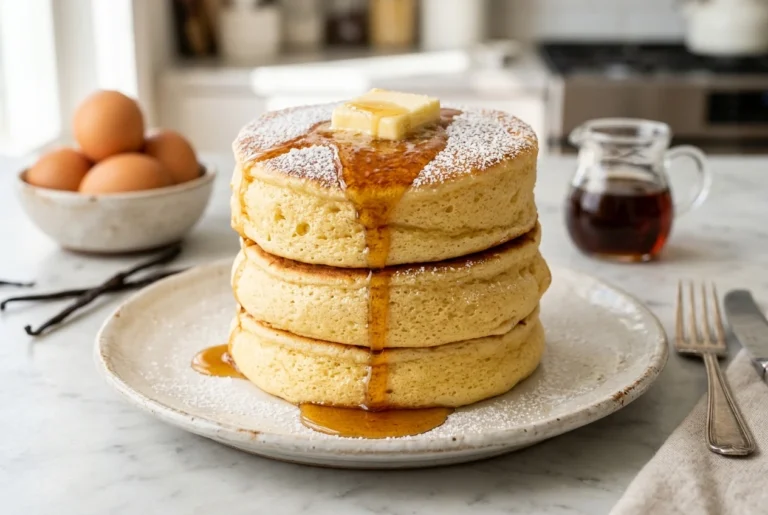
Brioche is uniquely suited for this culinary transformation due to its extraordinarily high butter and egg content. Unlike lean sourdough or airy sandwich bread, brioche boasts an ultra-tender crumb structure with tight, uniform alveoli. When slightly staled or dried, these delicate crumb pockets act like capillary micro-sponges, drinking in the aromatic dairy custard without losing structural integrity. Alongside our beloved morning creations like Fluffy Japanese Souffle Pancakes and savory Crispy Feta Fried Eggs, this recipe establishes a new benchmark for morning hospitality.
What elevates this specific preparation above casual recipes is scientific precision. We balance dairy fats, egg proteins, and natural sugars to achieve the elusive golden trifecta: a micro-thin, crispy caramelized shell, an aromatic custard interior with zero scrambled-egg flavor, and an unctuous richness that pairs harmoniously with pure maple syrup and tart seasonal berries.
The Culinary Physics of Custard: Perfect Milk to Egg Ratio
The foundation of any exceptional Brioche French Toast Recipe lies not in the pan, but in the bowl. The custard is a delicate emulsion of dairy water, emulsified milk fats, egg proteins, and aromatic volatile compounds. Understanding how these elements interact under heat is essential to eliminating rubbery or eggy results.
The golden ratio for luxury French toast custard is precisely one large egg for every one-quarter cup (60 ml) of enriched dairy liquid. If you use too many eggs, the albumin in egg whites coagulates into a dense, chewy rubber layer on the bread surface that tastes like a fried omelet. Conversely, if you use too much milk or cream without sufficient egg protein, the bread becomes overly saturated and waterlogged, preventing the core from ever setting properly during cooking.
Furthermore, the choice of dairy plays a profound thermodynamic role. Whole milk alone produces a light, refreshing custard, but lacks the fat necessary to buffer egg proteins against rapid heat shock. Heavy cream alone delivers decadent richness, yet its high viscosity can impede deep penetration into the center of thick bread slices. The ideal compromise is a 50/50 blend of whole milk and heavy whipping cream, or rich half-and-half, achieving approximately 18 to 20 percent total butterfat. This butterfat cushions the egg yolks, lowering the coagulation threshold and creating a silky custard texture identical to classic pastry cream.
Salt and sugar also serve critical biochemical functions in the custard emulsion. A generous pinch of fine sea salt does not merely season; sodium ions unravel protein filaments in egg yolks and whites, promoting a more fluid, homogenous custard that strains effortlessly. A tablespoon of granulated sugar or pure maple syrup in the custard reduces surface water activity, enhancing Maillard browning and sugar caramelization the instant bread touches the hot buttered skillet.

Bread Selection Matrix: Brioche vs Challah vs Sourdough
While this recipe specifically celebrates brioche, selecting the right loaf or understanding viable artisanal alternatives ensures success regardless of what is available at your neighborhood bakery. The internal density, hydration capacity, and crumb firmness vary considerably among bread varieties.
Refer to this comparative guide to understand how different artisanal breads perform when transformed into French toast:
| Bread Type | Crumb Density & Porosity | Custard Absorption Time | Fat & Sugar Content | Cooked Interior Texture | Overall Score |
|---|---|---|---|---|---|
| Artisanal Brioche | Tight, tender, velvety crumb with golden yellow hue | 35 to 45 seconds per side | High (enriched with butter and egg yolks) | Silky, melting custard; cake-like richness | 10 / 10 |
| Traditional Challah | Dense, braided structure with medium-sized pockets | 45 to 60 seconds per side | Medium-High (vegetable oil and whole eggs) | Soft, custardy core with firm, chewy crust | 9.5 / 10 |
| Rustic Sourdough | Large open wild air pockets with thick crust | 60 to 90 seconds per side | Lean (zero added fats or sugars) | Pleasantly chewy with tart contrast to sweet custard | 8.5 / 10 |
| Texas Toast (White) | Loose, airy commercial crumb structure | 10 to 15 seconds per side (sogginess risk) | Low to Moderate (minimal enriched dairy) | Soft but can easily turn mushy if soaked too long | 7.0 / 10 |
| French Baguette | Chewy, crusty exterior with irregular crumb | 90 to 120 seconds per side | Lean (flour, water, yeast, salt only) | Very chewy exterior with custardy interior pudding | 7.5 / 10 |
As documented in our comprehensive matrix, artisanal brioche remains the undisputed champion. Its natural sweetness and generous egg-and-butter base establish a seamless flavor bridge with the soaking custard, producing a harmonious, cohesive bite from crust to core.
Essential Ingredients for the Ultimate Brioche French Toast Recipe
Creating world-class French toast requires uncompromised ingredient quality. Because the ingredient list is concise and approachable, every single component must pull its weight in flavor and aroma:
- Stale Brioche Loaf: A bakery-style unsliced brioche loaf, hand-sliced into sturdy 1-inch (2.5 cm) thick slabs. Bread that is 1 to 2 days old or lightly oven-dried absorbs custard cleanly without becoming structurally compromised.
- Large Fresh Eggs: Four Grade-A large eggs at room temperature. Fresh eggs ensure a clean, vibrant custard that binds smoothly and cooks with silky tenderness.
- Heavy Cream & Whole Milk: One-half cup of heavy whipping cream paired with one-half cup of whole milk creates the optimal 20 percent dairy fat balance.
- Pure Madagascar Vanilla Bean Paste or Extract: One tablespoon of authentic vanilla paste provides rich aromatic depth and gorgeous tiny vanilla bean specks suspended across every slice.
- Ground Ceylon Cinnamon: One teaspoon of high-grade ground cinnamon. Ceylon cinnamon offers a warm, floral sweetness without harsh astringency.
- Freshly Grated Nutmeg: Just one-eighth teaspoon of freshly grated nutmeg imparts that subtle, warm bakery sophistication reminiscent of classic custard tarts.
- Granulated Cane Sugar: One tablespoon whisked directly into the custard to enhance surface browning and round out dairy acidity.
- Fine Sea Salt: One-quarter teaspoon to balance sweetness, enhance buttery notes, and break down egg albumins.
- Unsalted Butter & Neutral Oil: Two tablespoons of European-style unsalted butter combined with one teaspoon of avocado or grapeseed oil in the skillet prevents the milk solids in butter from scorching over prolonged cooking.
- Pure Grade-A Amber Maple Syrup: Real wood-fired maple syrup warmed gently before serving. Never settle for artificial pancake syrup flavored with high-fructose corn syrup.
- Fresh Seasonal Berries & Powdered Sugar: Crisp raspberries, blackberries, blueberries, and a light dusting of confectioners’ sugar provide vibrant color, refreshing acidity, and visual elegance.
The 5 Master Steps to Golden Custard French Toast
Follow these five meticulous steps to achieve golden, caramelized exterior edges and a silky, pudding-like center every single time you step up to the stove:
Step 1: Slice and Dehydrate the Brioche. Slice your unsliced brioche loaf into thick, uniform 1-inch slices using a sharp serrated bread knife. If your loaf is fresh and soft, place the slices on a wire baking rack inside an oven preheated to 120 degrees Celsius (250 degrees Fahrenheit) for 12 to 15 minutes. You are not toasting the bread or creating browning; you are simply evaporating surface moisture so the crumb acts like a thirsty sponge when submerged in custard.
Step 2: Whisk and Strain the Custard Emulsion. In a wide, shallow ceramic baking dish or pie plate, whisk together the eggs, heavy cream, whole milk, cane sugar, vanilla paste, ground cinnamon, freshly grated nutmeg, and sea salt. Whisk vigorously for a full 90 seconds until the mixture is completely homogenous and no streaks of egg white remain. For a truly velvet-smooth French restaurant finish, pour the custard through a fine-mesh sieve to catch any stubborn chalazae or undissolved egg fibers.
Step 3: Perform the Timed Immersion Soak. Lay 2 to 3 slices of dried brioche into the custard dish in a single layer. Let each slice soak undisturbed for precisely 40 to 45 seconds on the first side. Gently flip using a wide silicone spatula and soak the second side for another 40 seconds. When you lift the slice, it should feel heavy, saturated, and pillowy, yet maintain its structural geometry without tearing or dripping excessively.
Step 4: Heat the Butter and Sear to Golden Perfection. Set a heavy cast-iron skillet or non-stick griddle over medium heat. Add one tablespoon of butter and a tiny splash of neutral oil. Once the butter is completely melted and bubbling with a gentle foaming hiss, gently transfer the soaked brioche slices into the skillet. Cook undisturbed for 3 to 4 minutes over medium-low heat. Do not press down with your spatula. Listen for a steady, gentle sizzle; if the butter starts smoking or darkening rapidly, lower heat immediately.
Step 5: Flip, Baste, and Rest. Carefully flip each slice using a wide spatula. The cooked side should boast an even, glistening mahogany-gold crust with light cinnamon caramelization. Cook the second side for an additional 3 to 4 minutes until puffed and golden. Gently prop the slices onto their crust edges for 30 seconds each to crisp the sides. Transfer the cooked French toast to a warm wire rack in a 95 degrees Celsius (200 degrees Fahrenheit) oven while you cook the remaining batches. Rest for 2 minutes before plating to allow the interior custard to settle into pure silk.
Skillet vs Griddle vs Oven-Baked Method Performance Matrix
Depending on your kitchen equipment and the number of hungry guests at your breakfast table, different cooking methods offer unique advantages. Here is how the three primary cooking techniques compare:
| Cooking Technique | Surface Temperature | Average Cook Time | Crust Crispness Score | Batch Efficiency | Best Application |
|---|---|---|---|---|---|
| Seasoned Cast Iron Skillet | 160°C to 175°C (325°F to 350°F) | 6 to 8 minutes total | 9.8 / 10 (Supreme caramelization) | Small (2 slices at a time) | Weekend intimate brunch for couples |
| Electric Non-Stick Griddle | 175°C (350°F calibrated) | 7 to 9 minutes total | 8.8 / 10 (Uniform even browning) | Large (6 to 8 slices at once) | Family breakfasts and holiday gatherings |
| Sear & Oven-Finished | Pan sear 3 mins, then 180°C oven | 10 to 12 minutes total | 9.5 / 10 (Deep puffed souffle effect) | Medium (4 to 6 slices on rack) | Extra thick 1.5-inch artisan slices |
For standard 1-inch brioche slices, the heavy cast-iron skillet remains our top recommendation. Its massive thermal mass ensures that cold, custard-soaked bread does not cause a sudden drop in cooking temperature, locking in immediate crust sear while insulating the tender center.

Critical Culinary Secrets for Flawless French Toast Every Time
Elevating a home recipe to culinary perfection relies on subtle nuances that many mainstream guides omit. Keep these professional chef tips at the forefront of your preparation:
1. Never Use Freshly Baked, Ultra-Moist Bread. Bread straight from the bakery or supermarket contains significant moisture within its starches. When submerged in custard, fresh bread dissolves into sticky dough rather than absorbing the liquid evenly. Staling the bread in a low 120-degree oven removes water while preserving structural starches, yielding the perfect absorbent sponge.
2. Whisk Custard Thoroughly to Eliminate Albumen Clumps. Egg whites contain dense albumin strands that do not break down easily with casual stirring. If egg whites remain unblended, you will notice unsightly white fried patches on your cooked French toast. Whisk vigorously, or pulse the custard ingredients in a blender for 5 seconds for absolute uniformity.
3. Use Medium-Low Heat, Never High Heat. Because brioche contains natural sugars and enriched fats, and the custard includes vanilla and sugar, high heat will incinerate the exterior sugars in under two minutes, leaving the center cold, raw, and runny. Maintain a gentle medium-low sizzle so heat can penetrate gently to the center before the exterior over-browns.
4. Wipe the Pan Between Batches. Residual butter and stray cinnamon flecks left behind from the first batch will burn into bitter black specks during the second batch. Simply wipe your skillet clean with a folded dry paper towel between batches before adding fresh butter and oil.
Decadent Toppings, Syrups, and Gourmet Variations
While classic pure maple syrup and a melting pat of salted butter are timeless, this luxurious brioche base invites boundless culinary creativity. Here are several chef-inspired flavor combinations to try:
The Salted Caramel Banana Brulee: Top your hot French toast with sliced ripe bananas. Sprinkle turbinado sugar over the fruit and caramelize with a culinary blowtorch until crisp and glassy. Drizzle with warm homemade salted caramel and toasted pecans.
Whipped Vanilla Mascarpone & Fresh Berries: Whip 4 ounces of Italian mascarpone cheese with 2 tablespoons of heavy cream, 1 tablespoon of powdered sugar, and a drop of vanilla extract until light and fluffy. Dollop over warm slices and surround with fresh raspberries, macerated strawberries, and fresh mint.
Spiced Apple Cider Compote: Simmer diced Honeycrisp apples in pure apple cider, brown sugar, cinnamon, and a pat of butter until tender and glossy. Spoon generously over French toast for an autumn-inspired breakfast feast.
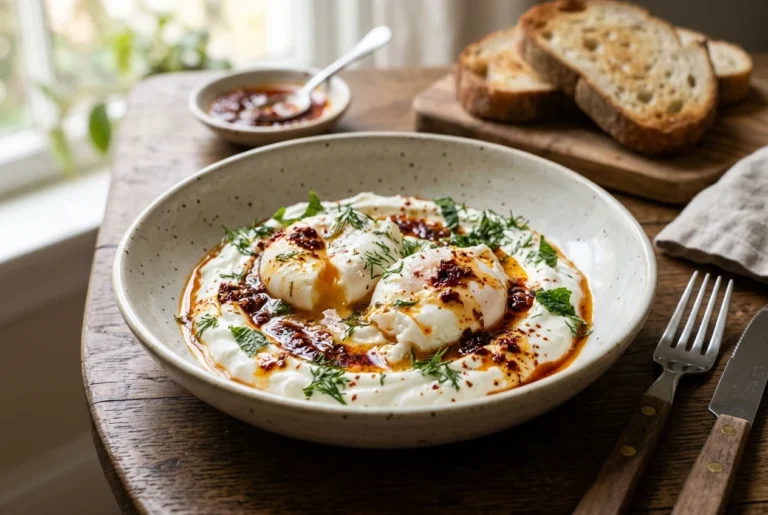
For a savory-sweet morning banquet, pair this decadent French toast alongside savory specialties like Authentic Turkish Eggs (Cilbir) or spicy Authentic Shakshuka to balance sweet custard richness with garlic-herb and tomato-pepper brightness.

Comprehensive Troubleshooting Guide: Fixing Common French Toast Disasters
Even seasoned home cooks encounter occasional morning mishaps. Use this rapid diagnostic guide to identify and correct any cooking flaws immediately:
Problem: The center is soggy and uncooked, but the outside is dark brown.
Root Cause: Pan temperature was set too high, searing the crust before heat could penetrate the 1-inch slice.
Immediate Fix: Transfer the browned slices immediately to a 180 degrees Celsius (350 degrees Fahrenheit) oven on a baking sheet for 5 to 7 minutes. The gentle surrounding heat will bake the center through like a bread pudding without scorching the surface. Next time, lower your stovetop burner to medium-low.
Problem: The toast tastes eggy like an omelet rather than a pastry custard.
Root Cause: Insufficient dairy dilution, lack of aromatic vanilla/cinnamon, or using low-quality eggs with prominent egg white strands.
Immediate Fix: Ensure you follow the 1/4 cup dairy per egg ratio. Always incorporate pure vanilla extract, cinnamon, and nutmeg, which mask sulfurous egg aromas. Straining the custard through a sieve also removes stringy chalazae.
Problem: Slices tear in half when transferring from soaking dish to skillet.
Root Cause: Slices were either cut too thin, soaked far too long, or the bread was excessively fresh and moist.
Immediate Fix: Use a wide, flat slotted spatula supported by your clean hand to lift soaked slices gently. Always slice brioche at least 1 inch thick, and ensure bread has been oven-dried or staled before dipping.
Problem: The crust is limp and greasy rather than crisp.
Root Cause: The skillet was not hot enough when the bread entered, causing the bread to soak up melted butter rather than sear immediately.
Immediate Fix: Ensure butter is fully melted and actively foaming before adding bread. Rest cooked slices on a wire cooling rack rather than a solid ceramic plate, where trapped steam would soften the bottom crust.
Nutritional Analysis and Dietary Balance
Brioche French toast is an indulgent breakfast that provides sustained energy, healthy fats, and high-quality protein from farm-fresh eggs and whole dairy. According to nutritional reference data from USDA FoodData Central and bakery benchmarks from King Arthur Baking, here is the full nutritional profile for one generous serving (two 1-inch thick slices without syrup):
| Nutritional Metric | Amount per Serving (2 Slices) | Daily Value Percentage (% DV) | Culinary & Dietary Significance |
|---|---|---|---|
| Calories | 445 kcal | 22 % | Wholesome, energizing weekend brunch portion |
| Total Carbohydrates | 48 g | 17 % | Enriched starches from golden bakery brioche |
| Dietary Fiber | 2.2 g | 8 % | Naturally occurring grain cellulose |
| Sugars | 14 g | — | From natural dairy lactose and custard cane sugar |
| Total Protein | 14.8 g | 30 % | Complete bioavailable protein from whole eggs and dairy |
| Total Fat | 22.5 g | 29 % | Rich butterfat providing satiety and silky mouthfeel |
| Saturated Fat | 11.8 g | 59 % | High-quality European cream and butter |
| Cholesterol | 225 mg | 75 % | Wholesome egg yolk lecithin and vitamin A |
| Sodium | 460 mg | 20 % | Balanced seasoning enhancing sweet custard notes |
| Calcium | 185 mg | 14 % | Essential bone-strengthening dairy minerals |
| Iron | 2.8 mg | 16 % | Bioavailable iron from enriched wheat flour and yolks |
| Potassium | 240 mg | 5 % | Beneficial cellular electrolyte balance |
Make-Ahead Prep, Storage, and Reheating for Ultimate Crispness
One of the finest attributes of this recipe is its adaptability for entertaining. You do not have to stand chained to the stove while your family or brunch guests dine without you:
Overnight French Toast Casserole Preparation: You can arrange the dried brioche slices directly inside a buttered 9×13-inch baking dish, pour the prepared custard evenly over the slices, cover tightly with foil, and refrigerate overnight for up to 12 hours. In the morning, uncover and bake at 180 degrees Celsius (350 degrees Fahrenheit) for 30 to 35 minutes until puffed, golden, and gently set.
Refrigeration: Allow leftover cooked slices to cool completely on a wire rack. Store in an airtight glass container lined with parchment paper in the refrigerator for up to 4 days.
Freezing: Flash freeze cooked slices in a single layer on a parchment-lined baking sheet for 2 hours until solid. Transfer frozen slices into a heavy-duty freezer bag, pressing out excess air. Freeze for up to 3 months.
Reheating to Restored Crispness: Never reheat French toast in a microwave, which turns the delicate crust soggy and rubbery. Instead, reheat refrigerated or frozen slices directly in a toaster oven or conventional oven at 190 degrees Celsius (375 degrees Fahrenheit) for 6 to 8 minutes (10 to 12 minutes from frozen). Alternatively, pop a single slice directly into a standard slot toaster on medium-high setting for a lightning-fast weekday morning treat with restored crunch!
Frequently Asked Questions About Brioche French Toast Recipe
Can I make this brioche French toast recipe dairy-free?
Yes, with excellent results! Substitute the whole milk and heavy cream with full-fat canned coconut milk, unsweetened cashew milk, or rich barista-style oat milk. Replace the butter in the skillet with virgin coconut oil or vegan European-style cultured butter.
Why is brioche better than regular white bread for French toast?
Commercial white sandwich bread is airy, low in protein, and disintegrates upon contact with liquid. Artisanal brioche contains higher concentrations of butter, eggs, and gluten structure, allowing it to absorb copious custard while retaining a luxurious, cake-like chew.
What if I cannot find unsliced brioche loaf at my bakery?
If only pre-sliced brioche is available, look for thick-cut slices. If the slices are relatively thin (half-inch), reduce your soak time to 15 to 20 seconds per side to prevent saturation and tearing.
Can I use only egg yolks instead of whole eggs?
While whole eggs provide optimal structural lift through egg white albumen, substituting 2 whole eggs with 4 egg yolks creates an intensely rich, French creme-brulee style custard that is extraordinarily decadent.
How do I keep a large batch warm for brunch guests?
Set your oven to its lowest warming temperature, approximately 95 degrees Celsius (200 degrees Fahrenheit). Place a stainless steel wire cooling rack inside a rimmed baking sheet. As you finish cooking each batch of French toast, transfer slices directly onto the wire rack in the warm oven. The rack allows air circulation, keeping both top and bottom crusts crisp for up to 45 minutes.
Classic Brioche French Toast (Golden Custard Pain Perdu)
- Total Time: 25 mins
- Yield: 4 servings (8 thick slices) 1x
Description
Master bakery-caliber brioche French toast with thick golden-caramelized slices, rich vanilla-cinnamon custard, and a cloud-like custardy center that melts in your mouth.
Ingredients
- 1 loaf (approx. 1 lb / 450g) artisanal brioche, cut into 1-inch (2.5 cm) thick slices (stale or lightly oven-dried)
- 4 large fresh Grade-A eggs, room temperature
- 1/2 cup (120ml) heavy whipping cream (minimum 36% butterfat)
- 1/2 cup (120ml) whole milk
- 1 tablespoon granulated pure cane sugar
- 1 tablespoon pure Madagascar vanilla bean paste or pure extract
- 1 teaspoon ground Ceylon cinnamon
- 1/8 teaspoon freshly grated nutmeg
- 1/4 teaspoon fine sea salt
- 2 tablespoons European-style unsalted butter (for frying)
- 1 teaspoon neutral avocado oil (to prevent butter burning)
- Warm pure Grade-A amber maple syrup, for serving
- Fresh strawberries, raspberries, and powdered sugar, for garnish
Instructions
- Dry the Brioche Slices: Pre-heat oven to 120°C (250°F). Arrange 1-inch brioche slices on a wire baking rack and dry for 12 to 15 minutes without browning to eliminate surface moisture so the crumb absorbs custard evenly. Let cool 5 minutes.
- Whisk the Custard Emulsion: In a wide shallow baking dish, whisk together eggs, heavy cream, whole milk, cane sugar, vanilla paste, cinnamon, nutmeg, and sea salt for 90 seconds until thoroughly blended and free of egg white streaks. Pour through a fine-mesh sieve for a velvet restaurant texture.
- Perform the Timed Soak: Submerge brioche slices in the custard for 40 to 45 seconds on the first side. Gently flip using a wide spatula and soak the second side for another 40 seconds. Slices should feel heavy and pillowy without falling apart.
- Sear in Sizzling Butter: Melt 1 tablespoon of butter with 1/2 teaspoon oil in a heavy cast-iron skillet over medium-low heat until gently foaming. Add soaked brioche slices and cook undisturbed for 3 to 4 minutes until deep golden-mahogany with crisp caramelized edges.
- Flip and Rest: Flip gently and cook the second side for 3 to 4 minutes until puffed and golden. Crisp the crust edges by standing slices upright for 30 seconds. Transfer to a warm 95°C (200°F) oven rack while cooking remaining slices. Rest 2 minutes, dust with powdered sugar, top with berries and warm maple syrup, and serve immediately!
Notes
Always use 1-inch thick day-old brioche. Fresh bread dissolves into mush, whereas staled brioche drinks in custard while keeping its cloud-like crumb intact. Keep cooked slices warm on a wire rack in the oven to preserve crispness.
- Prep Time: 10 mins
- Cook Time: 15 mins
- Category: Breakfast
- Cuisine: French / American Brunch