
Balsamic Glaze Recipe: 4 Chef Secrets to Velvet Restaurant Syrup
Mastering this foolproof Balsamic Glaze Recipe replaces gummy store-bought squeeze bottles loaded with cornstarch and artificial caramel coloring with rich, naturally glossy velvet reduction made from real Modena vinegar in fifteen quiet minutes. Every shiny dark ribbon brings tangy sweet-tart depth straight to burrata salads, crisp bruschetta, seared chicken breasts, roasted root vegetables, and fresh summer berries.
Most homemade vinegar reductions go wrong in the closing three minutes: cooks blast high heat to hurry evaporation, boil past soft syrup thresholds, and wind up scraping stiff bitter caramel glued onto pan bottoms once cooled. Using steady low warmth, testing thickness accurately on spoon backs, and balancing acidity cleanly with pure honey yields satin-smooth pourable sauce every single week.
Whether you swirl shiny ribbons across our juicy Creamy Balsamic Mushroom Chicken Skillet Recipe or finish crisp crostini layered alongside savory Homemade Bacon Jam Recipe, homemade reduction upgrades plates instantly. Read through the four crucial chef secrets, vinegar selection chart, and storage notes below.
Table of Contents
- Why This Homemade Balsamic Glaze Recipe Beats Bottled Squeeze Sauces
- Choosing the Best Balsamic Vinegar and Sweetener Ratios
- 4 Chef Secrets for Glossy Velvet Glaze With Zero Scorched Bitterness
- Simmer Stage Visual Guide and Thickness Troubleshooting Chart
- Step-by-Step Balsamic Glaze Recipe Instructions
- Acetic Acid Evaporation Science and Sugar Viscosity Physics
- Infused Variations, Plating Pairings, Storage, and Re-Softening
- Frequently Asked Questions About Making Balsamic Glaze
Why This Homemade Balsamic Glaze Recipe Beats Bottled Squeeze Sauces
Pick up commercial grocery store balsamic glaze bottles and inspect tiny back-label ingredient lines closely: almost every budget glaze starts with cheap water, modified corn starch, commercial glucose syrup, caramel color E150d, and added xanthan gums designed to simulate slow barrel reduction cheaply. Those industrial thickeners leave chalky dull films across fresh cheese and lack bright lingering grape aroma.
Reducing real grape-must balsamic vinegar concentrates natural fructose, rich tartaric acidity, and wood-aged tannins naturally inside your own pan. As historical culinary references in authentic Modena balsamic heritage outline alongside food profiles cataloged by USDA FoodData Central, true cooked grape must naturally reduces silky thick without chemical thickeners, adding bold flavor for barely 32 calories per generous spoonful.
Key Takeaways for Everyday Home Cooks
- Zero chemical gums, thickeners, or cornstarch needed: Gentle open reduction shrinks two cups dark vinegar cleanly into one full cup satin syrup naturally.
- Never waste expensive 25-year traditional bottles: Priced-right everyday IGP supermarket Modena bottles concentrate beautifully when kissed lightly with wildflower honey and dark brown sugar.
- Remember the cooling-thickening rule always: Hot syrup flows briskly off wooden spoons, then thickens roughly three times thicker once cooled inside storage jars.
- Keeps fresh cleanly up to three weeks: High natural acidity preserves clean jars snugly inside refrigerators ready for thirty-second lunch salads or appetizers.
Choosing the Best Balsamic Vinegar and Sweetener Ratios
Although genuine aged Traditional Balsamic Vinegar of Modena already pours naturally thick like honey right out of tiny ceramic bottles, heating rare twenty-year nectar wastes delicate volatile esters instantly. Instead, select bright everyday Italian bottles carrying concentrated grape must high in their short ingredient lists.
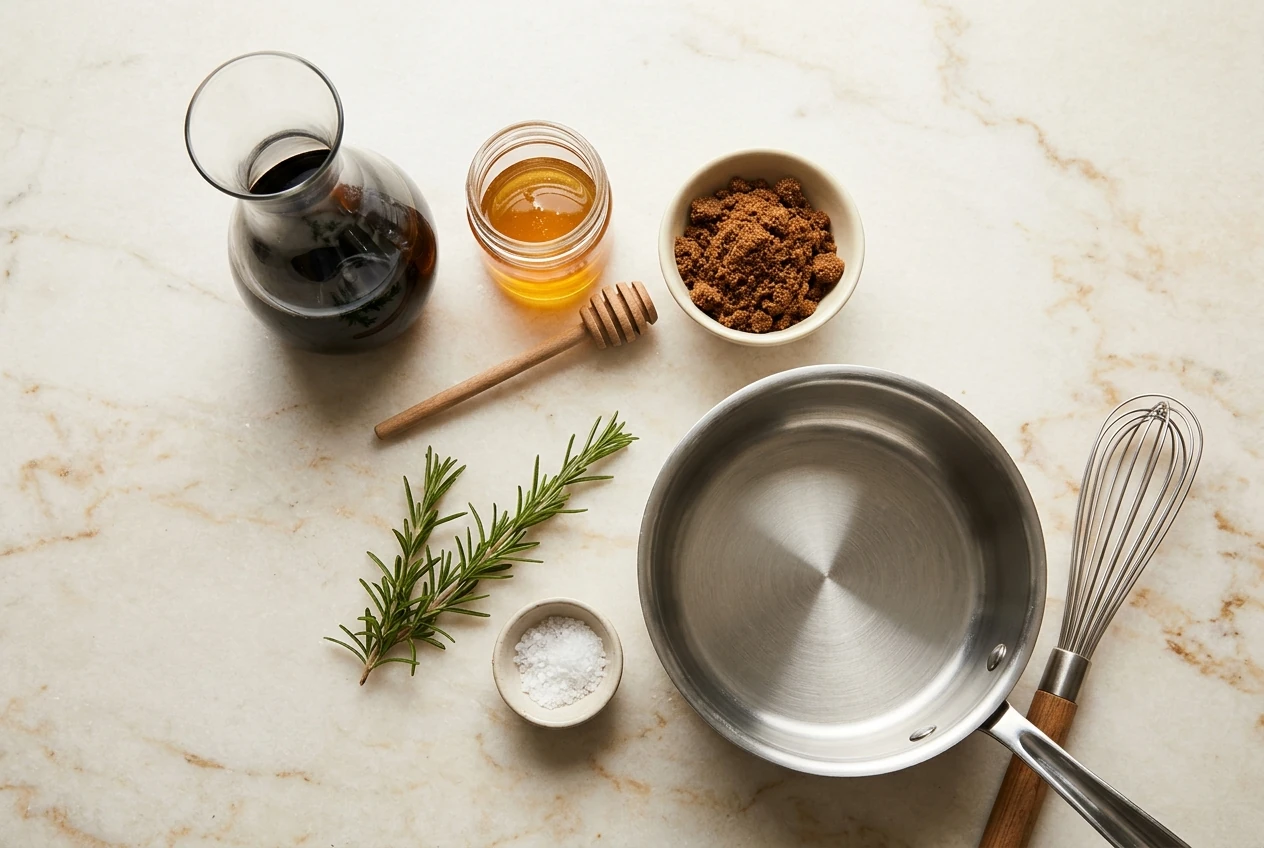
Compare exact bottle tiers, sweetener helpers, and quick dietary modifications below before lighting kitchen burners.
| Vinegar or Sweetener Choice | Behavior Under Gentle Reduction | Best Practical Match and Kitchen Notes |
|---|---|---|
| Mid-Tier IGP Balsamic Vinegar (8 to 20 USD) | Contains genuine cooked grape must; turns glossy dark velvet in 13 minutes | Ideal balanced winner yielding tart depth and shiny syrup cleanly without overspending |
| Thin Entry-Level Salad Balsamic | Higher distilled wine vinegar content; sharp acetic steam and thinner sheen | Whisk in full 1/4 cup brown sugar or wildflower honey to tame punchy tart bite |
| Expensive Aged Tradizionale Balsamic | Already concentrated over wood barrels for decades | Never cook or boil! Drizzle raw drops directly at plating over strawberries or Parmigiano |
| Wildflower Honey (2 tbsp) | Polishes sheen mirror-bright and softens harsh vinegar sting smoothly | Best match for burrata cheese boards, peaches, roasted carrots, and chicken marinades |
| Dark Brown Sugar (2 tbsp) | Deepens dark mahogany color and subtle molasses warmth cleanly | Pairs wonderfully with red meat reductions, figs, and crisp caramelized onions |
| Pure Dark Maple Syrup (Vegan Option) | Gives fluid satin drip and maple woody undertones | Swap raw honey 1:1 with maple syrup cleanly for 100% plant-based pantry jars |
| Fresh Herb Infusion (Rosemary / Thyme) | Releases subtle piney aromatics gently during slow simmer | Remove whole wooden sprig before bottling so lingering bitterness never develops |
Keep kitchen stove hood fans running gently on medium speed while simmering plain balsamic vinegar! Warm acetic steam carries sharp vinegar tang quickly across kitchens during early minutes before sugars caramelize calm and sweet, so opening a cracked nearby window makes kitchen prep remarkably pleasant.
4 Chef Secrets for Glossy Velvet Glaze With Zero Scorched Bitterness
Making balsamic reduction looks ridiculously easy on paper, yet burning sticky concentrated vinegar sugars ruins saucepans quickly. Following four simple guardrails keeps glossy dark caramel completely silky from rim to center.
1. Use a Wide Heavy-Bottom Saucepan Over True Low Simmer
Tall narrow soup pots trap rising water vapor inside vertical walls and demand extended boiling times that fatigue delicate fruit brightness. Picking a broad ten-inch stainless skillet or wide saucepan speeds mild steam evaporation across lower flames cleanly. Keep burner heat strictly low once initial tiny bubbles emerge so sugar droplets never paste black along overheated steel rims.
2. Pair Unrefined Brown Sugar With Floral Raw Honey
Skipping sweetener altogether works strictly with pricey ultra-sweet aged bottles, whereas standard pantry vinegars reduce far too sharp and punchy without balanced sucrose helpers. Blending half wildflower honey with half dark brown sugar smooths acidic sting while resisting stubborn crystallization inside refrigerated jars weeks later.
3. Pull the Pan Off Heat While Glaze Still Looks Slightly Thin
This single timing shift prevents ninety percent of homemade glaze failures. When boiling at 215 degrees Fahrenheit inside your saucepan, liquid sugar flows briskly like warm chocolate sauce; the moment temperature falls back down to room air around 70 degrees Fahrenheit, dissolved grape pectin and honey tighten noticeably into stiff syrup. Always test doneness on chilled spoons and stop cooking while glaze still pours slowly off edges.
4. Finish With One Tiny Pinch of Flaky Sea Salt Off Heat
Just like dark salted chocolate ganache, concentrated sweet balsamic syrup tastes flat and single-note without balanced mineral saltiness lifting grape fruitiness forward. Whisking in just one pinch delicate flaky sea salt right after pulling hot pans off stove grates wakes savory-sweet harmony effortlessly across cold cheeses and grilled proteins alike.
Simmer Stage Visual Guide and Thickness Troubleshooting Chart
Because thick dark balsamic looks identical to plain dark liquid at a quick glance, tracking bubble size, aroma shifts, and cold-spoon drag eliminates all timing anxiety during cooking.
| Simmer Stage & Time | Visual and Aroma Cues | Exact Action & Cold-Spoon Recovery Fix |
|---|---|---|
| Minute 0:00 to 2:00 (Dissolve) | Medium heat melts brown sugar and honey clear; tangy sharp vinegar aroma rises | Whisk slowly until zero gritty sugar rests on pan floor; dial flame straight to low |
| Minute 2:00 to 9:00 (Steady Reduce) | Tiny quiet bubbles simmer smoothly around edges; liquid drops roughly 1/3 depth | Stir every 3 minutes cleanly along sides; avoid scraping dry ring buildup down |
| Minute 10:00 to 15:00 (Coat Stage) | Bubbles slow slightly bigger and turn glossy mahogany; sweet raisin scent blooms | Dip cold spoon in glaze, run finger cleanly across spoon back: sharp path stays open! |
| Too Thin After Cooling? | Glaze pools watery beside cherry tomatoes rather than hugging cheese ridges | Pour glaze right back into clean skillet and simmer gently 2 to 3 additional minutes |
| Too Thick Like Hard Taffy? | Spoon refuses to pour freely or freezes rubbery right inside jar bottoms | Warm jar in hot tap water bath or simmer gently with 2 tablespoons warm water until fluid |
Step-by-Step Balsamic Glaze Recipe Instructions
One clean heavy stainless-steel saucepan, one whisk, and one wooden tasting spoon handle everything smoothly from start to storage bottle with hardly two minutes of dishwasher cleanup afterward.
Phase 1: Dissolve Honey and Dark Brown Sugar Before Boiling
Measure two full cups dark Modena balsamic vinegar directly into your dry medium heavy-bottom saucepan resting centered over cold stove grates. Add two tablespoons wildflower honey, two tablespoons packed dark brown sugar, and one small washed fresh rosemary sprig if adding savory herbaceous complexity. Turn burner flames gently to medium heat and whisk continuously for roughly ninety seconds so thick honey melts seamlessly and brown sugar granules dissolve completely clear into dark vinegar before liquids begin steaming rapidly.
Phase 2: Maintain Calm Low Simmer Until Reduced by Half
The second gentle foamy bubbles ring outer steel pan edges, drop your burner thermostat down promptly to steady calm low warmth. Leave the saucepan uncovered completely so excess vinegar water escapes upward freely without boiling furiously across pan walls. Stir casually every three minutes around curved corners using a clean wooden spoon, noting carefully as sharp vinegar aroma mellows gradually into warm sweet roasted fig and plum fragrance around minute ten.
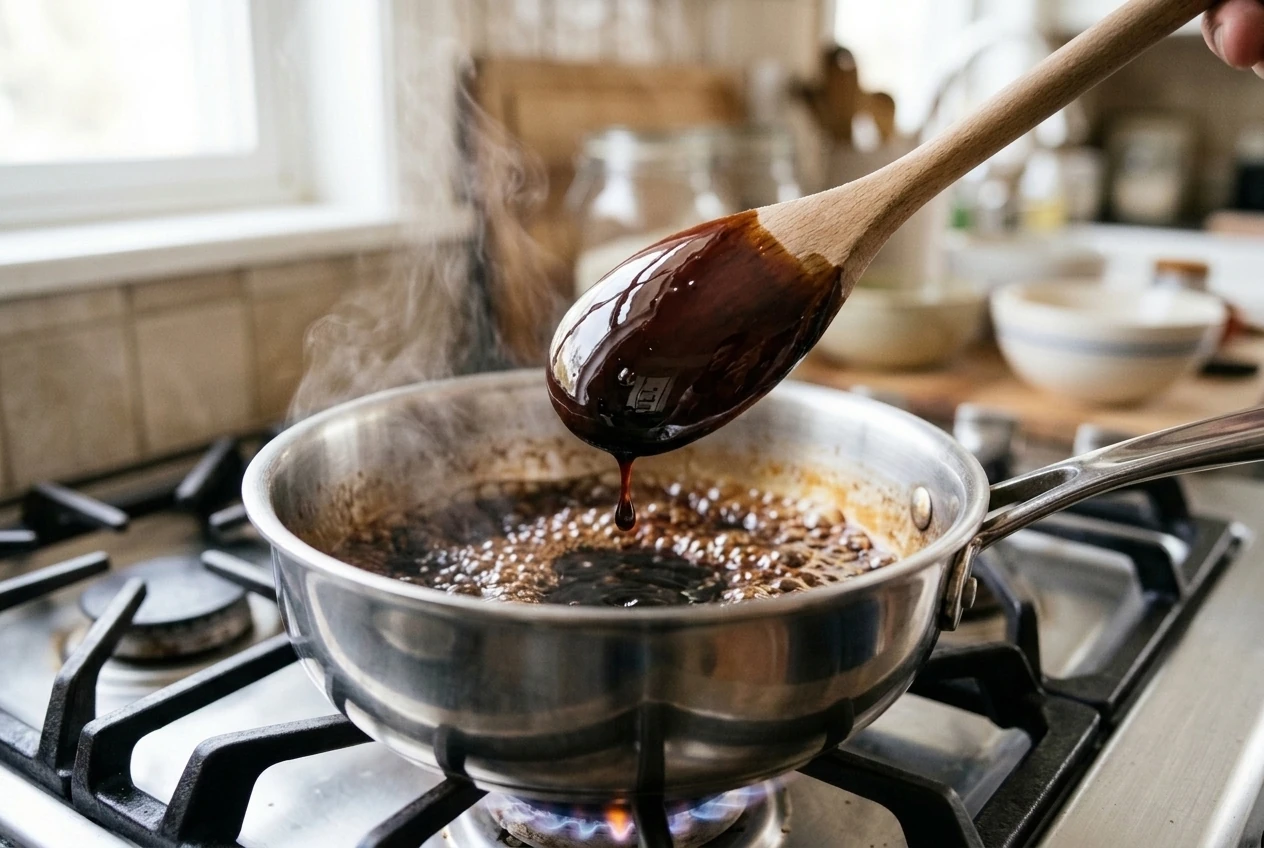
Phase 3: Run the Cold-Spoon Trail Test and Cool Completely
Between twelve and fifteen simmering minutes total, watch closely as bubbling foam moves noticeably slower and liquid volume shrinks neatly in half to roughly one cup depth. Dip a dry wooden or chilled metal spoon down inside the bubbling dark glaze, lift upward out of rising steam, and blow gently once before dragging a dry fingertip carefully down across the coated spoon back. When thick mirror-gloss glaze holds clean crisp edges along your trail without running sluggishly together again, pull the pan immediately clear off stove heat.
Pluck out the warm steeped rosemary sprig with tidy kitchen tongs and whisk in one small pinch flaky sea salt cleanly. Allow finished Balsamic Glaze Recipe syrup ten quiet minutes cooling right inside the off-heat skillet (or poured cleanly inside a waiting spouted glass pitcher) while natural sugars thicken gracefully into pourable satin ribbons ready for drizzling across platters.
Acetic Acid Evaporation Science and Sugar Viscosity Physics
Behind humble simmering vinegar sits practical kitchen thermodynamics explaining why rushing high flames ruins balance quickly. Regular commercial Modena balsamic holds roughly six percent sharp volatile acetic acid mixed alongside water and cooked concentrated trebbiano grape must sugars. When heated gently open to kitchen air around 212 degrees Fahrenheit, sharp volatile acids evaporate rapidly alongside water steam while dense glucose and fructose fruit sugars concentrate downward without decomposing.
By supplementing modest fructose levels with raw wildflower honey (rich in liquid fructose that actively resists gritty sucrose crystal chains) and damp brown cane molasses, cooled homemade syrup builds tight smooth hydrogen bonds that pour like cold maple nectar directly out of glass squeeze bottles instead of hardening stiff like lollipop taffy on chilled cheese plates.
Notice too why gentle caramelization protects gut wellness and vibrant polyphenols naturally found inside red Trebbiano and Lambrusco grapes. Scorching reductions fiercely above 240 degrees Fahrenheit chars beneficial grape anthocyanins into bitter harsh smoke compounds, whereas slow simmering keeps antioxidant polyphenols intact inside silky velvet droplets alongside mild, digestible fruit acidity.
Furthermore, letting completed reductions cool quietly uncovered for ten full minutes allows delicate citrus peel oils or warm rosemary vapors suspended inside hot glaze to settle gently into clear top oil layers. Swirling your wooden spoon once before bottling distributes bright balanced flavor uniformly down through every single pourable tablespoon.
Infused Variations, Plating Pairings, Storage, and Re-Softening
Keeping one chilled jar of velvety balsamic glaze parked neatly inside refrigerator condiment doors sparks effortless Tuesday night upgrades across sandwiches, crisp pizzas, salads, and sweet fruit bowls.

High-Impact Dishes Elevated by One Simple Drizzle
- Torn Burrata & Heirloom Tomato Tartines: Crown warm garlic-rubbed sourdough with cool creamy cheese, ripe tomatoes, torn sweet basil, olive oil, flaky salt, and crisp dark ribbons of balsamic glaze.
- Savory Cast-Iron Sides & Steaks: Finish browned Garlic Butter Mushrooms Recipe skillets or blistered sweet caramelized root dishes like Honey Garlic Butter Roasted Carrots Recipe with sharp sweet-tart contrast off heat.
- Charred Crispy Brussels & Winter Greens: Toss roasted sprouts, crispy bacon crumbs, and pomegranate jewels inside two shiny tablespoons glaze right before platter service.
- Macerated Fresh Strawberries & Gelato: Steep fresh sliced garden berries gently with black pepper and drizzle glossy aged syrup over cold vanilla ice cream scoops.
Easy Flavor Twists, Bottling, and Quick Cold Jar Fix
Drop sliced fresh ginger coins, two smashed black garlic cloves, or two whole smashed sweet strawberries cleanly inside simmering vinegar during minute one for bright custom twists (straining cleanly through tiny fine-mesh strainers before storing). Once cooled completely to room temperature, pour finished reduction inside sterilized glass jars or clean narrow-tip food squeeze bottles sealed snugly up to 3 crisp weeks refrigerated or 2 weeks cool pantry cleanly away from bright sunlight.
Naturally high sugar and acetic concentration stiffens chilled fridge glaze slightly firmer than room-temp sauce: never dig hard metal knives furiously at cold bottles! Simply sit capped bottles upright inside a shallow coffee mug holding warm tap water for 90 seconds right while tossing salads, and velvety dark ribbons glide smoothly straight out of tips every dinner night.
Frequently Asked Questions About Making Balsamic Glaze
Can I make balsamic glaze completely without adding sugar or honey?
Yes! Good-quality mid-priced Italian IGP Modena vinegar contains natural grape must sugars that caramelize smoothly on their own into tart-savory glaze once halved cleanly. Adding moderate honey or brown sugar simply trims harsh acidic punch smoothly on standard everyday bottles while brightening shiny visual gloss across savory foods.
Why did my balsamic glaze seize solid hard in the bottom of the jar?
Over-reducing vinegar past 50 percent volume or boiling fiercely past 225 degrees Fahrenheit flashes out remaining moisture required for silky fluidity. Place stiff cold jars inside warm simmering water for three minutes with one to two tablespoons warm water stirred gradually until smooth pourable drizzle texture returns cleanly.
Does balsamic glaze go bad or expire quickly without preservatives?
Because vinegar’s natural low acetic pH creates an inhospitable environment for household bacteria alongside concentrated sugar levels, sealed clean glass jars hold spotless tangy freshness in refrigerators cleanly for three to four weeks (provided zero wet dirty spoons ever dip repeatedly inside storage jars).
Can I use white balsamic vinegar instead of dark balsamic vinegar?
Definitely! Substituting clear golden white balsamic vinegar reduces beautifully into mild, bright honey-blonde syrup ideal over delicate poached pears, pale white fish fillets, peach prosciutto boards, or light citrus fennel salads where dark mahogany streaks might muddle pale colors.
How do I clean sticky burnt vinegar residue out of my saucepan fast?
Never attack sticky cooled pots dry with abrasive steel scrubbers! Fill warm emptied saucepans neatly with plain warm tap water plus one drop mild dish soap, cover lightly or simmer calmly on low heat for three minutes, and caramelized sugar dissolves effortlessly clear down kitchen drains with one soft sponge wipe.
Is homemade balsamic glaze healthier than commercial bottled versions?
Preparing this clean Balsamic Glaze Recipe at home puts you in complete control over ingredients with zero cornstarch thickeners, high-fructose corn syrup, or artificial colorants hiding behind squeeze caps. Just thirty-two calories per fragrant spoonful boosts vegetable and salad enthusiasm immediately without creamy heavy fats.
Grab a simple everyday bottle of Italian balsamic vinegar and warm honey tonight to whip up your own jar of this glossy Balsamic Glaze Recipe in under twenty minutes. One quick squeeze transforms humble weeknight tomatoes, grilled vegetables, and fresh cheeses into sparkling bistro plates effortlessly all month long.
Print
Balsamic Glaze Recipe
- Total Time: 16 minutes
- Yield: 1 cup (about 16 tablespoons) 1x
- Diet: Vegan Option
Description
Thick, silky sweet-tangy homemade balsamic glaze reduced gently over low heat with raw honey, dark brown sugar, rosemary, and flaky salt in 15 minutes with zero scorched bitterness.
Ingredients
- 2 cups (480ml) good-quality Modena balsamic vinegar (mid-priced IGP bottle works best)
- 2 tablespoons pure wildflower honey (or pure maple syrup for strictly vegan glaze)
- 2 tablespoons packed dark brown sugar
- 1 small sprig fresh rosemary (optional herbal infusion during simmering)
- 1 pinch flaky sea salt
Instructions
- Pour 2 cups balsamic vinegar, 2 tablespoons wildflower honey, 2 tablespoons dark brown sugar, and optional fresh rosemary sprig straight into a wide, heavy-bottom light stainless-steel saucepan.
- Turn on gentle medium heat and whisk slowly for 90 seconds just until honey and dark brown sugar dissolve smoothly into dark liquid vinegar before simmering begins.
- Once calm tiny bubbles surface around the rim, reduce burner immediately down to low so vinegar holds a quiet steady simmer without violent boiling or burnt edges.
- Simmer completely uncovered for 12 to 15 minutes, stirring lazily with a wooden spoon every 3 minutes while steam vents upward and volume shrinks cleanly by half to about 1 cup.
- Dip a chilled metal or wooden spoon directly into the dark glossy reduction: pull the pan cleanly off heat the moment syrupy glaze clings noticeably along the spoon back and leaves a clean trail when swiped with a finger.
- Fish out the steeped rosemary sprig carefully, stir in one tiny pinch of flaky sea salt, and let glaze rest undisturbed 10 full minutes so viscosity sets thick like warm maple syrup as it cools.
- Pour cooled glaze into a clean glass squeeze bottle or sterilized Mason jar and drizzle neatly across burrata platters, caprese tomatoes, charred meats, roasted vegetables, or fresh strawberries.
Notes
Remember balsamic reduction thickens dramatically more as it cools to room temperature! Pull the saucepan slightly thinner than final sandwich drizzle texture so cooled jars stay smoothly pourable instead of turning to hard candy.
- Prep Time: 2 minutes
- Cook Time: 14 minutes
- Category: Sauce
- Method: Simmered
- Cuisine: Italian
Nutrition
- Serving Size: 1 tablespoon (approx. 15ml)
- Calories: 32 kcal
- Sugar: 7 g
- Sodium: 18 mg
- Fat: 0 g
- Saturated Fat: 0 g
- Unsaturated Fat: 0 g
- Trans Fat: 0 g
- Carbohydrates: 8 g
- Fiber: 0 g
- Protein: 0.1 g
- Cholesterol: 0 mg
If you want more cooking tips recipes, Explore now
Follow us on Facebook and Pinterest for cooking tips, delicious recipes, and more ideas.