Homemade Garlic Aioli Recipe: 4 Secrets to Ultra-Thick Creamy Emulsion
Welcome to the comprehensive culinary masterclass for the ultimate Homemade Garlic Aioli Recipe. Whether dipping crispy hand-cut fries, drizzling over roasted vegetables, or topping seared seafood, this definitive guide provides all the science, ratios, and technique you need to achieve an ultra-thick, luscious emulsion that never splits.
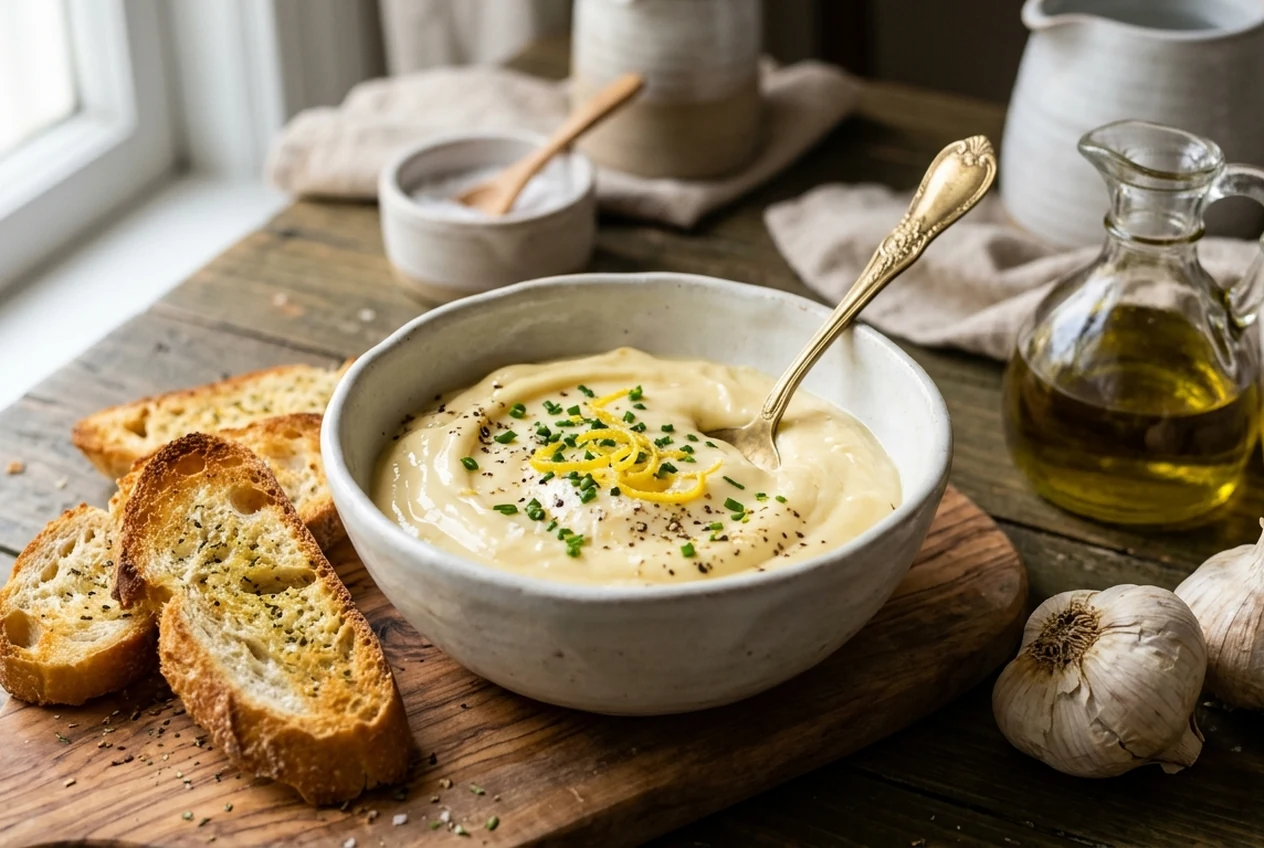
Table of Contents
Why This Authentic Homemade Garlic Aioli Recipe Works
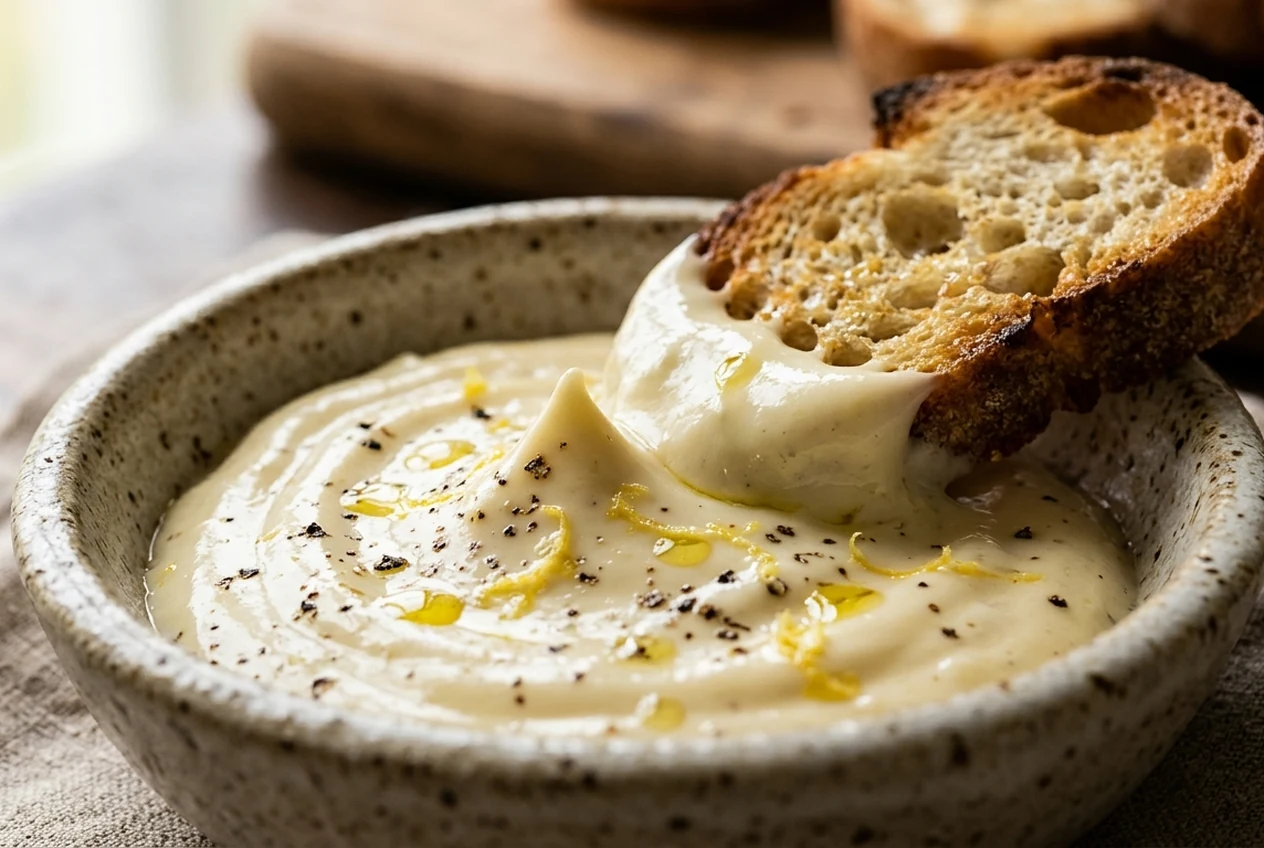
True garlic aioli is one of the crown jewels of Mediterranean gastronomy. Far from commercial mayonnaise mixed with garlic powder, this traditional Homemade Garlic Aioli Recipe creates a luscious, silky emulsion where pungent crushed garlic and rich extra virgin olive oil unite into a velvety sauce with structural body firm enough to stand in peaks on a spoon.
Historically originating in Provence and Catalonia (where it is known as allioli, literally meaning garlic and oil), this culinary masterpiece balances the spicy, sulfurous punch of raw garlic with the fruity, rounded richness of high-grade olive oil and bright lemon acidity. However, countless home cooks struggle with broken emulsions, bitter flavors, or thin, runny textures.
This foolproof Homemade Garlic Aioli Recipe eliminates every point of failure through precise molecular food science. By leveraging natural egg yolk lecithin, creating an initial micro-paste with garlic and kosher salt, and utilizing a controlled drop-by-drop oil incorporation technique, you achieve an intensely aromatic, ultra-stable sauce that elevates roasted vegetables, seafood, steak, and crusty bread into gourmet delicacies.
The 4 Chef Secrets to an Ultra-Thick Emulsion That Never Breaks
Creating a permanent culinary emulsion involves forcing two immiscible liquids (water and oil) into a harmonious suspended matrix. Here are the four indispensable rules that guarantee success with this Homemade Garlic Aioli Recipe:
1. Mashing Garlic into a Cell-Breaking Paste with Salt
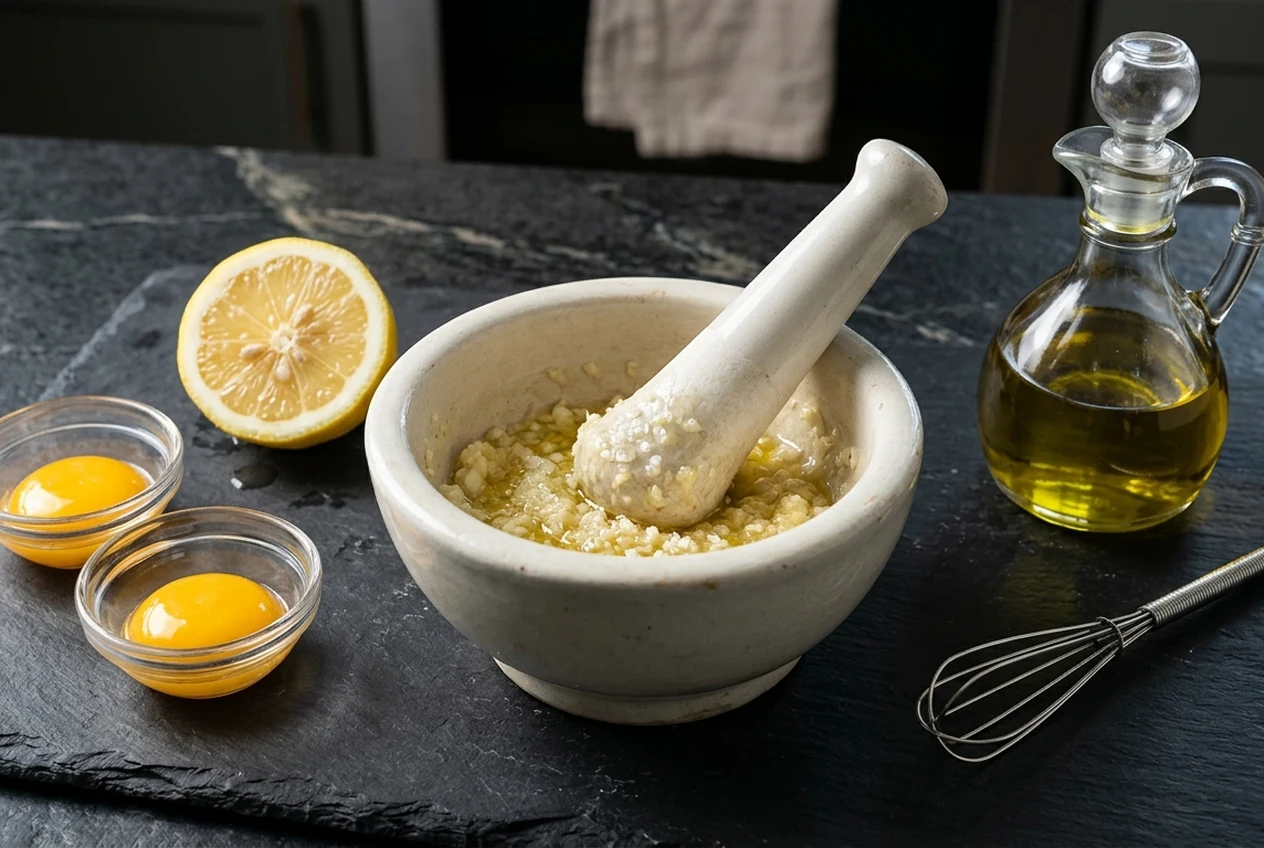
Roughly chopped or grated garlic releases large cellular debris that disrupts droplet dispersion during emulsification. In this Homemade Garlic Aioli Recipe, garlic cloves are mashed with coarse kosher salt using either a heavy mortar and pestle or the flat blade of a chef knife. The abrasive salt crystals shear through tough garlic cell membranes, liberating natural plant juices and allicin while reducing the cloves to a smooth, pasty purée. This micro-fine paste integrates smoothly without causing greasy separation.
2. Room-Temperature Ingredients for Optimal Lecithin Bonding
Cold egg yolks straight from the refrigerator are rigid and slow to bind with room-temperature lipids. For maximum emulsification power, egg yolks and freshly squeezed lemon juice must sit at ambient room temperature (approximately 68 to 72 degrees Fahrenheit / 20 to 22 degrees Celsius) for thirty minutes before whisking. Room-temperature lecithin molecules orient themselves rapidly, wrapping microscopic oil droplets in protective hydration shells that resist separation.
3. The Oil Blend Protocol: Balancing EVOO Fruitiness and Neutral Bitterness
While authentic Catalan allioli relies solely on olive oil, high-speed whisking or blending 100 percent extra virgin olive oil releases bitter polyphenols (specifically oleuropein), leaving an astringent back-of-the-throat burn. This perfected Homemade Garlic Aioli Recipe utilizes a balanced ratio: 60 percent neutral high-smoke-point oil (such as avocado oil or organic grapeseed oil) to build a thick, stable structure, followed by 40 percent premium cold-pressed extra virgin olive oil to infuse robust, peppery Mediterranean flavor without bitterness.
4. The Drop-by-Drop Commencement Technique
The single greatest cause of broken aioli is adding oil too quickly at the start. Until an initial emulsion forms, oil must be drizzled literally drop by drop while whisking vigorously. Once one-third of the oil is successfully emulsified into a pale, mayonnaise-like base, you can safely pour the remaining oil in a steady, thin ribbon. Patience during the first two minutes ensures rock-solid stability.
Essential Ingredients and Culinary Equipment
Because this Homemade Garlic Aioli Recipe relies on minimal raw elements, ingredient quality directly dictates final flavor and texture:
- Fresh Garlic Cloves: 4 to 5 medium cloves. Select firm, heavy heads with tight, dry skins. Avoid sprouted garlic with green centers, which taste unpleasantly bitter and metallic.
- Large Egg Yolks: 2 pasture-raised egg yolks, brought to room temperature. Fresh yolks contain high concentrations of natural emulsifying phospholipids.
- Extra Virgin Olive Oil: 1/2 cup (120 ml) of first cold-pressed, fruity Spanish or Italian olive oil.
- Neutral Oil (Avocado or Grapeseed Oil): 1/2 cup (120 ml). Provides clean fat solids without overwhelming garlic aromatics.
- Fresh Lemon Juice: 1.5 tablespoons of freshly squeezed lemon juice. Citric acid clarifies the emulsion and brightens heavy fats.
- Dijon Mustard (Optional Emulsion Booster): 1/2 teaspoon of smooth French Dijon. While purists skip mustard, its natural mucilage provides an extra safety net against splitting.
- Coarse Kosher Salt: 1/2 teaspoon for cell shearing and seasoning.
- Freshly Ground White or Black Pepper: 1/4 teaspoon for gentle warmth.
Recommended Tools
- Heavy Granite Mortar and Pestle: The traditional and most tactile tool for crushing garlic into a silky paste.
- Medium Glass or Stainless Steel Bowl: Non-reactive materials prevent discoloration from lemon acid.
- Damp Kitchen Towel (The Stabilizer): Form a rolled towel into a ring beneath your bowl so it remains rock-steady while whisking with one hand and pouring oil with the other.
- Balloon Whisk or Immersion Blender: A fine-wire balloon whisk aerates beautifully, while an immersion blender achieves emulsion in under 60 seconds.
Step-by-Step Preparation: Whisk and Blender Methods
Execute this Homemade Garlic Aioli Recipe using whichever culinary technique best suits your kitchen setup:
Method A: The Traditional Hand-Whisked Technique
Step 1: Garlic Paste Foundation
Peel your garlic cloves and roughly slice them. Place the garlic on a cutting board, sprinkle with 1/2 teaspoon of coarse kosher salt, and use the flat side of a chef knife to smash and drag the garlic repeatedly against the board until a glossy, translucent paste forms. Alternatively, pound the garlic and salt in your mortar.
Step 2: Base Emulsion Setup
Set a damp kitchen towel ring on your work surface and place your mixing bowl on top. Add the garlic paste, 2 room-temperature egg yolks, 1 teaspoon of fresh lemon juice, and Dijon mustard. Whisk vigorously for 60 seconds until the mixture turns pale yellow and slightly frothy.
Step 3: The Critical Drop-by-Drop Inception
Combine your neutral oil and extra virgin olive oil in a spouted measuring cup. While whisking constantly and rhythmically with your dominant hand, begin adding the oil blend one single drop at a time with your other hand. Do not rush. Each drop must be fully incorporated into the yolk matrix before the next drop enters.
Step 4: Continuous Stream and Expansion
After incorporating approximately 3 tablespoons of oil, you will notice the sauce suddenly thicken and cling to the whisk wires. At this pivotal moment, increase the oil flow to a thin, steady thread while whisking continuously in wide circular motions until all oil is absorbed.
Step 5: Final Seasoning and Acidic Balancing
Whisk in the remaining lemon juice, freshly ground pepper, and additional salt to taste. The aioli will lighten to a pale ivory-gold color and hold its shape effortlessly on a spoon. Rest at room temperature for 15 minutes before chilling to let garlic flavors bloom.
Method B: The 60-Second Immersion Blender Method
If pressed for time, this Homemade Garlic Aioli Recipe can be executed flawlessly with an immersion stick blender:
- In a tall, narrow blending jar that snugly fits the blender head, add the garlic paste, egg yolks, lemon juice, mustard, salt, and all of the blended oil at once.
- Place the blender head flat against the very bottom of the jar.
- Turn the blender on high speed without moving it for 15 seconds. You will see a dense, white emulsion form at the bottom.
- Slowly tilt and draw the blender head upward over 10 seconds to draw down the remaining surface oil into the whirlpool. A thick, spoonable aioli is ready in under 30 seconds.
Expert Troubleshooting: How to Rescue a Broken or Thin Aioli
Even professional chefs occasionally witness an emulsion break into an unappealing oily puddle. If your Homemade Garlic Aioli Recipe breaks or fails to thicken, do not discard it. Follow these proven restoration protocols:
Fix 1: The Fresh Egg Yolk Reset (For Completely Separated Aioli)
Take a clean mixing bowl, set it on your damp towel ring, and add 1 fresh room-temperature egg yolk along with 1 teaspoon of warm water or lemon juice. Whisk until frothy. Then, treat your broken aioli exactly as if it were pure oil: drizzle the broken mixture drop by drop into the fresh yolk base while whisking vigorously. The new lecithin matrix will absorb the broken oil and re-establish an ultra-thick emulsion instantly.
Fix 2: The Warm Water Trick (For Over-Thick, Greasy Sauces)
If your aioli becomes so dense that it resembles stiff butter and looks oily around the edges, the emulsion is over-saturated with lipid droplets. Whisk in 1 to 2 teaspoons of warm water. The water widens the continuous aqueous phase, restoring a silky, glossy sheen without thinning the body.
Fix 3: Tempering Garlic Harshness
If your garlic is excessively pungent or burns the tongue, stir in 1 teaspoon of honey or pure maple syrup, or whisk in 1 tablespoon of cultured sour cream or Greek yogurt. In future batches, soak minced garlic in lemon juice for 10 minutes before emulsifying to neutralize sharp allicin vapors.
Gourmet Pairings and Culinary Applications
Mastering this versatile Homemade Garlic Aioli Recipe unlocks countless gourmet dining possibilities across international cuisines:
Spanish Patatas Bravas and Tapas
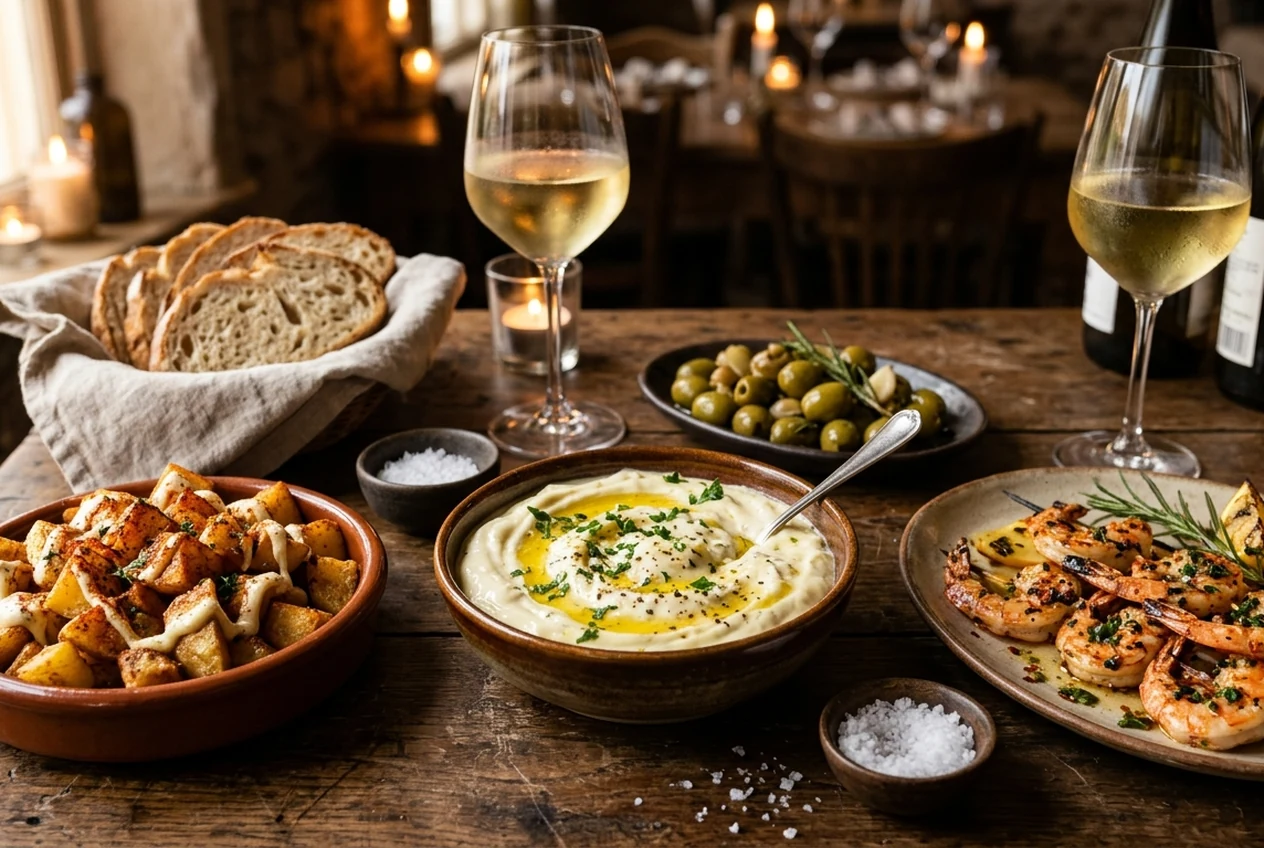
Drizzle generous ribbons of chilled garlic aioli over piping-hot, crispy roasted potato cubes seasoned with smoked paprika and sea salt. The contrast between steaming hot potatoes and cold creamy aioli is legendary.
Seafood and Shellfish
Serve as a luxurious dipping sauce alongside grilled colossal prawns, crispy calamari, pan-seared sea scallops, or golden fish and chips. The garlic-lemon acidity cuts through seafood richness impeccably.
Artisanal Burgers and Sandwiches
Upgrade classic burgers, roast beef baguettes, or grilled vegetable paninis by spreading a generous layer of this Homemade Garlic Aioli Recipe directly onto toasted brioche buns. Its high fat content forms a barrier against tomato moisture, keeping bread crispy.
Roasted Vegetables and French Fries
Pair with roasted asparagus, crispy smashed green beans, artichoke leaves, or hand-cut Belgian frites for an unforgettable bistro-style appetizer.
Storage Protocols and Food Safety Guidelines
Because this authentic Homemade Garlic Aioli Recipe contains raw egg yolks, strict hygiene and temperature controls are essential:
- Refrigeration: Transfer freshly prepared aioli immediately into a sterile glass jar with a tight-sealing lid. Keep refrigerated at or below 40 degrees Fahrenheit (4 degrees Celsius) at all times.
- Shelf Life: Consume within 4 to 5 days. Unlike shelf-stable commercial mayonnaise packed with preservatives, fresh homemade emulsion should not be stored indefinitely.
- Pasteurized Egg Option: For immunocompromised individuals, pregnant women, or elderly family members, utilize commercially pasteurized in-shell eggs. They possess identical emulsifying capability with zero salmonella risk.
- Freezing Proscription: Never freeze aioli. Sub-zero temperatures rupture the water-in-oil emulsion structure, causing total liquefaction and oily separation upon defrosting.
Homemade Garlic Aioli Recipe Card
Print
Homemade Garlic Aioli Recipe
- Total Time: 15 mins
- Yield: 1 cup (approx. 8 servings) 1x 1x
Description
Description
Silky, ultra-thick homemade garlic aioli made with raw egg yolks, fresh garlic paste, extra virgin olive oil, and lemon juice.
Ingredients
- 4 large cloves fresh garlic, peeled
- 1/2 teaspoon fine sea salt
- 2 large fresh egg yolks, room temperature
- 1 tablespoon freshly squeezed lemon juice
- 1/2 cup extra virgin olive oil
- 1/2 cup neutral high-smoke-point oil (avocado or light olive oil)
- 1 teaspoon cold water (if emulsion becomes overly dense)
Instructions
- Crush Garlic into Fine Paste: In a mortar and pestle, mash peeled garlic cloves with 1/2 teaspoon fine sea salt until a smooth, translucent paste forms with no coarse chunks remaining.
- Whisk Base: In a medium mixing bowl, vigorously whisk egg yolks, lemon juice, and the garlic paste together for 60 seconds until slightly pale and frothy.
- Drip-Feed the Emulsion: Begin adding the blended oil drop by drop while whisking constantly and rhythmically without stopping. Once 2 to 3 tablespoons have formed a thick, glossy core emulsion, increase to a thin, steady thread of oil.
- Adjust Consistency and Season: Whisk until all oil is fully incorporated and the aioli forms stiff peaks that hold their shape on a spoon. Whisk in a teaspoon of cold water if the aioli becomes too dense. Taste and adjust with additional lemon juice or sea salt if needed. Chill for 30 minutes before serving.
Notes
Ensure all ingredients (especially eggs and lemon juice) are at room temperature (around 68°F to 72°F / 20°C to 22°C) to facilitate rapid, stable emulsion. Never freeze aioli as freezing breaks the delicate oil-in-water emulsion.
- Prep Time: 15 mins
- Cook Time: 0 mins