Honey Balsamic Chicken Thighs Recipe: 4 Secrets to Crispy Skin and Sticky Glaze
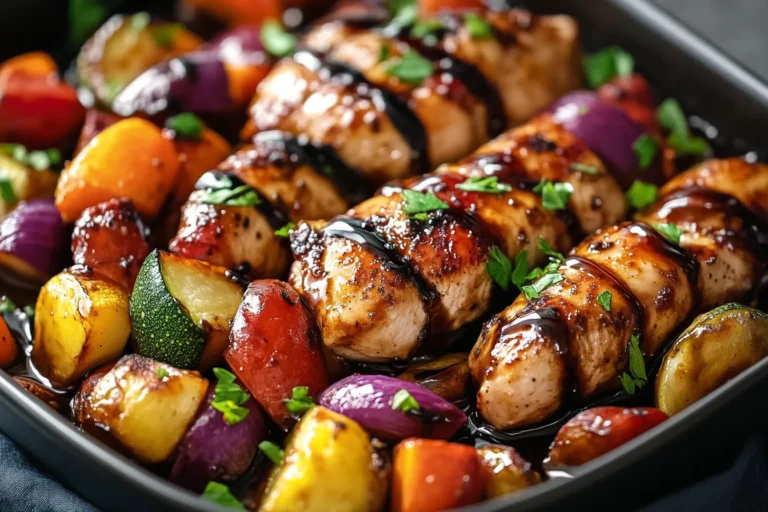
Few skillet dinners command the dining table with such mouthwatering authority as this Honey Balsamic Chicken Thighs Recipe. Evolving directly from our readers’ beloved favorite Delicious Balsamic Chicken Recipe A Power Dish, which captured home kitchens with its comforting roasted depth and sweet caramelized onions, this modern cast iron creation refocuses on the unparalleled juiciness of crispy skin-on chicken thighs. By pairing crackling, deeply rendered poultry skin with a glossy, bubbling reduction of raw wildflower honey, aged Modena balsamic vinegar, whole garlic cloves, and fresh rosemary, this recipe delivers an unforgettable harmony of sweet, tangy, and deeply savory flavors in just thirty minutes.

Table of Contents
The Art of the Sticky Glaze: Why Honey Balsamic Chicken Captivates the Table
In the vast repertoire of skillet poultry cooking, few flavor profiles achieve the irresistible resonance of sweet wildflower honey paired with tangy, aged balsamic vinegar. While chicken breasts demand gentle, vigilant cooking to avoid dryness, chicken thighs represent the dark meat gold standard: naturally marbled with rich intramuscular fat, fortified with collagen-rich connective tissue, and capable of enduring high-heat pan searing without sacrificing succulence. In this Honey Balsamic Chicken Thighs Recipe, bone-in, skin-on thighs are transformed into a restaurant-caliber feast, featuring shatteringly crisp, crackling skin enveloped in a glossy mahogany reduction that balances caramelized natural sugars with bracing acetic acidity.
The culinary brilliance of this preparation rests upon the classic French gastrique principle, where equal measures of sweetness and acidity are reduced together to create a complex, syrupy pan glaze. Honey supplies deep floral sweetness, viscous body, and invert sugars (glucose and fructose) that caramelize beautifully under medium heat. Balsamic vinegar of Modena provides complex fermented notes of dried figs, black cherries, and oak tannins, cutting directly through the natural richness of the poultry fat. When infused with sautéed whole garlic cloves, aromatic rosemary, and a touch of sharp Dijon mustard, the reduction clings tightly to the chicken skin rather than pooling into a watery puddle.
Our culinary development of this recipe builds upon the massive success of our foundational Delicious Balsamic Chicken Recipe A Power Dish. While that slow-roasted Dutch oven preparation focused on whole chicken pieces baked gently alongside caramelized red onions and sweet roasted garlic heads, this skillet and oven-finished thigh recipe is designed for rapid weeknight luxury. By searing the chicken skin directly in a screaming-hot cast iron pan to render sub-cutaneous fat, we achieve an extraordinarily crisp crust that stays crunchy even beneath the sticky, savory glaze.
The Food Science of Crispy Skin: Subcutaneous Fat Rendering and Collagen Breakdown
Achieving truly shatteringly crisp poultry skin while ensuring the underlying dark meat remains fork-tender is a study in thermal physics. Chicken skin consists primarily of water, fat, and a dense structural matrix of type I and type III collagen proteins. If wet chicken skin is placed directly into an oiled skillet, surface water immediately vaporizes into steam, creating an insulating vapor barrier that prevents direct contact between the skin and the skillet floor. Consequently, the skin flabs and boils rather than crisps.
To overcome this challenge, desiccation and gradual fat rendering are paramount. Thoroughly patting the raw chicken thighs dry with paper towels is the initial requirement. Seasoning the meat generously with kosher salt fifteen minutes prior to cooking initiates osmotic fluid release; once the expelled moisture dissolves the salt, the brine is reabsorbed into the muscle, seasoning the meat to the bone while leaving the exterior skin dry. When the thighs are placed skin-side down in a medium-hot cast iron skillet with minimal added fat, the low initial temperature allows subcutaneous fat to liquefy and render out gradually. As the fat melts, it fries the collagen proteins in their own lipid bath, transforming tough connective tissue into a delicate, crispy, golden lattice.
Meanwhile, inside the chicken thigh, the presence of the femur bone acts as a thermal conductor and heat sink, distributing heat evenly throughout the thickest portion of the muscle. Dark meat contains significant amounts of myoglobin and collagen, which only begin converting into luscious, melt-in-your-mouth gelatin at internal temperatures between 165°F and 175°F (74°C to 79°C). Cooking chicken thighs to these higher internal temperatures does not dry them out; rather, the melted collagen coats individual muscle fibers in rich gelatin, delivering extraordinary juiciness that lean breast meat simply cannot match.
| Thigh Cut Type | Bone & Skin Status | Searing Duration (Skin-Down) | Collagen Gelatin Conversion | Crispness Longevity Under Glaze |
|---|---|---|---|---|
| Bone-In, Skin-On Thighs | Whole natural thigh with bone | 8 to 10 Minutes (Low-Medium) | Maximum gelatin release; ultra-juicy | Shatteringly crisp; resists glaze softening |
| Boneless, Skin-On Thighs | Deboned with skin intact | 6 to 7 Minutes (Medium) | High juiciness; cooks faster | Very crisp; requires careful pan monitoring |
| Boneless, Skinless Thighs | Completely trimmed | 4 to 5 Minutes per side | Moderate juiciness; no skin crackling | No crispy crust; glaze adheres directly to meat |
| Bone-In, Skinless Thighs | Bone intact, skin stripped | 5 to 6 Minutes per side | High moisture retention along bone | Soft surface; best suited for slow braising |

Honey Varietals and Vinegar Reduction Chemistry
The glaze is the undisputed crown of this Honey Balsamic Chicken Thighs Recipe. A successful glaze requires understanding the behavior of invert sugars and acetic acid under thermal concentration. Honey is naturally composed of roughly 40 percent fructose, 30 percent glucose, 17 percent water, and complex enzymes. Because fructose has a low caramelization temperature of approximately 230°F (110°C), boiling honey over excessive heat causes it to scorch rapidly, yielding a bitter, acrid flavor. Conversely, gentle simmering promotes Maillard reactions between amino acids in the chicken pan fond and honey sugars, creating intoxicating aromas of toasted nuts, caramel, and baked fruit.
Selecting the proper honey varietal significantly impacts the flavor architecture of the dish. Mild clover honey provides clean, straightforward sweetness without overpowering herbal notes. Raw wildflower honey delivers complex floral undertones that accentuate fresh rosemary and thyme. For deeper, more robust profiles, orange blossom honey introduces subtle citrus notes, while dark buckwheat honey introduces earthy molasses nuances reminiscent of barbecue glazes.
Equally crucial is the balsamic vinegar component. Genuine balsamic vinegar of Modena IGP contains concentrated grape must blended with aged wine vinegar. When reduced over medium-low heat alongside low-sodium chicken bone broth and Dijon mustard, the water content drops from 75 percent to under 35 percent. The mustard plays an unsung chemical role: its natural mucilage acts as a surfactant, emulsifying the rendered chicken pan drippings, melted butter, and honey-balsamic syrup into a stable, glossy pan sauce that clings tenaciously to the crispy chicken skin.
| Honey Varietal | Color & Viscosity | Primary Flavor Notes | Glaze Synergy with Balsamic | Culinary Recommendation |
|---|---|---|---|---|
| Wildflower Honey | Amber, medium viscosity | Floral bouquet, mild fruit, herbal | Flawless balance with aged Modena vinegar | Chef standard choice for pan glazing |
| Clover Honey | Light golden, fluid | Mild, sweet, clean, subtle vanilla | Allows balsamic acidity to dominate cleanly | Excellent for families preferring milder sweetness |
| Orange Blossom Honey | Pale amber, thick | Bright citrus perfume, delicate tartness | Amplifies fruity grape notes in balsamic | Superb when paired with fresh orange zest |
| Buckwheat Honey | Dark molasses, heavy | Malty, earthy, robust, slight bitterness | Creates an intense, savory barbecue-style glaze | Use sparingly or blend 50/50 with clover honey |
The Cast Iron Skillet Advantage: Seamless Stovetop-to-Oven Cooking
While this recipe can be executed in a high-grade tri-ply stainless steel pan, a seasoned 12-inch cast iron skillet is the premier vessel for cooking chicken thighs. Cast iron boasts high volumetric heat capacity, meaning that once the pan is preheated, placing cold raw poultry into it causes virtually zero drop in surface temperature. This steady, intense thermal reservoir accelerates fat rendering and ensures that every square millimeter of the chicken skin achieves uniform mahogany contact.
The two-zone cooking technique employed in this recipe guarantees success. First, the thighs are seared exclusively on the stovetop over medium heat for eight to ten minutes skin-side down, until the skin is deeply browned and paper-thin. Second, the chicken is flipped briefly, the pan is deglazed with garlic, balsamic vinegar, honey, Dijon mustard, and broth, and the entire skillet is transferred to a preheated 400°F (204°C) oven. The surrounding dry convection heat of the oven cooks the thick dark meat to a safe internal temperature of 175°F (79°C) while the bubbling glaze reduces directly beneath the chicken, infusing the underside with savory sweetness while preserving the crispy integrity of the exposed top skin.

Comprehensive Step-by-Step Culinary Blueprint
Executing this Honey Balsamic Chicken Thighs Recipe requires approximately thirty minutes from prep to table. By following this meticulous six-stage culinary blueprint, you will guarantee crackling crispy skin, fork-tender juicy meat, and a mirror-glossy sticky glaze every single time.
Stage 1: Thigh Butchering, Trimming, and Skin Desiccation
Select six bone-in, skin-on chicken thighs (approximately 2 to 2.25 pounds total). Using sharp kitchen shears, trim away any excessive hanging skin flaps or large pockets of yellow fat from the underside of the thighs, ensuring the skin neatly covers the top surface without wrapping excessively underneath. Pat the thighs aggressively dry on both sides with multiple layers of paper towels. Season both sides evenly with one teaspoon of kosher salt, one-half teaspoon of freshly cracked black pepper, one-half teaspoon of garlic powder, and one-fourth teaspoon of smoked paprika. Allow the seasoned thighs to rest on your cutting board at room temperature for ten minutes.
Stage 2: Cold-Pan Initial Searing and Fat Rendering
Place one tablespoon of olive oil in a cold or barely warm 12-inch cast iron skillet. Place the chicken thighs into the skillet skin-side down in a single layer, ensuring they do not touch or crowd each other. Set the burner to medium heat. As the pan gently warms, you will hear a slow, steady sizzle as subcutaneous fat begins to render into the pan floor. Cook undisturbed for eight to ten minutes. Do not move or press down on the thighs; allow the skin to fry in its own rendered fat until it releases freely and displays an even, deep golden-brown, blistered crust.
Stage 3: Flipping and Aromatic Infusion
Preheat your oven to 400°F (204°C). Using stainless steel tongs, carefully flip each chicken thigh skin-side up. The skin should be shatteringly crisp and taut. Cook the underside for two minutes. Tilt the skillet and carefully spoon out all but two tablespoons of rendered chicken fat into a heat-safe bowl (reserve this liquid gold for roasting potatoes). Push the thighs slightly toward the skillet perimeter. Add six peeled whole cloves of fresh garlic and two fresh rosemary sprigs to the center of the pan. Sauté for one minute until the garlic cloves are fragrant and lightly golden.
Stage 4: Whisking the Honey Balsamic Gastrique
In a small bowl, whisk together one-third cup of quality Modena balsamic vinegar, one-fourth cup of pure raw wildflower honey, one-fourth cup of low-sodium chicken bone broth, and one tablespoon of smooth Dijon mustard until homogeneous. Pour the liquid mixture directly into the center of the hot skillet around the chicken thighs, taking care not to pour the sauce directly over the crispy top skin. Bring the liquid to a rapid boil, using a wooden spoon to scrape up all the caramelized browned bits (fond) stuck to the cast iron surface.
Stage 5: Oven Roasting and Glaze Viscosity Concentration
Transfer the uncovered cast iron skillet directly to the middle rack of the preheated 400°F (204°C) oven. Roast for twelve to fifteen minutes. During roasting, the oven heat will concentrate the honey-balsamic liquid into a thick, glossy syrup while the chicken finishes cooking to an internal temperature of 175°F (79°C). The bubbling glaze around the base of the pan will transform into large, glossy bubbles that cling smoothly to the back of a spoon.
Stage 6: Final Pan Basting, Resting, and Presentation
Carefully remove the skillet from the oven using a heavy-duty oven mitt. Place the skillet over low heat on the stovetop for two minutes if the sauce requires any additional thickening. Using a spoon, carefully baste the dark syrup over the sides and underside of each thigh, leaving the top skin exposed to preserve its crackling texture. Remove the skillet from heat and let the chicken rest for five minutes. Scatter fresh rosemary leaves and cracked black pepper across the skillet. Serve the sizzling thighs immediately directly from the cast iron skillet alongside warm garlic mashed potatoes or roasted seasonal vegetables.
Comprehensive Nutritional Analysis and Micronutrient Breakdown
This Honey Balsamic Chicken Thighs Recipe offers a robust, satisfying nutritional architecture rich in bioavailable dark meat protein, essential minerals, and gut-friendly fermented antioxidants. Bone-in chicken thighs supply substantial amounts of dietary zinc, iron, and vitamin B6, which are critical for immune cellular proliferation, metabolic energy transfer, and red blood cell formation.
Raw honey provides natural carbohydrates, oligosaccharides, and polyphenol flavonoids (pinocembrin and chrysin) possessing recognized antimicrobial and anti-inflammatory properties. Balsamic vinegar contains polyphenolic bioflavonoids derived from concentrated grape must, including resveratrol and caffeic acid, which assist in cardiovascular endothelial health. By pairing these natural plant compounds with high-protein poultry, the meal delivers balanced macronutrients and sustained energy without artificial additives.
| Nutrient Metric | Quantity per Serving | Daily Value Percentage (% DV) | Primary Ingredient Contributor |
|---|---|---|---|
| Calories | 420 kcal | 21% | Chicken thighs, honey, rendered fat, olive oil |
| Total Protein | 34 g | 68% | Bone-in chicken thigh dark poultry meat |
| Total Fat | 22 g | 28% | Natural chicken subcutaneous fat, olive oil |
| Saturated Fat | 6 g | 30% | Poultry lipids, rendered pan fat |
| Total Carbohydrates | 18 g | 7% | Wildflower honey, reduced balsamic vinegar |
| Dietary Fiber | 0.5 g | 2% | Fresh garlic cloves, rosemary sprigs |
| Total Sugars | 16 g | N/A | Natural fructose and glucose in honey and grape must |
| Sodium | 540 mg | 23% | Kosher sea salt, Dijon mustard, bone broth |
| Iron | 2.1 mg | 12% | Dark poultry meat, fresh rosemary |
| Zinc | 2.8 mg | 25% | Chicken thigh muscle tissue |
| Vitamin B6 | 0.6 mg | 35% | Poultry meat |
| Potassium | 460 mg | 10% | Chicken meat, balsamic reduction |
Honey Balsamic Skillet Troubleshooting and Pro-Tips
Pan-searing chicken thighs and reducing a honey-based gastrique requires managing pan heat and evaporation rates. Below is a comprehensive diagnostic guide detailing common culinary hurdles encountered when preparing this Honey Balsamic Chicken Thighs Recipe, along with professional culinary solutions.
| Observable Issue | Root Culprit Cause | Immediate Corrective Action | Preventative Golden Rule |
|---|---|---|---|
| Chicken skin turned soggy or rubbery | Glaze was poured directly over the top of the skin, or pan was crowded | Place skillet under oven broiler for 60 seconds | Always spoon glaze around thighs; never cover the top skin |
| Glaze tastes burnt or bitter | Honey was boiled at excessive temperatures; sugars scorched | Whisk in 2 tbsp fresh chicken broth and 1 tsp butter | Simmer glaze over medium-low heat; do not exceed 240°F (115°C) |
| Glaze is too thin and watery | Incomplete reduction or low-grade high-water vinegar used | Simmer on stovetop 2 additional minutes until syrupy | Reduce until bubbles become glossy and slow-moving |
| Meat near the bone remains bloody | Chicken was removed from heat before reaching 175°F (79°C) | Return skillet to 400°F (204°C) oven for 5 minutes | Always verify with instant-read digital meat thermometer |
| Chicken skin tore or stuck to skillet floor | Thighs were flipped prematurely before crust naturally released | Allow pan to cook undisturbed until crust releases freely | Do not move meat during the first 8 minutes of searing |
Pro-Tip for Air Fryer Adaptation: If you prefer an express countertop method, you can execute this recipe in an air fryer. Preheat your air fryer to 380°F (193°C). Place the seasoned chicken thighs skin-side down in the basket and air fry for twelve minutes. Flip skin-side up and air fry for an additional eight to ten minutes until the skin is blistered and internal temperature hits 175°F (79°C). Meanwhile, simmer the balsamic, honey, garlic, mustard, and broth in a small saucepan on the stovetop for six minutes until syrupy. Plate the chicken and spoon the warm reduction around the base.

Sommelier Wine Pairings, Accompaniments, and Regional Variations
To turn this Honey Balsamic Chicken Thighs Recipe into a memorable culinary occasion, deliberate beverage selections and complementary side dishes are essential. Because the glaze offers rich honeyed sweetness intertwined with tart acetic acid and savory chicken fats, it pairs brilliantly with wines possessing bright acidity and moderate tannins.
For red wine pairings, an earthy French Pinot Noir from Burgundy or an Oregon Willamette Valley Pinot Noir offers bright red cherry fruit, subtle forest floor complexities, and vibrant acidity that harmonize effortlessly with rosemary and balsamic glaze. An Italian Chianti Classico (Sangiovese) or a Spanish Rioja Crianza (Tempranillo) also provides the necessary acidity and savory herbal depth to balance the chicken dark meat. For white wine enthusiasts, a rich, dry German Riesling (Trocken) or an aromatic French Viognier provides the weight and stone-fruit character to stand up to the honey reduction.
When selecting dinner accompaniments, choose starch bases that absorb the glossy pan sauce:
- Creamy Garlic Butter Mashed Potatoes: Fluffy Yukon Gold potatoes whipped with butter, cream, and roasted garlic provide the ultimate comforting sponge for the sticky glaze.
- Parmesan Herb Polenta: Soft, slow-cooked corn polenta enriched with aged parmesan and mascarpone cheese mirrors the rustic Italian roots of balsamic vinegar.
- Roasted Brussels Sprouts and Pancetta: Caramelized roasted sprouts tossed with crispy pancetta provide a pleasant bitter-sweet vegetal contrast.
- Warm Crusty Sourdough Bread: Slices of artisanal bread are essential for mopping up every remaining drop of honey-balsamic sauce from the plate.
Creative flavor variations:
- Balsamic Fig Glaze: Whisk two tablespoons of artisanal fig preserves into the balsamic reduction for a decadent autumn variation.
- Spicy Calabrian Chili Kick: Add one teaspoon of minced fermented Calabrian chili paste or crushed red pepper flakes to the garlic for an assertive sweet-and-spicy agrodolce finish.
- Herb Garden Medley: Incorporate fresh sage leaves and fresh marjoram alongside rosemary for a deep autumnal herbal complexity.
- Citrus Balsamic Twist: Grate the zest of one fresh orange into the honey glaze to infuse vibrant citrus essential oils into the sticky mahogany reduction.
Honey Balsamic Chicken Thighs Recipe Card
Print
Honey Balsamic Chicken Thighs Recipe
- Total Time: 30 mins
- Yield: 4 servings (6 thighs) 1x 1x
Description
Description
Master this restaurant-quality Honey Balsamic Chicken Thighs Recipe featuring shatteringly crispy chicken skin, fork-tender dark meat, and a sticky mahogany garlic honey balsamic reduction glaze in just 30 minutes.
Ingredients
- 6 bone-in, skin-on chicken thighs (approx. 2 to 2.25 lbs / 1kg), trimmed of excess fat
- 1 teaspoon kosher sea salt
- 1/2 teaspoon freshly cracked black pepper
- 1/2 teaspoon garlic powder
- 1/4 teaspoon smoked Spanish paprika
- 1 tablespoon extra-virgin olive oil
- 6 whole cloves fresh garlic, peeled
- 2 fresh rosemary sprigs
- 1/3 cup (80ml) quality balsamic vinegar of Modena (IGP)
- 1/4 cup (60ml) pure raw wildflower honey
- 1/4 cup (60ml) low-sodium chicken bone broth
- 1 tablespoon smooth Dijon mustard
- 1 tablespoon unsalted European butter, chilled
- Flaky Maldon sea salt, for finishing
Instructions
- Trim & Desiccate Thighs: Trim away excess hanging skin flaps from chicken thighs. Pat skin completely dry with paper towels. Season both sides with kosher salt, black pepper, garlic powder, and smoked paprika. Rest at room temperature for 10 minutes.
- Render Skin to Crispness: Add 1 tablespoon olive oil to a cold 12-inch cast iron skillet. Place chicken thighs skin-side down in a single layer. Heat skillet over medium. Cook undisturbed for 8 to 10 minutes until fat renders out and skin is deeply golden, blistered, and crisp.
- Flip & Sauté Aromatics: Preheat oven to 400°F (204°C). Flip thighs skin-side up and cook 2 minutes. Spoon out excess chicken fat, leaving 2 tablespoons in pan. Push thighs to pan edges; add whole garlic cloves and rosemary sprigs to center. Sauté 1 minute until fragrant.
- Whisk & Add Glaze: In a bowl, whisk together balsamic vinegar, wildflower honey, chicken broth, and Dijon mustard. Pour liquid around chicken thighs into skillet center, avoiding the crispy top skin. Bring to a rapid bubble, scraping up browned fond.
- Roast to Viscous Perfection: Transfer skillet uncovered to 400°F (204°C) oven. Roast for 12 to 15 minutes until internal chicken temperature reaches 175°F (79°C) and sauce reduces to a thick, glossy mahogany glaze.
- Baste & Serve: Remove skillet from oven. Swirl in chilled butter off-heat to give glaze an artisanal shine. Spoon glaze around thighs, garnish with fresh rosemary and flaky sea salt, and serve hot from the skillet.
Notes
Always start chicken thighs skin-side down in a cold or barely warm skillet to allow subcutaneous fat to render slowly. Never pour the glaze directly over the crispy top skin during cooking; spooning it around the thighs preserves their crackling crunch.
- Prep Time: 10 mins
- Cook Time: 20 mins
Frequently Asked Questions About Honey Balsamic Chicken Thighs Recipe
Can I make this Honey Balsamic Chicken Thighs Recipe with boneless skinless chicken thighs?
Yes. Boneless skinless chicken thighs cook even faster, requiring only 5 to 6 minutes per side in the skillet over medium heat. While you will miss out on the crackling crispy skin, the dark meat absorbs the sticky honey-balsamic glaze exceptionally well, yielding ultra-tender and saucy chicken.
Why should I cook chicken thighs to 175°F (79°C) instead of 165°F (74°C)?
Unlike lean chicken breasts, which dry out when cooked past 165°F (74°C), chicken thighs are rich in intramuscular connective tissue and collagen. Cooking thighs to 175°F to 180°F (79°C to 82°C) allows this collagen to fully melt into succulent gelatin, making the dark meat dramatically more tender and juicy.
How do I keep the chicken skin crispy when coating it in glaze?
The secret is selective glazing. During cooking and oven roasting, pour and spoon the honey-balsamic reduction strictly around the base and sides of the thighs, leaving the top blistered skin completely exposed to dry oven convection heat. Baste lightly only around the meat fibers right before serving.
Can I make this recipe in a slow cooker or Crockpot?
Yes. To prepare in a slow cooker, sear the seasoned chicken thighs in a skillet for 5 minutes skin-side down to render fat, then transfer to your slow cooker. Whisk the balsamic vinegar, honey, garlic, mustard, and broth, and pour over the thighs. Cook on LOW for 4 to 5 hours. Broil on a baking sheet for 3 minutes before serving to re-crisp the skin.
How long can I store leftover honey balsamic chicken thighs?
Store cooled chicken thighs in an airtight glass container in the refrigerator for up to 4 days. To reheat while restoring crispy skin, place thighs on a foil-lined baking sheet in a preheated 375°F (190°C) oven for 10 to 12 minutes until sizzling hot. Avoid microwave reheating, which softens the skin.
For more extraordinary poultry and culinary inspiration, explore our parent champion Delicious Balsamic Chicken Recipe A Power Dish, our skillet Caprese Balsamic Glazed Chicken Recipe, and our tender Garlic Herb Butter Lamb Chops Recipe. For official poultry food safety temperatures, consult the USDA Food Safety and Inspection Service Poultry Temperature Guide and discover authentic balsamic aging methods at the Consortium for the Protection of Balsamic Vinegar of Modena.
If you want more chicken recipes, Explore now
Follow us on Facebook and Pinterest for cooking tips, delicious recipes, and more ideas.