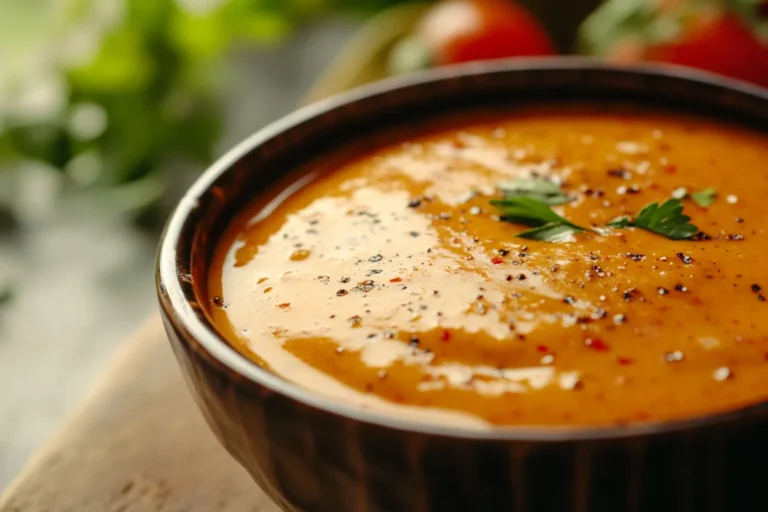
Creamy Lobster Bisque Risotto Recipe: 4 Secrets to Restaurant-Quality Seafood Elegance
Few dishes rival the transcendent luxury and culinary sophistication of this Creamy Lobster Bisque Risotto Recipe. Born from the tremendous culinary passion inspired by our popular Creamy Trader Joe’s Lobster Bisque Pasta Recipe: Gourmet 20-Minute Meal, this artisanal Italian creation reimagines those velvety, sweet roasted lobster notes through the revered Northern Italian method of risotto cookery. By marrying Italian Carnaroli superfino rice with a warm, concentrated lobster bisque reduction, ice-cold European butter, and tender butter-poached cold-water lobster medallions, this dish achieves an undulating, velvety wave texture (all’onda) that rivals the finest Michelin-starred dining rooms of the Venetian coast.
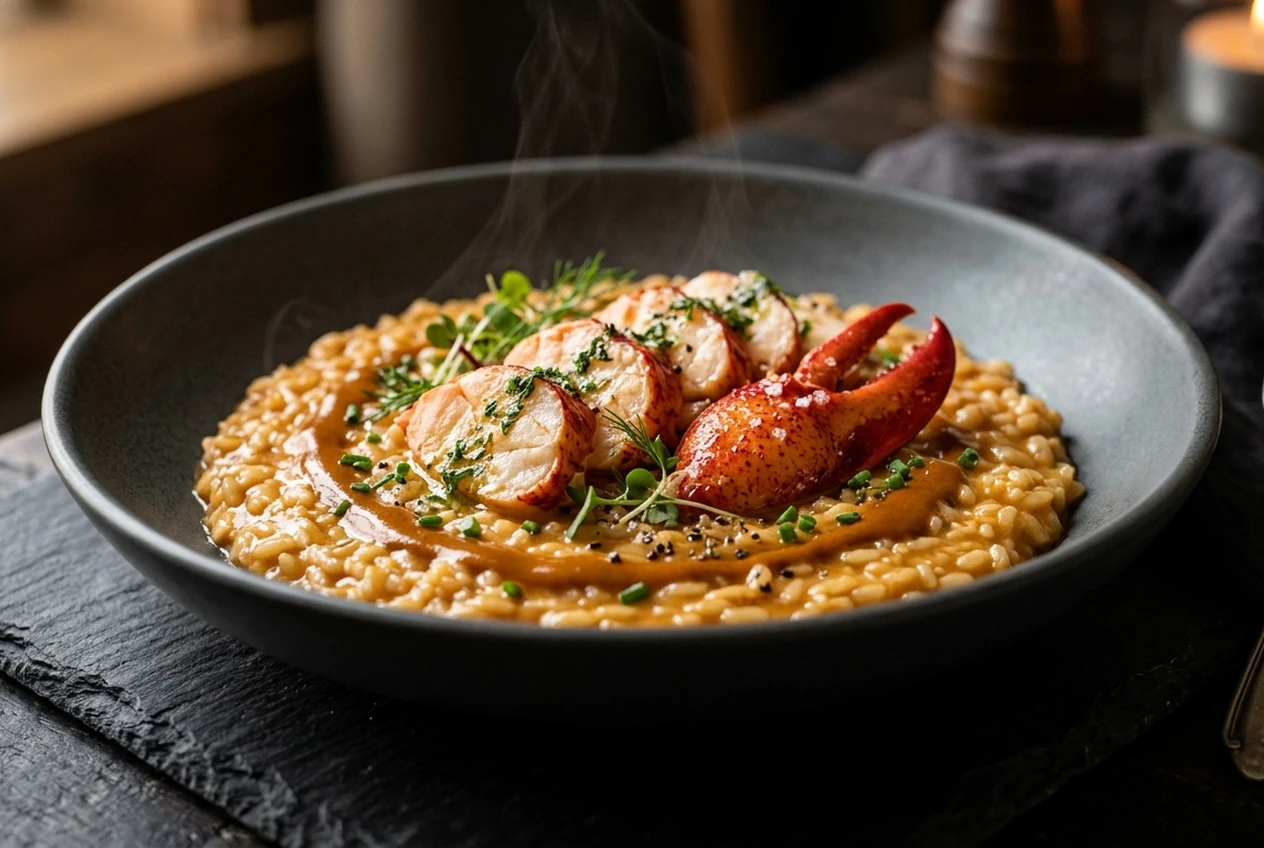
Table of Contents
The Art of Venetian Seafood Risotto: Mastering the All’Onda Wave
Few dishes command the respect of master chefs quite like an impeccably executed seafood risotto. Emerging from the rich culinary traditions of Northern Italy and the Venetian lagoon, risotto is not merely a recipe but a meditative cooking method that demands patience, precision, and an intimate understanding of rice starch chemistry. In this Creamy Lobster Bisque Risotto Recipe, classic Italian craftsmanship converges with French haute cuisine. By substituting standard seafood broth with a velvety, concentrated lobster bisque reduction, each grain of Italian short-grain rice absorbs intense coastal sweetness, toasted shell essence, and aromatic aromatics, yielding a dish fit for the world’s finest coastal dining rooms.
The pinnacle of risotto craftsmanship is achieving the texture known throughout Italy as all’onda, literally translating to ‘like a wave’. When the serving bowl is gently shaken, the risotto should neither pool into a watery soup nor stand stiffly like porridge; instead, it should flow across the plate in a slow, undulating ripple. This coveted emulsion is created through the gradual liberation of surface amylose starches from the rice kernels, which bind seamlessly with warm lobster bisque, dry white wine, melted European butter, and finely grated Parmigiano Reggiano. Crowned with succulent medallions of cold-water lobster tail gently poached in sweet cream butter, this recipe represents the ultimate union of comfort and culinary luxury.
Our inspiration for this masterpiece follows the beloved success of our celebrated Creamy Trader Joe’s Lobster Bisque Pasta Recipe: Gourmet 20-Minute Meal, which proved how magnificently a rich bisque reduction elevates weeknight dining. While that pasta dish focused on speed and simplicity with al dente fettuccine, this risotto invites home cooks to slow down and practice the timeless craft of grain agitation, producing a depth of flavor and velvety mouthfeel that cannot be replicated by any other cooking technique.
The Food Science of Risotto Rice: Amylose, Amylopectin, and Starch Release
Mastering this Creamy Lobster Bisque Risotto Recipe requires understanding the botanical architecture of Italian risotto rice varieties. Unlike long-grain rice (such as Basmati or Jasmine), which is prized for remaining dry and distinct, Italian superfino rice cultivars are chosen specifically for their high starch density and dual-starch composition.
Rice starch consists of two distinct polysaccharides: amylose and amylopectin. Amylose forms straight, tightly packed molecular chains that resist heat and water absorption, ensuring that the central core of each grain remains pleasantly firm to the tooth (al dente). Amylopectin, on the other hand, consists of branched molecular clusters on the outer surface of the grain that swell and dissolve rapidly in hot simmering liquid. As the rice is toasted in hot butter and agitated with a wooden spoon, these outer amylopectin starches abrade into the simmering broth, creating the luxurious, creamy suspension that defines world-class risotto.
Among the classic Italian cultivars, Carnaroli is universally hailed as the ‘King of Rice’ by Italian chefs. It possesses a higher amylose content and firmer grain structure than common Arborio, making it virtually impervious to overcooking and grain rupture. While Arborio is widely available and delivers excellent initial creaminess, its lower amylose threshold means it can turn gummy if over-stirred. Vialone Nano, grown in the Veneto plains, is smaller and rounder, capable of absorbing more than twice its weight in liquid, making it another superb choice for delicate seafood risottos.
| Rice Cultivar | Kernel Size & Shape | Amylose Content | Creaminess Index | Resistance to Overcooking |
|---|---|---|---|---|
| Carnaroli Superfino | Medium-long, slender oval | High (24% to 25%) | Exceptional velvety flow; perfect suspension | Maximum; maintains firm al dente core |
| Arborio Superfino | Large, plump, rounded pearly | Moderate (19% to 21%) | Rapid, thick initial starch release | Moderate; prone to mushiness if overcooked |
| Vialone Nano | Small, compact, semi-tondo | High (23% to 24%) | Light, wave-like creaminess | High; ideal for traditional Venetian seafood |
| Baldo / Roma | Medium, elongated | Low to Moderate (18% to 20%) | Moderate creaminess | Low; best for baked casseroles or arancini |
The Bisque Infusion and Butter-Poaching Science (Beurre Monté)
The soul of this dish lies in the cooking liquid. Rather than relying on simple fish stock or water, this Creamy Lobster Bisque Risotto Recipe employs a two-tier liquid system: rich lobster bisque blended with gentle seafood or chicken bone broth. High-end lobster bisque contains caramelized tomato paste, aromatic mirepoix (onions, carrots, celery), dry white wine, cognac, heavy cream, and concentrated roasted lobster shell essence. Because full-strength bisque is dense with dairy fat and sodium, cooking the rice solely in pure bisque would scorch on the bottom of the pan and yield an overwhelmingly heavy risotto. By diluting the bisque 50/50 with light seafood stock and maintaining it at a gentle simmer in a dedicated saucepan, the rice absorbs delicate coastal flavor gradually with zero scorching.
Equally critical is the treatment of the lobster meat itself. Lobster muscle tissue is composed of delicate protein strands that seize and turn rubbery if boiled or overcooked. Simmering raw lobster meat directly inside the risotto pot for twenty minutes would completely destroy its tender sweetness. Instead, the lobster tails and claws are cooked separately using the classic French technique of beurre monté, or butter poaching.
Beurre monté is an emulsion of melted butter and water held at a gentle temperature between 160°F and 180°F (71°C to 82°C). At this precise temperature, butter fats remain suspended without breaking into clarified butter oil and milk solids. Poaching raw lobster meat in this warm butter bath gently cooks the proteins without reaching the boiling point, ensuring the flesh remains extraordinarily tender, plump, and infused with luxurious dairy sweetness. The lobster is gently sliced into medallions and arranged atop the finished risotto along with a drizzle of the fragrant poaching butter right before serving.
| Deglazing & Liquid Component | Alcohol / Liquid Type | Primary Acidity & Flavor Profile | Impact on Rice Starch | Culinary Role |
|---|---|---|---|---|
| Dry Italian Pinot Grigio | Crisp, unoaked white wine | Bright malic and tartaric acidity | Dissolves fond; prevents grain collapse | Essential initial deglazing after toasting |
| French Cognac or Brandy | Distilled grape spirit | Warm oak, dried fruit, caramel notes | Deepens bisque flavor complexity | Optional splash during shallot sautéing |
| Diluted Lobster Bisque | 50/50 Bisque and light stock | Sweet lobster, roasted shell, cream | Primary absorption liquid for starch swelling | Added gradually in warm ladle increments |
| Beurre Monté Butter Bath | Emulsified butter and water | Rich, sweet dairy creaminess | Coats poached lobster; finishes risotto | Gentle poaching medium for delicate seafood |
The Mantecatura Ritual: Cold Butter and Parmigiano Emulsification
The ultimate transformation of risotto occurs during the final ninety seconds, in a sacred culinary technique the Italians call mantecatura (derived from the Spanish word manteca, meaning butter). Once the rice reaches perfect al dente tenderness and is removed completely from the heat, the starch-rich liquid surrounding the grains is ready to be emulsified into a glossy, velvety glaze.
The secret to perfect mantecatura is using ice-cold unsalted European butter and finely grated, aged Parmigiano Reggiano. When cold butter is vigorously beaten into the hot risotto with a wooden spoon, the rapid temperature differential prevents the butter fat from separating into a greasy film. Instead, the milk solids and butter fats homogenize with the liberated rice starches and warm lobster bisque, creating a mirror-gloss emulsion of extraordinary lightness and richness.
While traditional purists occasionally argue against pairing cheese with seafood, aged Parmigiano Reggiano (aged 24 to 36 months) contains extraordinary concentrations of natural glutamic acid (umami). In small, measured quantities, this savory umami boosts the natural sweetness of lobster meat without overpowering its delicate coastal nuance. A final squeeze of fresh lemon juice adds essential citric acidity, brightening the rich dairy fats and cutting cleanly across the palate.

Comprehensive Step-by-Step Culinary Blueprint
Executing this Creamy Lobster Bisque Risotto Recipe requires approximately thirty-five minutes of attentive culinary focus. By adhering strictly to this six-stage culinary blueprint, you will guarantee individual al dente rice grains, an undulating all’onda wave consistency, and fork-tender butter-poached lobster in every bite.
Stage 1: Simmering the Lobster Bisque Infusion Broth
In a medium saucepan, combine two cups of quality prepared lobster bisque (such as Trader Joe’s or fresh seafood market bisque) with two cups of low-sodium seafood stock or chicken bone broth. Place over medium heat until gently simmering, then reduce heat to the lowest setting to maintain a steady, barely simmering temperature of 180°F to 190°F (82°C to 88°C). Keeping the cooking liquid hot is mandatory; adding cold broth to hot rice lowers the cooking temperature and halts the starch release process.
Stage 2: Butter-Poaching the Cold-Water Lobster Tails
Using sharp kitchen shears, cut down the center of the top shell of two raw cold-water lobster tails (approx. 4 to 5 ounces each) and gently pull the meat free from the shell. Cut the lobster meat into bite-sized half-inch medallions. In a small skillet, heat two tablespoons of water over medium heat until steaming, then whisk in four tablespoons of cold unsalted European butter, one tablespoon at a time, until an opaque, emulsified sauce (beurre monté) forms. Add the lobster medallions, reduce heat to low, and poach gently for four to five minutes until the meat is opaque, sweet, and tender. Remove from heat and set aside in the warm butter bath.
Stage 3: Soffritto Sauté and Tostatura (Rice Grain Toasting)
In a large 12-inch heavy-bottomed stainless steel pan or enamelled cast iron Dutch oven, melt two tablespoons of unsalted European butter with one tablespoon of extra virgin olive oil over medium heat. Add two finely minced French shallots and two cloves of minced garlic. Sauté for three minutes until soft and translucent, taking care not to brown the alliums. Add one and a half cups of Italian Carnaroli or Arborio rice. Stir continuously for two to three minutes in a process known as tostatura. The rice grains will become translucent around the edges with a chalky white center, emitting a delightful aroma of toasted hazelnuts.
Stage 4: White Wine Deglazing and Gradual Bisque Absorption
Pour one-half cup of dry white wine (such as Pinot Grigio or Sauvignon Blanc) directly into the hot rice. The pan will hiss violently as the wine vaporizes. Stir vigorously with a wooden spoon or heat-resistant spatula, scraping up any fond until the wine is almost completely absorbed by the rice. Begin adding the hot lobster bisque broth one ladle (approximately one-half cup) at a time, stirring steadily. Allow each ladle of broth to be nearly absorbed before adding the next. Maintain a steady, gentle simmer where small bubbles actively break across the surface.
Stage 5: Starch Agitation and Achieving Al Dente Tenderness
Continue this ladle-and-stir process for eighteen to twenty-two minutes. Agitate the rice regularly with gentle, sweeping figure-eight motions; this friction rubs outer starches from the grains into the liquid, building the luscious cream sauce. Taste a few grains at the eighteen-minute mark. The rice should be creamy and tender on the exterior while retaining a firm, toothsome center with no chalky graininess. The consistency should be loose and fluid (all’onda). Remove the pan completely from the burner.
Stage 6: The Mantecatura Emulsion, Assembly, and Fine Dining Service
Immediately add two tablespoons of ice-cold unsalted butter, one-half cup of freshly grated Parmigiano Reggiano, and one teaspoon of fresh lemon juice to the off-heat risotto. Vigorously beat the ingredients into the rice for sixty seconds until the sauce transforms into a glossy, velvety sheen. Spoon the creamy risotto into warm, shallow ceramic bowls. Generously crown each bowl with the warm butter-poached lobster medallions, spooning a teaspoon of the poaching butter over top. Garnish with finely sliced fresh chives, freshly cracked black pepper, and delicate sea salt flakes. Serve immediately while undulating and steaming hot.
Comprehensive Nutritional Analysis and Micronutrient Breakdown
This Creamy Lobster Bisque Risotto Recipe provides a balanced culinary experience combining energy-sustaining complex carbohydrates, lean marine protein, and essential dietary minerals. Cold-water lobster meat is celebrated as one of the purest sources of lean protein available, naturally free of saturated fats while delivering robust quantities of copper, selenium, zinc, and vitamin B12.
Arborio and Carnaroli rice grains offer slow-burning complex starches that replenish muscle glycogen without the rapid glycemic swings associated with simple sugars. The addition of quality dairy fats from European cultured butter and Parmigiano Reggiano aids in the metabolic absorption of fat-soluble vitamins while providing bioavailable dietary calcium and phosphorus for skeletal health.
| Nutrient Metric | Quantity per Serving | Daily Value Percentage (% DV) | Primary Ingredient Contributor |
|---|---|---|---|
| Calories | 485 kcal | 24% | Carnaroli rice, lobster bisque, European butter |
| Total Protein | 26 g | 52% | Cold-water lobster tail meat, Parmigiano Reggiano |
| Total Fat | 19 g | 24% | Unsalted butter, lobster bisque dairy cream |
| Saturated Fat | 11 g | 55% | European cultured butter, heavy cream in bisque |
| Total Carbohydrates | 52 g | 19% | Italian Carnaroli superfino rice |
| Dietary Fiber | 1.5 g | 5% | Arborio rice grain, French shallots |
| Total Sugars | 3 g | N/A | Sweet lobster meat, tomato reduction in bisque |
| Sodium | 680 mg | 30% | Seafood stock, lobster bisque, Parmigiano Reggiano |
| Calcium | 210 mg | 21% | Parmigiano Reggiano cheese, dairy cream |
| Iron | 2.2 mg | 12% | Superfino rice grains, wild lobster |
| Selenium | 54 mcg | 98% | Cold-water lobster tail meat |
| Copper | 1.4 mg | 155% | Wild cold-water lobster meat |
Seafood Risotto Troubleshooting and Pro-Tips
Cooking authentic risotto is an exact culinary craft where timing and heat control dictate success. Below is a comprehensive diagnostic guide detailing common stumbling blocks encountered when making this Creamy Lobster Bisque Risotto Recipe, along with professional chef remedies.
| Observable Issue | Root Culprit Cause | Immediate Corrective Action | Preventative Golden Rule |
|---|---|---|---|
| Risotto is thick, stiff, and gluey | Overcooked beyond al dente, or broth added too slowly | Stir in 3 to 4 tbsp hot seafood broth off-heat | Stop cooking when rice still has bite; maintain all’onda flow |
| Lobster meat is tough and rubbery | Lobster was boiled or simmered inside the risotto pot | Baste meat in warm melted butter immediately | Poach lobster separately in 170°F (77°C) butter bath |
| Rice core is chalky and crunchy | Broth was too cold, or heat was excessively high | Add 1/2 cup hot stock, cover pan with lid 3 minutes | Always keep simmering broth at 185°F (85°C) in saucepan |
| Greasy oil slick pooling on surface | Warm melted butter used during mantecatura instead of cold | Whisk in 1 tbsp hot stock vigorously to re-emulsify | Always use ice-cold butter for mantecatura off-heat |
| Rice scorched on bottom of pan | Undiluted bisque used or burner heat was too intense | Transfer top unburned rice to clean pan; do not scrape bottom | Dilute bisque 50/50 with broth and maintain medium-low simmer |
Pro-Tip for Preparing Lobster Stock from Shells: If you purchase whole lobster tails with shells intact, never discard the shells. Place the raw shells into a small saucepan with one tablespoon of olive oil, one smashed garlic clove, and a sprig of fresh thyme. Sauté over medium-high heat for three minutes until the shells turn bright orange-red and release an intoxicating sweet seafood perfume. Pour your chicken or seafood broth into the shells and simmer for fifteen minutes before straining. Using this fortified shell broth to dilute your lobster bisque will impart astonishing Michelin-star depth to your risotto.

Sommelier Wine Pairings, Accompaniments, and Creative Variations
To turn this Creamy Lobster Bisque Risotto Recipe into a show-stopping dining experience, curated wine pairings and elegant accompaniments are essential. Because the dish is rich with cultured butter, Parmigiano Reggiano, and sweet lobster meat, it demands wines with vibrant acidity, mineral tension, and delicate fruit structure.
The premier wine pairing is a vintage French Champagne (Brut or Blanc de Blancs). The fine, effervescent bubbles and crisp brioche acidity cleanse the palate between rich bites of risotto, resetting the taste buds to experience the sweet lobster afresh. For still white wines, an elegant, lightly oaked French Chardonnay from Meursault or Chablis Premier Cru offers hazelnut complexities and stone-fruit richness that mirror the butter-poached lobster. For Italian wine enthusiasts, a crisp, mineral-forward Vermentino di Sardegna or a volcanic Etna Bianco from Sicily provides exhilarating coastal salinity.
When selecting table accompaniments, keep side dishes light, crisp, and refreshing:
- Shaved Fennel and Citrus Salad: Shaved raw fennel bulb tossed with blood orange segments, baby arugula, and lemon-tarragon vinaigrette provides a crisp, anise-scented palate cleanser.
- Artisanal Sourdough Ciabatta: Warm, crusty bread with coarse sea salt butter is perfect for capturing every trace of velvety bisque sauce.
- Roasted Asparagus with Meyer Lemon Zest: Tender green asparagus spears roasted in olive oil and finished with lemon zest add vibrant garden color to the plate.
- Seared Diver Scallops Garnish: For an ultra-luxurious multi-seafood feast, sear two jumbo diver scallops in butter and place them alongside the lobster medallions atop the risotto.
Creative flavor variations:
- Saffron Infused Lobster Risotto: Steep a pinch of Spanish saffron threads in the warm white wine before deglazing, imparting an exotic floral aroma and brilliant golden-yellow hue.
- Tarragon Lobster Reduction: Whisk two tablespoons of finely minced fresh French tarragon into the mantecatura butter, introducing a subtle anise sweetness that pairs magnificently with shellfish.
- Smoked Paprika and Mascarpone Twist: Replace half the mantecatura butter with two tablespoons of Italian mascarpone cheese and a pinch of sweet Spanish paprika for an even silkier, pastel-orange finish.
Creamy Lobster Bisque Risotto Recipe Card
Print
Creamy Lobster Bisque Risotto Recipe
- Total Time: 35 mins
- Yield: 4 servings 1x 1x
Description
Description
Master restaurant-quality Italian seafood elegance with this Creamy Lobster Bisque Risotto Recipe featuring al dente Carnaroli rice simmered in rich lobster bisque reduction, butter-poached cold-water lobster medallions, and Parmigiano Reggiano in just 35 minutes.
Ingredients
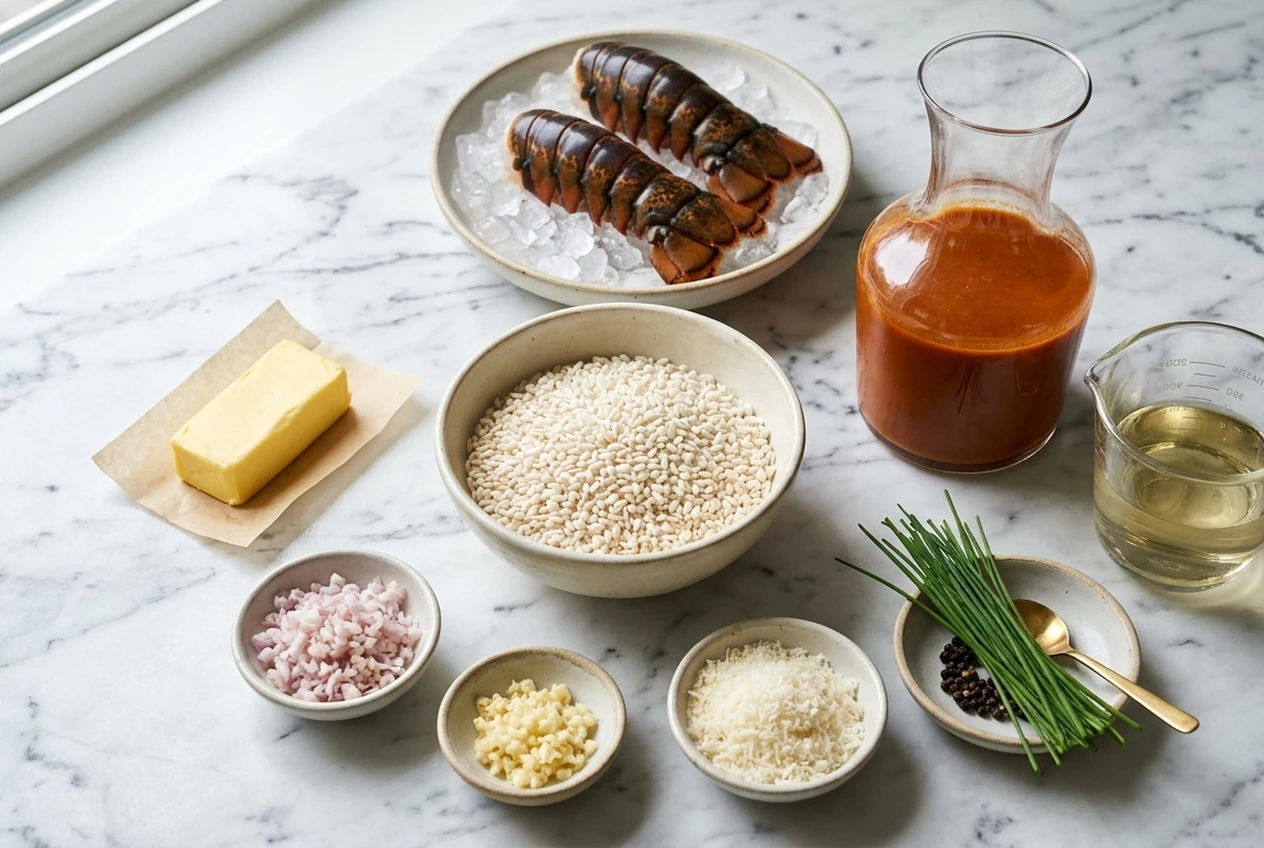
- 1 1/2 cups (300g) Italian Carnaroli or Arborio superfino rice
- 2 raw cold-water lobster tails (approx. 4 to 5 oz / 130g each), shelled and cut into medallions
- 2 cups (480ml) rich prepared lobster bisque (Trader Joe’s or fresh seafood market)
- 2 cups (480ml) low-sodium seafood stock or chicken bone broth
- 1/2 cup (120ml) dry white wine (Pinot Grigio or Sauvignon Blanc)
- 2 medium French shallots, finely minced
- 2 cloves fresh garlic, finely minced
- 6 tablespoons (90g) unsalted European cultured butter, divided (2 tbsp for cooking, 4 tbsp cold for poaching/mantecatura)
- 1 tablespoon extra-virgin olive oil
- 1/2 cup (50g) freshly grated Parmigiano Reggiano cheese
- 1 teaspoon fresh lemon juice
- 2 tablespoons fresh green chives, finely chopped
- Flaky Maldon sea salt and freshly cracked black pepper, to taste
Instructions
- Simmer Bisque Infusion Broth: In a saucepan, whisk together lobster bisque and seafood stock. Bring to a gentle simmer over medium heat, then reduce to lowest heat to maintain 185°F (85°C).
- Butter-Poach Lobster: Heat 2 tablespoons water in a small pan, whisk in 4 tablespoons cold butter one tablespoon at a time to form an emulsion (beurre monté). Add lobster medallions and poach on low for 4 to 5 minutes until tender and opaque. Remove from heat; keep warm.
- Soffritto & Tostatura: Heat 2 tablespoons butter and 1 tablespoon olive oil in a wide heavy-bottomed Dutch oven or pan over medium. Sauté minced shallots and garlic for 3 minutes until translucent. Add Carnaroli rice; toast stirring continuously for 2 minutes until translucent around edges.
- Deglaze & Gradual Absorption: Pour in dry white wine; stir vigorously until nearly absorbed. Begin ladling hot bisque broth one ladle at a time, stirring steadily. Allow each ladle to be absorbed before adding the next.
- Cook to Al Dente (All’Onda): Continue ladling and stirring for 18 to 22 minutes until rice is tender with a firm toothsome core and a creamy undulating wave (all’onda). Remove from heat immediately.
- Mantecatura & Presentation: Vigorously beat in 2 tablespoons ice-cold butter, Parmigiano Reggiano, and lemon juice for 60 seconds until glossy. Spoon into shallow bowls, crown with warm butter-poached lobster, drizzle poaching butter, and garnish with fresh chives and black pepper.
Notes
Always keep the diluted lobster bisque simmering hot in a separate saucepan; adding cold broth to hot rice halts starch release and makes grains gummy. Using Carnaroli rice provides superior al dente texture that resists overcooking compared to standard Arborio.
- Prep Time: 10 mins
- Cook Time: 25 mins
Frequently Asked Questions About Creamy Lobster Bisque Risotto Recipe
Can I make this Creamy Lobster Bisque Risotto Recipe ahead of time?
Traditional Italian risotto is best enjoyed the exact moment it finishes mantecatura, as the starches begin to set and thicken upon resting. However, for dinner parties, you can par-cook the risotto up to 2 hours in advance: cook the rice for 12 minutes until half-absorbed, spread it onto a baking sheet to stop the cooking, and finish with the remaining hot bisque and butter right before serving.
What is the difference between Carnaroli and Arborio rice for lobster risotto?
Carnaroli is known as the ‘King of Rice’ because it has a higher amylose starch content, allowing it to produce an extraordinarily creamy emulsion while keeping a firm, toothsome al dente center that never turns mushy. Arborio is wider and plumper, releasing starch quickly, but requires vigilant stirring to prevent it from becoming overly soft.
Can I use pre-cooked lobster meat instead of raw lobster tails?
Yes. If using pre-cooked steamed lobster meat or claw meat, simply warm it gently in melted European butter over low heat for 60 to 90 seconds right before serving. Do not simmer pre-cooked lobster in the risotto pot, as double-cooking will make the delicate seafood rubbery.
Why is it necessary to dilute the lobster bisque with stock?
Prepared lobster bisque is dense with heavy cream, tomato puree, and sodium. If used at full strength to cook the raw rice, the dairy solids would scorch on the bottom of the pan and the liquid would evaporate too quickly before the rice grains could fully swell. Diluting 50/50 with light seafood stock ensures steady, even starch gelatinization.
How do I achieve the famous all’onda (wave-like) texture?
To achieve all’onda, stop adding broth when the rice is tender to the bite but still surrounded by a loose, fluid sauce. Removing the pan from the burner and vigorously beating in ice-cold butter and Parmigiano Reggiano creates a glossy emulsion that flows gently across the plate when tilted.
For more extraordinary seafood dining inspiration, explore our parent champion Creamy Trader Joe’s Lobster Bisque Pasta Recipe: Gourmet 20-Minute Meal, our indulgent Creamy Lobster Bisque Mac and Cheese Recipe, and our decadent Maryland Crab Imperial Recipe. For official seafood nutritional standards, consult the USDA FoodData Central Seafood Database and discover authentic Italian risotto traditions through the Italian Rice Milling Guild & Risotto Academy.
If you want more seafood recipes, Explore now
Follow us on Facebook and Pinterest for cooking tips, delicious recipes, and more ideas.