Creamy Lobster Bisque Linguine Recipe: 4 Gourmet Secrets to Silky Decadent Coastal Pasta Luxury
When craving the sublime grandeur of a five-star coastal dining experience without spending hours in front of the stove, this master creamy lobster bisque linguine recipe stands in a class of its own. Long ribbons of al dente bronze-cut linguine are tossed in a velvety, coral-hued reduction of concentrated lobster bisque, rich heavy cream, sweet shallots, and crisp white wine. Crowned with tender, buttery medallions of sweet lobster tail and knuckle meat, this dish transforms a modest twenty-five-minute dinner into an opulent seafood gala.
Drawing inspiration from our beloved Creamy Trader Joe’s Lobster Bisque Pasta Recipe, alongside reader favorites like our Creamy Lobster Bisque Rigatoni Recipe and Creamy Lobster Bisque Cavatappi Recipe, this recipe perfects the flat, silky profile of linguine. The broad surface area of linguine acts as the perfect vehicle for holding glossy bisque emulsions, ensuring every single mouthful delivers rich shellfish sweetness, balanced acidity, and aromatic fresh herbs.
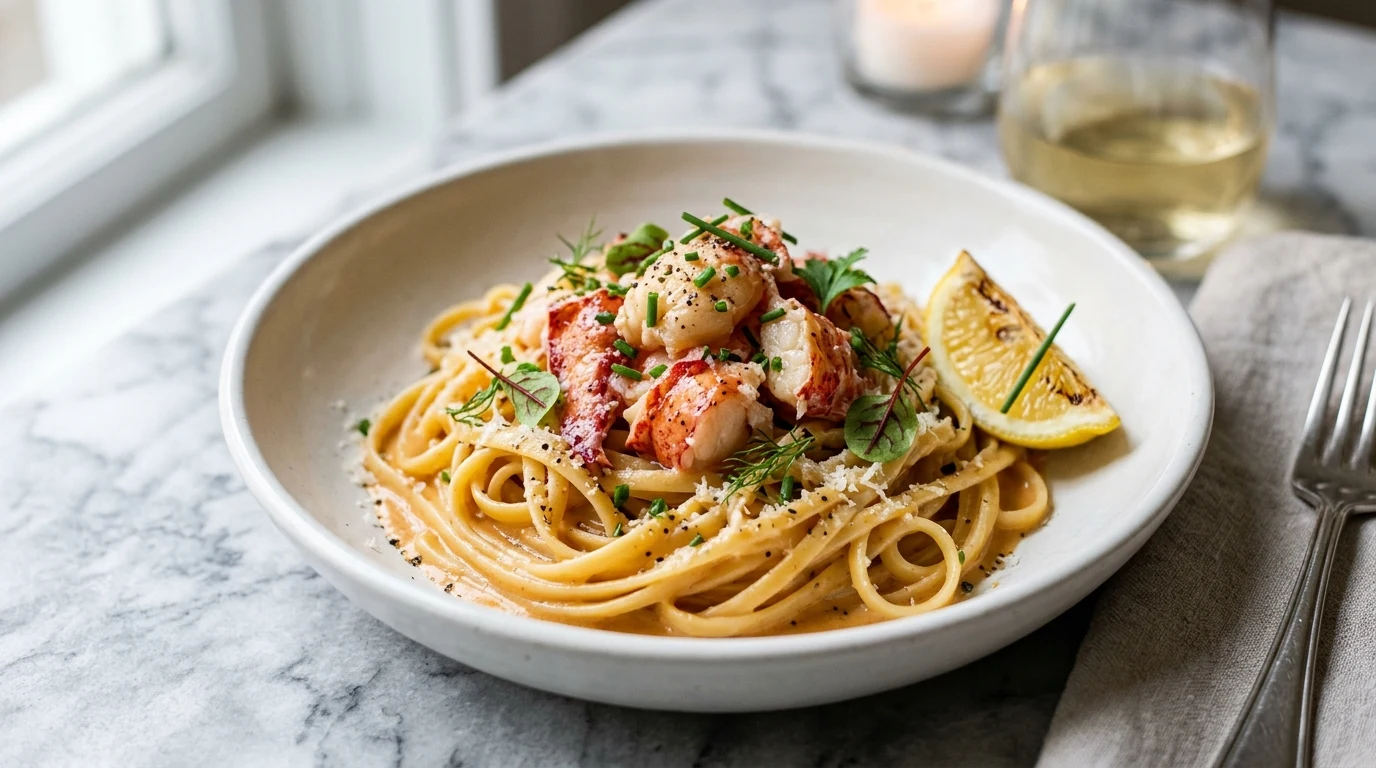
Table of Contents: Master Your Lobster Bisque Linguine
- The 4 Gourmet Secrets to Silky Lobster Bisque Pasta Luxury
- Selecting Premium Ingredients and Flavor Chemistry
- Step-by-Step Cooking Guide: Pan Emulsification Technique
- Why Bronze-Die Linguine is the Superior Pasta Choice
- Gourmet Side Dishes and Wine Pairings
- Printable Gourmet Recipe Card
- Frequently Asked Culinary Questions
The 4 Gourmet Secrets to Silky Lobster Bisque Pasta Luxury
Achieving the breathtaking richness of a restaurant seafood pasta relies on understanding emulsion mechanics and delicate protein heat management. When executing this creamy lobster bisque linguine recipe, these four foundational principles ensure flawless execution every time:
Secret 1: Two-Stage Pasta Cooking (Finishing in the Sauce)
Never drain fully cooked pasta and ladle warm sauce over the top. The hallmark of authentic Italian pasta cookery is pulling the linguine from the boiling salted water one to two minutes before it achieves true al dente. Transferring the porous pasta directly into the simmering lobster bisque allows the strands to drink in the rich shellfish reduction like a sponge, flavoring the pasta from within.
Secret 2: Starchy Pasta Water and Cold Butter Emulsification (Mantecatura)
The liquid gold of pasta making is the cloudy, salted water left behind in your stockpot. Rich in dissolved starches released by the boiling wheat, adding several tablespoons of this water to your simmering bisque alongside a final knob of cold European butter triggers rapid emulsification. Vigorous tossing binds the dairy fats with the bisque reduction, creating a clingy, mirror-gloss sauce that never breaks or turns watery on your plate.
Secret 3: Low-Temperature Lobster Reheating
Cooked lobster meat is delicate and lean; subjecting it to high, direct heat causes the muscle fibers to rapidly seize, turning succulent shellfish into tough, rubbery chunks. Gently warm the lobster in melted butter on low heat for barely ninety seconds, remove it to a holding plate, and fold it back into the pasta only at the very final minute off the heat. This preserves the lobster’s natural sweet tenderness and velvety bite.
Secret 4: Citrus and White Wine Acid Counterpoint
Lobster bisque combined with heavy cream and butter possesses immense richness. Without an acidic counterweight, that decadent richness can quickly overwhelm the palate. Deglazing the pan with a dry, mineral-forward white wine and finishing with fresh lemon zest and juice introduces vibrant brightness that cuts through the cream and elevates the sweet lobster meat.
Selecting Premium Ingredients and Flavor Chemistry
Every element in this luxurious pasta plays a deliberate role in harmonizing savory umami, natural sweetness, and silky texture:

- Bronze-Cut Linguine: Pasta extruded through traditional bronze dies features a rough, chalky exterior texture that catches and holds silky cream sauces far better than slick, Teflon-extruded commercial pasta.
- Fresh Cooked Lobster Meat: A blend of sweet claw, knuckle, and firm tail meat provides varied textural delight in every forkful. For seafood sourcing guidelines, consult the official FDA Seafood Safety and Handling Guide.
- Concentrated Lobster Bisque: High-grade store-bought lobster bisque (such as Trader Joe’s or fresh seafood counter bisque) provides deep roasted shell stock flavor, aromatics, and rich color without spending four hours simmering lobster carapaces.
- European Unsalted Butter: Containing 82% butterfat, European-style butter yields superior emulsification power and a velvety mouthfeel compared to standard domestic butter.
- Dry White Wine: Crisp varietals like Pinot Grigio, Sauvignon Blanc, or unoaked Chardonnay contribute essential malic and tartaric acids that balance the dairy richness.
- Fresh Chives and Flat-Leaf Parsley: Delicate allium sweetness from fresh snipped chives and clean herbal bitterness from parsley punctuate the coral sauce with vibrant color.
- Parmigiano-Reggiano: Freshly microplaned aged parmesan dissolves seamlessly into the cream sauce, imparting deep savory glutamates and subtle nutty complexity.
Step-by-Step Cooking Guide: Pan Emulsification Technique
Follow this precise kitchen workflow to prepare your creamy lobster bisque linguine recipe effortlessly in twenty-five minutes:

1. Salting the Water and Boiling Linguine
Fill a large 6-quart pot with cold water and bring to an aggressive rolling boil over high heat. Add two tablespoons of coarse kosher salt; the water should taste noticeably seasoned, like mild sea water. Add the linguine and stir immediately to prevent clumping. Set a timer for two minutes less than the lowest package recommendation. Before draining, dip a measuring cup into the pot and reserve one cup of starchy pasta water.
2. Building the Aromatic Pan Foundation
While the pasta boils, place a large 12-inch heavy skillet or saucier over medium heat. Melt one tablespoon of butter and add one tablespoon of olive oil. Add the minced shallot and cook gently for two minutes until soft and translucent, taking care not to brown it. Stir in the minced garlic and red pepper flakes, cooking for sixty seconds until fragrant. Pour in the white wine, scraping up any sweet fond stuck to the pan, and simmer until reduced by half.
3. Simmering the Bisque Reduction
Lower the heat to medium-low and pour in the lobster bisque and heavy cream. Whisk gently until the sauce unites into a silky, coral-orange liquid. Let the sauce simmer gently for four to five minutes until it thickens slightly and coats the back of a spoon. Whisk in the fresh lemon zest, lemon juice, kosher salt, and cracked black pepper.
4. Tossing, Emulsifying, and Folding in Lobster
Transfer the drained, slightly undercooked linguine straight into the bubbling skillet. Using kitchen tongs, toss and swirl the pasta continuously for two full minutes. The pasta will absorb the bisque while releasing starch into the sauce. Drizzle in two to four tablespoons of warm pasta water and add the final tablespoon of cold butter, tossing vigorously until the sauce transforms into a glossy, clingy glaze. Turn off the heat, gently fold in the warmed lobster meat, grated parmesan, and snipped chives, and serve immediately in heated bowls.
Why Bronze-Die Linguine is the Superior Pasta Choice
While short tubular pasta shapes like rigatoni and penne trap rich sauces inside their hollow centers, long ribbon pastas offer a completely different, luxurious sensory dynamic. Linguine, whose Italian name translates to “little tongues,” features a flattened elliptical cross-section that provides both structural chew (al dente resilience) and extensive surface area.
When twirled on a fork, the wide, flat ribbon wraps tightly around generous chunks of buttered lobster meat, holding the luscious cream glaze along its entire length. This guarantees that each forkful delivers an equal ratio of tender pasta, silky bisque sauce, and sweet coastal shellfish.

Gourmet Side Dishes and Wine Pairings
Complement the rich, coastal luxury of this creamy lobster bisque linguine recipe with crisp, refreshing accompaniments that balance its creamy decadence:
- Crisp Shaved Fennel and Citrus Salad: Thinly shaved Florence fennel, baby arugula, and blood orange segments dressed in an assertive white balsamic vinaigrette provide brisk crunch and palate-cleansing acidity.
- Warm Garlic and Herb Focaccia: Airy, golden focaccia studded with rosemary and sea salt serves as the ultimate tool for capturing every drop of the luxurious bisque pan sauce.
- Blistered Lemon Asparagus: Pan-seared green asparagus spears seasoned with Maldon salt and a squeeze of charred lemon offer vibrant green contrast and mineral crispness.
- Chilled Chablis or Sancerre: Mineral-driven, unoaked French white wines with razor-sharp acidity cut through heavy cream while complementing the briny sweetness of the lobster.
Printable Gourmet Recipe Card
Save or print this complete recipe card for step-by-step guidance, exact ingredient measurements, and complete nutritional facts:
Print
Creamy Lobster Bisque Linguine Recipe
- Total Time: 25 minutes
- Yield: 4 servings 1x
Description
Silky al dente linguine strands enrobed in a luxurious, coral-gold lobster bisque cream sauce, generously crowned with sweet butter-poached lobster tail chunks, fresh chives, and Parmigiano-Reggiano. A 25-minute gourmet seafood dinner masterpiece!
Ingredients
- 1 lb (450g) high-quality bronze-die linguine pasta
- 12 oz (340g) cooked lobster meat (tail, knuckle, and claw meat cut into generous bite-sized medallions)
- 2 cups (480ml) rich seafood lobster bisque (store-bought or homemade)
- 3/4 cup (180ml) heavy whipping cream
- 3 tablespoons unsalted European butter (divided)
- 1 tablespoon extra virgin olive oil
- 1 medium shallot (finely minced)
- 4 cloves fresh garlic (finely minced)
- 1/3 cup dry white wine (such as Sauvignon Blanc or Pinot Grigio)
- 1/4 cup freshly grated Parmigiano-Reggiano cheese
- 2 tablespoons fresh chives (finely snipped)
- 1 tablespoon fresh Italian flat-leaf parsley (finely chopped)
- 1/2 fresh lemon (zest and 1 teaspoon fresh juice)
- 1/4 teaspoon crushed red pepper flakes (optional, for subtle warmth)
- Coarse kosher salt and freshly cracked black pepper (to taste)
Instructions
- Cook the Linguine: Bring a large stockpot of well-salted water (2 tablespoons kosher salt per 4 quarts water) to a rolling boil. Drop the linguine and cook 1 to 2 minutes shy of al dente according to package directions. Reserve 1 cup of starchy pasta water before draining.
- Gently Warm the Lobster Meat: In a wide 12-inch stainless steel saucier or high-sided skillet, melt 1 tablespoon of butter over low heat. Add the lobster pieces and gently warm through for 1 to 2 minutes without cooking further. Transfer the warm lobster meat to a plate and set aside.
- Saute Aromatics and Deglaze: Add the olive oil and 1 tablespoon of butter to the skillet over medium heat. Add the minced shallot and cook for 2 minutes until translucent. Stir in the minced garlic and red pepper flakes, cooking for 45 to 60 seconds until fragrant. Pour in the dry white wine to deglaze the pan, scraping any fond from the bottom. Simmer for 2 minutes until reduced by half.
- Build the Velvety Bisque Sauce: Pour in the lobster bisque and heavy cream. Whisk gently to combine and bring to a steady simmer over medium-low heat. Let the sauce simmer for 4 to 5 minutes until it thickens slightly and coats the back of a wooden spoon. Whisk in the lemon zest, lemon juice, kosher salt, and cracked black pepper.
- Marry Pasta and Emulsify (Mantecatura): Add the drained linguine directly into the simmering bisque sauce. Toss and twirl vigorously using culinary tongs for 2 minutes over medium heat, allowing the pasta to absorb the rich seafood flavors. Add 2 to 4 tablespoons of reserved pasta cooking water and the remaining 1 tablespoon of cold butter to emulsify into a glossy, clingy glaze.
- Fold in Lobster and Cheese: Remove the skillet from heat. Gently fold in the warmed lobster meat, grated Parmigiano-Reggiano cheese, snipped chives, and chopped parsley until evenly distributed and glistening.
- Garnish and Serve: Divide the luscious twirls of linguine among warm, shallow pasta bowls. Spoon remaining lobster chunks and bisque sauce on top. Garnish with additional fresh chives, cracked black pepper, and serve immediately with fresh lemon cheeks.
Notes
Chef Secret: Always finish cooking your pasta directly in the simmering bisque sauce with a splash of starchy cooking water. The starch bonds with the butterfat, creating an unbreakable, velvety emulsion that clings perfectly to every strand.
- Prep Time: 10 minutes
- Cook Time: 15 minutes
Frequently Asked Culinary Questions
Can I use frozen lobster meat for this recipe?
Yes, high-quality flash-frozen cooked lobster meat works beautifully. Thaw the frozen lobster meat slowly overnight in your refrigerator. Before gently warming it in butter, pat the thawed meat thoroughly dry with paper towels to eliminate excess water that could dilute your bisque sauce.
Can I substitute other shellfish for lobster?
Absolutely. Jumbo wild shrimp, tender sea scallops, lump crabmeat, or sweet langoustines pair flawlessly with this bisque cream sauce. If using raw shrimp or scallops, sear them in olive oil and butter for two minutes per side until just cooked through, remove, and fold back into the finished pasta.
How should I store and reheat leftover lobster linguine?
Store leftovers in an airtight glass container in the refrigerator for up to two days. To reheat without overcooking the lobster, place the pasta in a skillet over low heat with two tablespoons of chicken broth, cream, or water. Gently toss until warmed through. Avoid microwaving on high power, which causes lobster to become tough and can separate the cream sauce.
If you want more chicken recipes, Explore now
Follow us on Facebook and Pinterest for cooking tips, delicious recipes, and more ideas.