
Classic New York Cheesecake Recipe: 5 Secrets to Ultra-Creamy Crack-Free Perfection
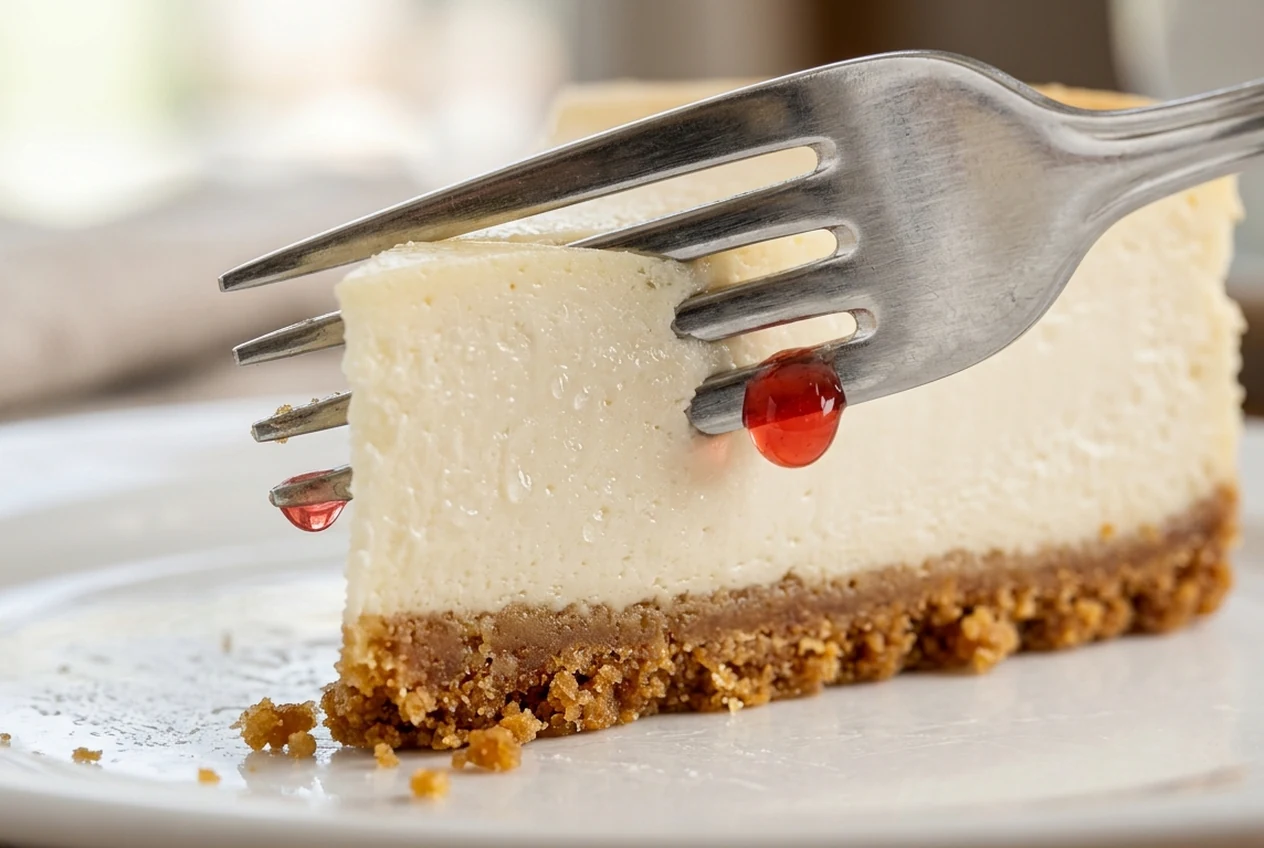
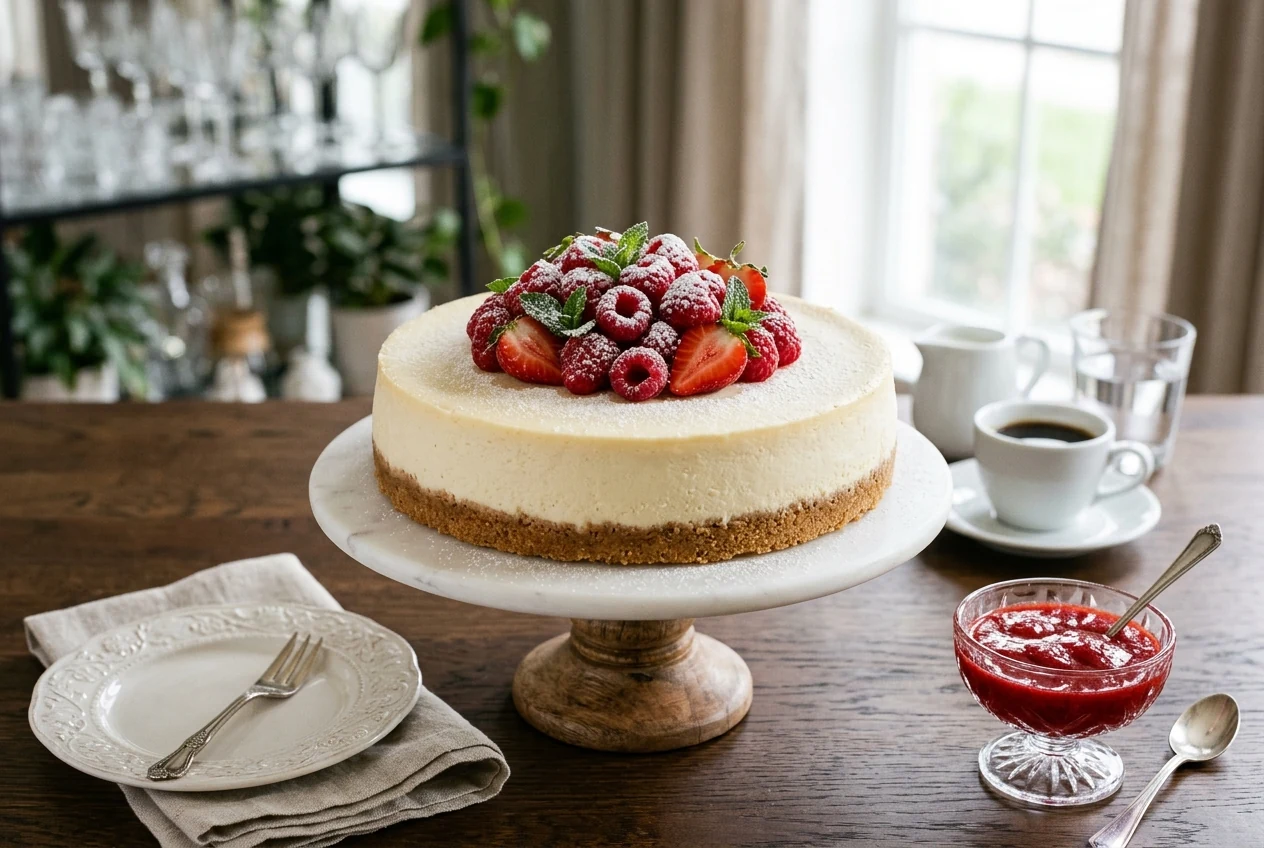
Mastering this authentic Classic New York Cheesecake Recipe is the ultimate rite of passage for every passionate home baker. Unlike lighter, airy chiffon cheesecakes or gelatin-stabilized no-bake variations, a genuine New York style cheesecake is legendary for its unmistakable personality: remarkably dense, rich, satiny-smooth, and balanced by a delicate tang from cultured sour cream and fresh lemon zest. Baked low and slow over a gentle water bath in a buttery graham cracker crust, this iconic dessert produces a flat, velvety golden surface without a single unsightly crack. In this comprehensive masterclass, you will uncover the exact pastry school techniques, baker secrets, and ingredient ratios needed to produce a showstopping centerpiece worthy of the finest Manhattan steakhouses and vintage bakeries.
Table of Contents
Table of Contents
Why This Classic New York Cheesecake Recipe Outshines Standard Cheesecakes
The culinary landscape is brimming with cheesecake variations, from fluffy Japanese jiggly cakes to rustic, scorched Basque burnt cheesecakes and effortless chilled no-bake tarts. Yet, the timeless Classic New York Cheesecake Recipe holds an undisputed crown in American pastry heritage. What makes this version so profoundly distinct is its calculated emulsion of dairy fats and delicate protein coagulation.
Standard grocery store cheesecakes frequently rely on excessive liquid heavy cream, gelatin stabilizers, or added cornstarch fillers to artificially mask poor emulsification. These shortcuts yield a mousse-like, rubbery, or wet texture that lacks structural integrity. By contrast, an authentic Classic New York Cheesecake Recipe maximizes whole dairy solids: full-fat Philadelphia-style brick cream cheese, extra egg yolks for luxurious mouthfeel, and rich sour cream rather than excessive milk or liquid cream. The result is a substantial, velvet-firm slice that holds a sharp, clean edge on the plate while melting like luscious buttercream on the tongue.
Anatomy of an Iconic New York Cheesecake: Texture, Crumb, and Flavor Chemistry
Understanding the science behind baking a Classic New York Cheesecake Recipe transforms baking from an unpredictable gamble into a repeatable, triumphant success. At its scientific core, cheesecake is not a cake at all: it is a rich, baked custard held together by delicate egg proteins suspended within a high-fat dairy emulsion.
When egg proteins heat up, their coiled amino acid chains unfold and bond with neighboring proteins, forming a microscopic protein lattice that traps moisture and fat. If heated too rapidly or cooked past 160 degrees Fahrenheit (71 degrees Celsius), these protein bonds contract violently like squeezed sponges. This excessive tightening forces water out of the emulsion (a phenomenon known as syneresis or weeping) and tears the custard surface apart, creating the dreaded center canyon crack. Maintaining gentle, moist heat via a protective water bath buffers the custard against harsh direct oven heat, allowing the delicate protein matrix to set softly and evenly from the edge to the center.
| Cheesecake Style | Core Dairy Base | Crust Foundation | Texture Profile | Key Baking Method |
|---|---|---|---|---|
| Classic New York | Full-fat brick cream cheese, sour cream, egg yolks | Thick buttery Graham cracker or digestive biscuit | Ultra-dense, velvety, substantial, tangy melt | Low-heat water bath (300°F / 150°C), slow oven cooling |
| Basque Burnt | Cream cheese, heavy cream, high sugar | Crustless, parchment-lined tin | Gooey molten center, scorched caramelized crown | Intense high heat (425°F / 220°C), no water bath |
| Japanese Souffle | Cream cheese, whipped meringue whites, butter | Minimal sponge cake or crustless base | Feather-light, jiggly, cotton-soft fluff | Water bath steam-bake, delicate low temperatures |
| Classic Philadelphia | Cream cheese, eggs, granulated sugar, cream | Thin graham cracker shell | Moderate density, sweeter, clean dairy profile | Moderate oven bake (325°F / 165°C), often no water bath |
| No-Bake Refrigerator | Cream cheese, condensed milk, whipped cream, gelatin | Chilled cookie crumb shell | Mousse-like, soft, chilled pudding texture | No oven baking; sets entirely through gelatin refrigeration |
Essential Ingredients for the Ultimate Classic New York Cheesecake Recipe
Because this Classic New York Cheesecake Recipe relies on a minimalist collection of pantry and dairy staples, the physical quality, fat percentage, and starting temperature of every single ingredient dictate your final outcome. Never substitute low-fat or reduced-fat alternatives here, as lower fat content introduces excess water that sabotages the custard emulsion.
- Full-Fat Brick Cream Cheese: You need 32 ounces (four standard 8-ounce blocks). Always choose traditional brick cream cheese, never spreadable tub cream cheese. Tub varieties are aerated and pumped with whey water and hydrocolloids that turn baked custards watery.
- Granulated White Sugar: 1 cup plus 2 tablespoons. Granulated sugar sweetens the cake while interrupting protein bonding, ensuring the crumb remains velvety rather than curd-like.
- Cultured Full-Fat Sour Cream: 1 cup (240g). Sour cream is the historic hallmark of the New York style. Its lactic acid cuts through the intense dairy fat, delivering that famous refreshing tang while softening the protein structure.
- Large Grade-A Eggs & Extra Egg Yolks: 4 whole large eggs plus 2 additional egg yolks, strictly at room temperature. The extra yolks infuse rich golden color, heighten emulsification, and yield a luxurious custard texture without adding excess moisture from egg whites.
- Pure Vanilla Extract & Fresh Lemon Juice: 1 tablespoon of bourbon pure vanilla extract and 1 tablespoon of freshly squeezed lemon juice with 1 teaspoon of finely microplaned lemon zest. Lemon amplifies the lactic tang of the cream cheese without making the cake taste overtly fruity.
- Cornstarch (Secret Stabilizer): 2 tablespoons. While purists argue whether starch belongs in cheesecake, adding two tablespoons of cornstarch serves as culinary insurance: it buffers egg proteins against thermal shock and virtually eliminates cracking without altering the velvety density.
- Graham Cracker Crumbs, Brown Sugar & Melted Butter: For the crust, 2 cups of finely pulverized graham cracker crumbs, 3 tablespoons of light brown sugar, a pinch of fine sea salt, and 6 tablespoons of melted unsalted European-style butter form a sturdy, caramelized foundation that stays crisp underneath the custard.
Professional Equipment: Springform Pans, Water Baths, and Thermal Shields
Having the proper tools on hand makes executing this Classic New York Cheesecake Recipe straightforward and stress-free. Invest in reliable equipment to safeguard your baking project:
- 9-Inch Heavy-Duty Springform Pan: Look for a light-colored, anodized aluminum pan with a sturdy latch. Dark pans absorb radiant oven heat aggressively, scorching the delicate outer ring of the cheesecake before the center sets.
- Oven Roasting Pan (Water Bath Vessel): A large, deep roasting pan that easily accommodates your 9-inch springform pan with at least 1.5 inches of clearance around the perimeter.
- Heavy-Duty Wide Aluminum Foil or Silicone Pan Shield: Water leakage is the number one nightmare when baking cheesecakes in a springform pan. Use 18-inch heavy-duty aluminum foil to wrap the exterior in three overlapping layers, or slip the springform pan into a 9-inch or 10-inch silicone cake pan before placing it into the water bath.
- Stand Mixer with Paddle Attachment (or Electric Hand Mixer): Always use the flat paddle attachment rather than a wire whisk. A wire whisk beats millions of tiny air bubbles into the cream cheese, causing the cheesecake to rise like a souffle in the oven and collapse into a cracked crater during cooling.
- Instant-Read Digital Thermometer: The ultimate objective guide for doneness. A cheesecake is cooked to silky perfection when the internal temperature in the exact center registers 150 to 155 degrees Fahrenheit (65 to 68 degrees Celsius).
Step-by-Step Guide: How to Bake This Classic New York Cheesecake Recipe
Follow these meticulously tested culinary steps to execute your Classic New York Cheesecake Recipe with confidence:
Step 1: Temper All Dairy and Egg Ingredients to Room Temperature
Remove the cream cheese, eggs, sour cream, and butter from the refrigerator at least two to three hours before baking. Cold cream cheese will stubbornly resist blending, creating permanent lumpy granules that no amount of mixing can rescue. When cream cheese reaches 68 to 72 degrees Fahrenheit (20 to 22 degrees Celsius), it creams effortlessly into silky perfection.
Step 2: Construct and Par-Bake the Buttery Graham Cracker Crust
Preheat your oven to 350 degrees Fahrenheit (175 degrees Celsius). In a medium mixing bowl, combine 2 cups of finely pulverized graham cracker crumbs, 3 tablespoons of light brown sugar, and a generous pinch of fine sea salt. Pour in 6 tablespoons of melted unsalted butter and toss with a fork until the mixture resembles wet beach sand. Transfer into your lightly buttered 9-inch springform pan. Using the flat bottom of a glass drinking tumbler or dry measuring cup, press the crumbs firmly and evenly across the bottom and approximately 1 inch up the sides. Bake for 10 minutes until fragrant and lightly golden. Remove to a wire cooling rack and allow the crust to cool completely while you prepare the filling. Lower your oven temperature to 300 degrees Fahrenheit (150 degrees Celsius).
Step 3: Cream the Cream Cheese, Sugar, and Cornstarch on Low Speed
In the bowl of a stand mixer fitted with the paddle attachment, place the softened cream cheese, granulated sugar, and cornstarch. Mix on low speed for 3 to 4 minutes, pausing twice to scrape the bottom and sides of the bowl with a flexible silicone spatula. The mixture should become completely glossy, supple, and lump-free. Never crank the mixer to medium or high speed; keeping the mixer on low prevents excess air entrapment.
Step 4: Incorporate the Sour Cream, Aromatics, and Room-Temperature Eggs
Add the sour cream, pure vanilla extract, fresh lemon juice, and finely grated lemon zest to the cream cheese base. Beat on low speed for 1 minute until seamlessly combined. Next, add the eggs and egg yolks one at a time, mixing on low speed for only 15 to 20 seconds after each addition, just until the yellow yolk disappears into the batter. Scrape the bowl down to the bottom after each egg. Over-beating at this stage is the chief culprit behind surface cracking.
Step 5: Waterproof the Pan and Assemble the Water Bath
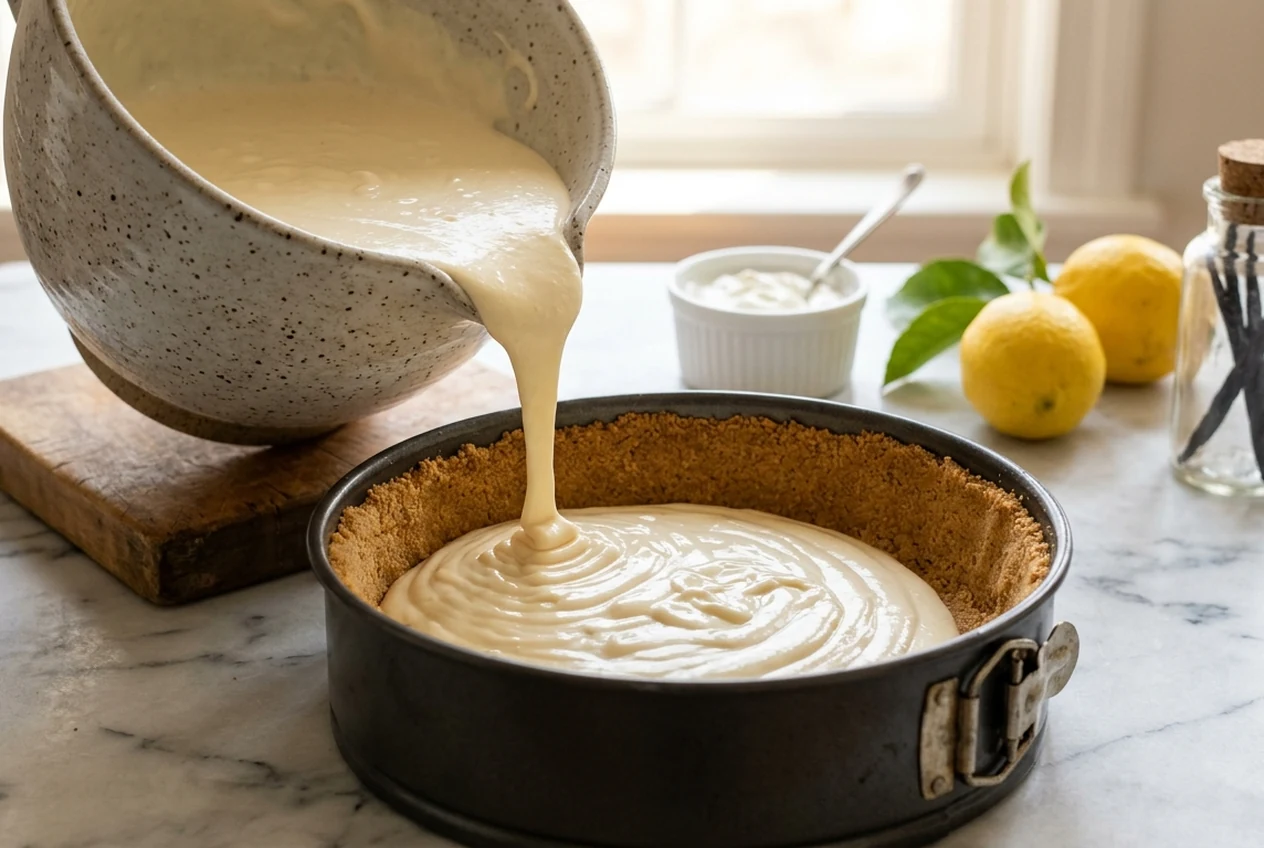
Place your springform pan in the center of two crossed sheets of 18-inch heavy-duty aluminum foil. Gather the foil up the exterior sides, crimping tightly around the upper rim to form a completely watertight barrier. Alternatively, slip the springform pan into a 9-inch silicone cake pan. Pour the velvety batter over the cooled graham cracker crust. Gently smooth the top with an offset spatula. Tap the pan firmly on your kitchen counter 4 to 5 times to release any trapped air bubbles to the surface.
Step 6: Bake in a Gentle Water Bath at 300°F (150°C)
Place the wrapped cheesecake pan inside your large roasting pan. Set the entire assembly onto the middle oven rack. Carefully pour boiling kettle water into the roasting pan until the water reaches halfway up the exterior sides of the springform pan (approximately 1.5 inches deep). Carefully slide the oven rack in and close the door. Bake undisturbed at 300 degrees Fahrenheit (150 degrees Celsius) for 65 to 75 minutes.
Step 7: Check for the Signature Jiggle and Rest in the Turned-Off Oven
At the 65-minute mark, gently nudge the roasting pan. The outer 2 to 3 inches of the cheesecake should appear matte, set, and gently puffed, while a small 2-inch circle in the very center should still tremble slightly like firm gelatin. Insert an instant-read digital thermometer into the center; it should read between 150°F and 153°F (65°C to 67°C). Turn the oven off completely. Crack the oven door open approximately 1 to 2 inches (prop it open with a wooden spoon handle if needed). Allow the cheesecake to cool slowly inside the resting oven for 1 full hour. This gradual temperature descent prevents thermal shock and keeps the surface mirror-smooth.
Step 8: Cool on the Counter, Loosen Edges, and Chill Overnight
After 1 hour in the oven, carefully remove the cheesecake from the water bath and strip away the foil. Run a thin, flexible paring knife or offset palette knife gently around the top inside rim of the springform pan. As the cheesecake cools, it naturally contracts slightly inward; running a knife ensures the edges release smoothly from the metal pan rather than clinging and tearing open a crack in the center. Allow the cake to cool on a wire rack at room temperature for 2 hours, then refrigerate uncovered for at least 8 hours (preferably overnight) before unlatching the springform collar and slicing.
5 Crucial Secrets to a Crack-Free Classic New York Cheesecake Recipe
Pastry chefs adhere to specific non-negotiable rules to ensure every single Classic New York Cheesecake Recipe emerges with a pristine, porcelain-smooth crown:
- Strict Low-Speed Mixing (Zero Whisking): Trapped air is the hidden enemy of dense custard. When air bubbles expand inside the oven, the cheesecake billows upward like a souffle. As soon as it cools, the unsupported air pockets collapse, rupturing the center. Always mix on speed 1 or 2 with a paddle attachment.
- A Gentle, Steamy Water Bath (Bain-Marie): Water cannot exceed 212 degrees Fahrenheit (100 degrees Celsius) at atmospheric pressure. Surrounding the springform pan with hot water buffers the cake against dry, uneven oven heat, guaranteeing that the delicate dairy fat and eggs set gradually without curdling or boiling.
- Starch Buffering with Cornstarch: Adding just two tablespoons of cornstarch forms a molecular buffer around egg proteins. The starch granules absorb moisture and gelatinize, physically hindering egg proteins from knitting together too aggressively and contracting during cooling.
- Loosening the Perimeter Knife Release: As dairy cools, fat and protein shrink. If the outer edges remain adhered to the springform pan wall while the center shrinks, the tension pulls the cake apart from the inside out. Gliding a thin knife around the perimeter frees the cake to contract harmoniously toward its center.
- The Gradual Multi-Stage Cool-Down: Sudden temperature swings cause rapid volumetric contraction. Moving a hot cheesecake straight from the oven into a cold kitchen causes instantaneous cracking. Cooling for 1 hour in the turned-off oven, 2 hours on the counter, and overnight in the refrigerator guarantees a crack-free finish.
Gourmet Variations, Glazes, and Fruit Compote Pairings
While this Classic New York Cheesecake Recipe is pure perfection enjoyed plain, its rich, tangy dairy profile serves as an exquisite canvas for artisan toppings and seasonal fruit sauces:
- Glossy Strawberry or Raspberry Coulis: Simmer 3 cups of fresh or frozen strawberries with 1/3 cup sugar and 1 tablespoon lemon juice for 8 minutes. Puree, strain through a fine-mesh sieve, and chill until thick and spoonable.
- Warm Salted Caramel & Toasted Pecans: Drizzle homemade amber caramel sauce infused with flaky Maldon sea salt over individual chilled slices, finishing with butter-toasted chopped pecans for rustic crunch.
- Dark Chocolate Ganache Glaze: Heat 1/2 cup of heavy cream until steaming, then pour over 4 ounces of chopped 70% bittersweet dark chocolate. Whisk until silky and pour in a delicate mirror pool over the chilled cheesecake crown.
- Lemon Curd & Fresh Blueberries: Spread a vibrant layer of homemade tart lemon curd across the top of the cheesecake and crown with fresh plump blueberries and fresh mint sprigs.
Cheesecake Troubleshooting Guide: Common Mistakes and How to Avoid Them
If you encounter unexpected results, use this professional diagnostic table to pinpoint the root cause and master your next bake:
| Symptom | Root Cause | Pastry Chef Solution |
|---|---|---|
| Deep fissure or center crack | Over-beating air into batter, severe oven thermal shock, or perimeter stuck to pan | Mix only on low speed with paddle, cool in propped-open oven for 1 hour, and loosen edges with a paring knife. |
| Soggy, waterlogged crust | Water bath water leaked through seams of the springform pan | Use 18-inch heavy-duty foil in three seamless layers, or place springform pan in a 9-inch silicone cake mold. |
| Grainy or lumpy batter | Cold cream cheese blended directly with cold eggs | Bring all ingredients to 70°F (21°C) room temperature before creaming; blend cream cheese with sugar first. |
| Sunken center with wet core | Under-baking; cheesecake removed from oven before center reached 150°F (65°C) | Bake until only a 2-inch center circle wobbles; verify 150°F internal temp with a digital thermometer. |
| Rubbery, curdled mouthfeel | Over-baking; internal temperature exceeded 165°F (74°C) causing syneresis | Bake in gentle water bath at 300°F (150°C); remove promptly when edges are set and center gently jiggles. |
| Cracked, crumbling slices | Cheesecake sliced while warm, or sliced with a dry, cold knife | Chill overnight for at least 8 hours; slice using a sharp chef knife dipped in hot water and wiped clean between cuts. |
Make-Ahead, Refrigerator Storage, and Freezing Guidelines
One of the finest attributes of this Classic New York Cheesecake Recipe is that its flavor and texture actually improve with time as the dairy matures in the cold:
- Refrigerator Storage: Store the cooled cheesecake covered loosely with plastic wrap in the refrigerator for up to 5 to 6 days. For optimal freshness, do not top the whole cheesecake with fruit sauces or whipped cream until ready to serve.
- Freezing Whole or Slices: Cheesecake freezes exceptionally well. Chill the cheesecake completely overnight. Wrap the whole cake (or individual slices separated by parchment paper) tightly in two layers of plastic cling wrap followed by heavy-duty aluminum foil. Freeze for up to 3 months.
- Thawing: Never thaw cheesecake at room temperature or in a microwave, which turns the delicate custard watery. Transfer the wrapped frozen cake to the refrigerator 24 hours before serving to thaw gently and maintain its dense, velvety crumb.
- How to Slice Like a High-End Bakery: Fill a tall container or pitcher with steaming hot water. Dip a long, thin-bladed chef knife into the hot water for 15 seconds, dry it completely on a clean kitchen towel, and make one clean downward slice. Wipe the blade clean and re-dip into hot water before every single cut.
Nutritional Profile and Dietary Information
The following nutritional estimations reflect one generous slice of a 9-inch cheesecake cut into 12 standard portions:
| Nutrient | Amount Per Serving (1/12th Cake) | % Daily Value |
|---|---|---|
| Calories | 540 kcal | 27% |
| Total Fat | 38 g | 49% |
| Saturated Fat | 22 g | 110% |
| Trans Fat | 0.5 g | – |
| Cholesterol | 165 mg | 55% |
| Sodium | 390 mg | 17% |
| Total Carbohydrates | 42 g | 15% |
| Dietary Fiber | 1 g | 4% |
| Total Sugars | 31 g | – |
| Protein | 9 g | 18% |
| Calcium | 135 mg | 10% |
| Iron | 1.4 mg | 8% |
| Potassium | 195 mg | 4% |
Frequently Asked Questions About Baking New York Cheesecake
Can I make this Classic New York Cheesecake Recipe without a water bath?
While a water bath is strongly recommended for bakery-quality results, you can simulate a steam oven by placing a 9×13-inch metal roasting pan filled with boiling water on the bottom oven rack directly underneath your springform pan. The rising steam creates a humid baking chamber that safeguards the custard against direct dry heat, though a true water bath surrounding the pan delivers superior insulation.
Why did my cheesecake crack while cooling?
Cracking is almost always caused by one of three mistakes: beating too much air into the batter with a whisk, cooling the cheesecake too rapidly after baking, or failing to release the edges from the springform pan with a paring knife. Following the paddle attachment rule and the slow 1-hour rest in the turned-off oven prevents this entirely.
Can I use low-fat cream cheese or Greek yogurt?
For an authentic Classic New York Cheesecake Recipe, do not substitute reduced-fat or Neufchatel cheese. Full-fat brick cream cheese contains the precise 33% milk fat needed to establish a stable custard emulsion. Low-fat varieties contain excess whey water that causes weeping and a rubbery texture.
How do I know when the cheesecake is fully baked?
Do not wait for the entire cake to become firm. Look for set, matte edges approximately 2 to 3 inches wide with a subtle 2-inch gentle jiggle in the center when the pan is nudged. If an instant-read thermometer inserted into the center reads between 150°F and 153°F (65°C to 67°C), it is done. The residual heat during the 1-hour oven rest will finish cooking the center to silky perfection.
Why do my graham cracker crumbs crumble when slicing?
A crumbly crust happens when there is insufficient melted butter to bind the crumbs or when the crumbs were not compacted firmly enough during assembly. Pressing the crumbs with the flat bottom of a drinking glass and par-baking for 10 minutes at 350°F (175°C) caramelizes the sugars, creating a crisp, cohesive crust that slices cleanly.

Classic New York Cheesecake Recipe
- Total Time: 9 hours 45 mins (includes chilling)
- Yield: 12 to 16 slices 1x
Description
The definitive ultra-creamy, crack-free Classic New York Cheesecake baked in a gentle water bath over a crisp, buttery graham cracker crust. Silky, rich, and dense with balanced vanilla and lemon notes.
Ingredients
- Graham Cracker Crust:
- 2 cups (200g) graham cracker crumbs, finely pulverized
- 6 tablespoons (85g) unsalted European-style butter, melted
- 3 tablespoons (40g) light brown sugar, packed
- 1/4 teaspoon fine sea salt
- Velvety Cheesecake Custard:
- 32 oz (4 standard 8-ounce blocks / 900g) full-fat brick cream cheese, room temperature
- 1 cup (200g) granulated sugar
- 3 tablespoons (25g) all-purpose flour
- 1 cup (240g) full-fat sour cream, room temperature
- 1 tablespoon pure vanilla extract
- 1 teaspoon freshly grated lemon zest
- 1 tablespoon fresh lemon juice
- 4 large pasture-raised eggs, room temperature
- 2 large egg yolks, room temperature
- 1/4 teaspoon fine sea salt
Instructions
- Temper All Ingredients: Remove cream cheese, eggs, egg yolks, sour cream, and butter from the refrigerator 2 to 3 hours prior to baking to reach 68-72°F (20-22°C).
- Par-Bake the Crust: Preheat oven to 350°F (175°C). In a bowl, toss pulverized graham cracker crumbs, brown sugar, salt, and melted butter until evenly moistened. Press firmly across bottom and 1 inch up sides of a 9-inch springform pan. Bake 10 minutes until fragrant. Transfer to a wire rack to cool completely. Reduce oven temperature to 300°F (150°C).
- Cream Cheese & Sugar: In a stand mixer fitted with paddle attachment on low speed, beat softened cream cheese, sugar, and flour for 2 minutes until perfectly smooth and creamy. Scrape bowl thoroughly.
- Add Aromatics & Sour Cream: Mix in sour cream, pure vanilla extract, lemon zest, lemon juice, and salt on low speed just until homogenous.
- Incorporate Eggs Gently: Add whole eggs and egg yolks one at a time, mixing on lowest speed just until incorporated. Tap the bowl against the counter three times to release trapped air bubbles.
- Assemble Water Bath: Wrap exterior of springform pan in two layers of heavy-duty aluminum foil. Pour batter over cooled crust. Place pan inside large roasting pan; carefully pour boiling water into the roasting pan until it reaches halfway up springform pan sides.
- Bake & Gradual Oven Cooling: Bake at 300°F (150°C) for 65 to 75 minutes until edges are gently puffed and set, and center 2-inch circle jiggles softly like gelatin. Turn oven off, prop door open 1 inch with a wooden spoon, and let cheesecake cool undisturbed inside oven for 1 hour.
- Chill to Perfection: Remove from water bath to wire rack; cool to room temperature (about 1 hour). Cover loosely and refrigerate at least 8 hours or overnight. Slice with a hot chef’s knife wiped clean between cuts.
Notes
Always use brick cream cheese, never spreadable cream cheese tubs. Never whip at high speed to avoid introducing air that causes cracking.
- Prep Time: 30 mins
- Cook Time: 1 hour 15 mins