Maryland Crab Imperial Recipe: 4 Secrets to Creamy Jumbo Lump Perfection
Few dishes along the Atlantic seaboard command the revered culinary stature of an authentic Maryland Crab Imperial Recipe. Born in the grand dining rooms of Baltimore and Annapolis luxury hotels during the late nineteenth century, crab imperial represents the absolute pinnacle of Chesapeake blue crab gastronomy. Following the tremendous acclaim of our signature Branzino Crab Imperial Recipe, which pairs this decadent stuffing with tender Mediterranean fish fillets, this standalone classic allows sweet colossal blue crab lumps to take center stage in all their unadorned glory.

Table of Contents
The Chesapeake Bay Heritage of Authentic Maryland Crab Imperial
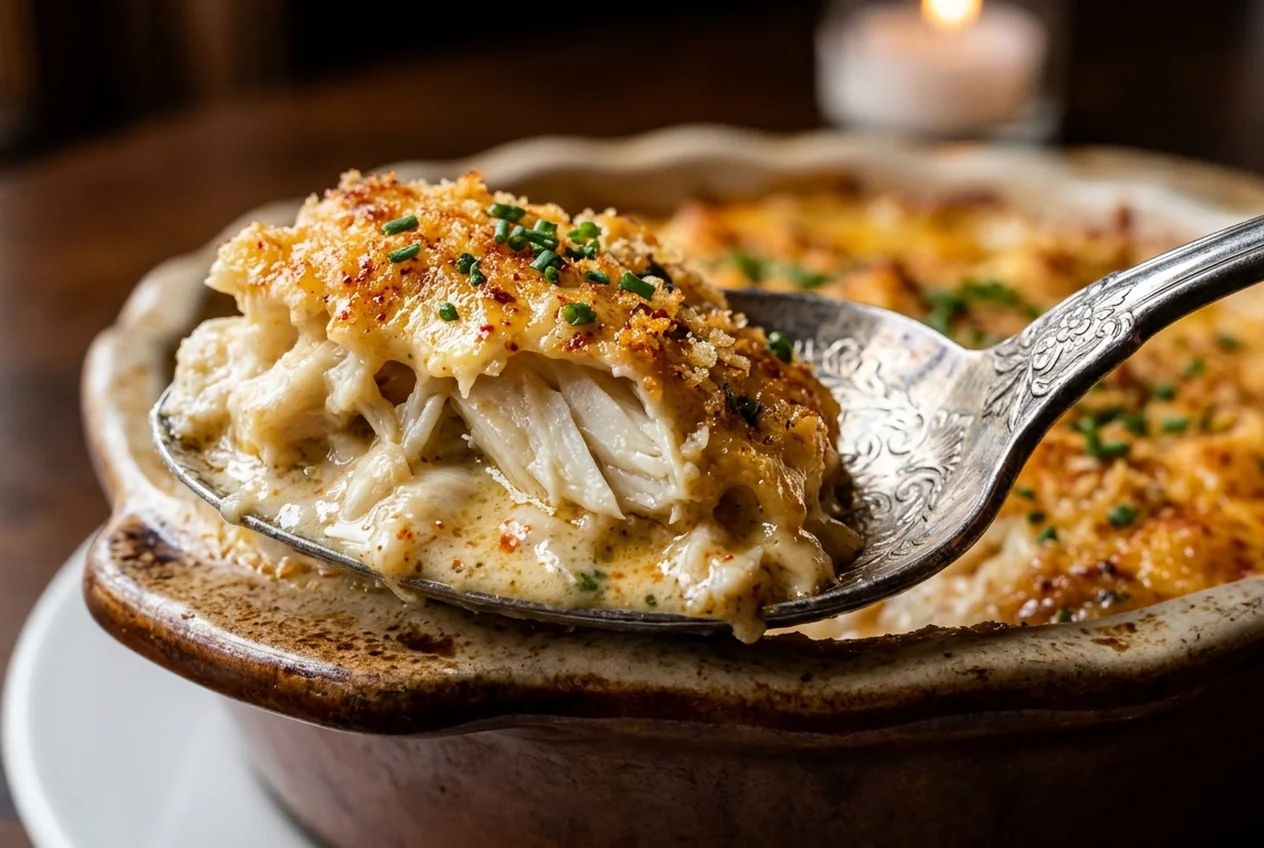
Few dishes along the Atlantic seaboard command the revered culinary stature of an authentic Maryland Crab Imperial Recipe. Born in the grand dining rooms of Baltimore and Annapolis luxury hotels during the late nineteenth and early twentieth centuries, crab imperial was conceived as the ultimate expression of Chesapeake blue crab gastronomy. While the humble Maryland crab cake relies on breadcrumbs or crushed saltines to bind shredded crab into pan-fried patties, true crab imperial is entirely devoid of heavy cereal fillers. Instead, colossal mounds of pristine, whole jumbo lump blue crab meat are gently coated in a velvety imperial emulsion and baked in scallop shells or gratin dishes until bubbling, glazed, and crowned with a delicate golden-brown crust.
Historically, the dish was created to highlight the natural, sweet oceanic delicacy of Callinectes sapidus (the savory beautiful swimmer of the Chesapeake Bay). By folding the tender, unbroken crab lumps into an emulsion enriched with egg yolk, heavy mayonnaise, dry English mustard, Worcestershire sauce, and a restrained dusting of Old Bay seasoning, chefs created a luxurious gratin that protected the delicate crab fibers from drying out under high thermal broiling.
Following our celebrated culinary guide for Branzino Crab Imperial Recipe, which pairs this decadent stuffing with tender Mediterranean fish fillets, this definitive standalone recipe allows the sweet blue crab to reign supreme. Home cooks who master our four fundamental secrets (proper crab grading, gentle folding technique, balancing the imperial sauce emulsion, and precise high-heat broiling) will produce an unforgettable coastal dinner party centerpiece in just twenty minutes of active kitchen preparation.
Commercial Crab Meat Grading, Freshness Indicators, and Inspection Science
The success of this Maryland Crab Imperial Recipe hinges almost entirely upon the grade and handling of the crab meat you procure. Because crab imperial does not utilize breadcrumbs to absorb moisture or mask shredded textures, using inferior shredded or claw meat will result in an unappealing, dense, and watery seafood mush.
When shopping at premium fish markets or seafood purveyors, look for domestic wild-caught blue crab meat packaged in plastic tubs and preserved on ice. Avoid pasteurized canned crab packed in metal tins whenever possible; while shelf-stable, the high-pressure thermal processing alters the delicate sweetness of the meat and introduces metallic notes. Always inspect the container to ensure the liquid inside is crystal clear rather than cloudy or milky, which indicates breakdown of muscle proteins.
| Commercial Crab Grade | Anatomical Muscle Origin | Texture & Visual Characteristics | Suitability for Maryland Crab Imperial Recipe |
|---|---|---|---|
| Colossal / Jumbo Lump | The two large swimming muscle clusters connected to the rear paddle fins. | Massive, unbroken white cylinders with sweet, delicate flavor and firm, resilient flaking texture. | The absolute gold standard for Crab Imperial. Delivers breathtaking visual height and pure succulent mouthfeel. |
| Standard Lump | A blend of smaller broken jumbo lumps and large body wall muscle pieces. | Bright white, medium-sized flakes with excellent natural sweetness and tender texture. | Excellent, cost-effective alternative. Mix 50 percent jumbo lump with 50 percent standard lump for balanced economics. |
| Backfin | Smaller broken flakes of body meat blended with fine white crab flakes. | Flaky, softer texture with smaller particle sizes; absorbs sauce rapidly. | Acceptable for everyday family baking, but lacks the luxurious whole-chunk presentation of true imperial. |
| Claw Meat | Extracted from the active swimming and feeding claws. | Brownish-pink color with intense, earthy, robust crab flavor and higher mineral content. | Not recommended for classic white imperial. The assertive flavor and dark color overwhelm the delicate sauce. |
The Biochemical Architecture of the Imperial Sauce Emulsion
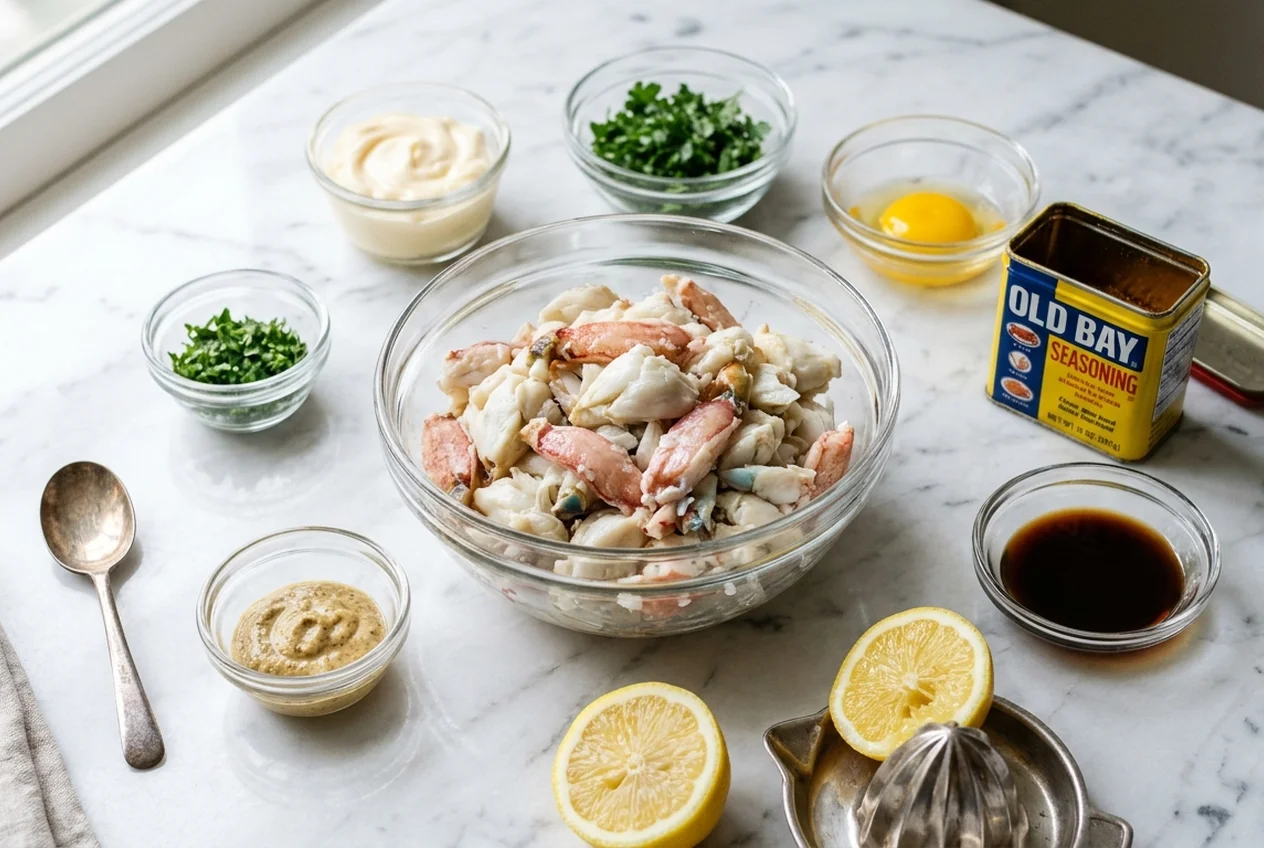
The soul of an authentic Maryland Crab Imperial Recipe resides in its imperial sauce, a specialized warm culinary emulsion closely related to classical French sauce mayonnaise and remoulade. Unlike cold sandwich spreads, the imperial emulsion must withstand 375°F to 400°F (190°C to 204°C) oven baking without separating into a greasy puddle of broken vegetable oil and rubbery scrambled egg proteins.
To construct a thermally stable imperial emulsion, professional seafood chefs combine heavy-duty real mayonnaise with a raw farm egg yolk. The egg yolk introduces concentrated lecithin (a powerful natural phospholipid emulsifier) and moisture-binding proteins. When whisked together with dry English mustard powder, Worcestershire sauce, fresh lemon juice, and a touch of melted European butter, the lecithin coats microscopic oil droplets in a protective hydrophilic barrier, preventing lipid coalescence under intense oven heat.
| Emulsion Component | Precise Amount | Biochemical Role & Culinary Contribution |
|---|---|---|
| Heavy Real Mayonnaise (Whole-Egg Base) | 1/2 cup (115g) | Provides the velvety lipid matrix that blankets the crab lumps, locking in moisture during high-heat broiling. |
| Fresh Egg Yolk (Large Farm Egg) | 1 large yolk (18g) | Injects vital lecithin emulsifiers and rich carotenoid pigments that bake into a glistening golden-amber surface glaze. |
| Dry English Mustard Powder (or Dijon Mustard) | 1 teaspoon (3g) | Supplies sinigrin and isothiocyanates that provide sharp, clean pungency to cut through heavy mayonnaise richness. |
| Authentic Worcestershire Sauce | 1 teaspoon (5ml) | Introduces fermented anchovy umami, tamarind acidity, and molasses complexity to ground the seafood flavors. |
| Freshly Squeezed Lemon Juice | 1 tablespoon (15ml) | Provides natural citric acid that balances rich dairy lipids and brightens the natural sweetness of blue crab. |
| Melted Unsalted European Butter | 2 tablespoons (30g) | Imparts clean dairy sweet notes and promotes delicate browning of the gratin crust. |
| Authentic Old Bay Seasoning | 3/4 teaspoon (2.5g) | Supplies the iconic Chesapeake blend of celery salt, black pepper, red pepper, and warm aromatic spices. |
Baking Vessel Selection, Oven Temperatures, and Broiling Dynamics
Baking pan selection exerts a massive influence over texture and moisture retention when preparing this Maryland Crab Imperial Recipe. Because wild crab meat is already cooked during the initial dockside steaming process, the objective in the home oven is simply to heat the crab gently through to 150°F (65°C) while simultaneously coagulating the imperial sauce into a bubbling, golden-glazed surface.
Traditional presentations utilize natural oven-safe porcelain or ceramic scallop baking shells (or individual 6-ounce shallow ceramic gratin dishes). Shallow individual vessels maximize the surface area exposed to radiant heat, creating a high ratio of crispy golden imperial glaze to succulent interior crab meat. Conversely, baking crab imperial in a deep glass casserole dish traps excess steam, leading to prolonged oven times that overcook the delicate crab fibers and cause the bottom of the dish to pool with separated liquid.
The optimal baking strategy is a dual-phase thermal cycle: initial gentle convection baking at 375°F (190°C) for 12 to 14 minutes to warm the crab gently to its thermal core, followed immediately by 2 to 3 minutes of high radiant broiling (500°F / 260°C) on the upper oven rack. This flash broil caramelizes the egg proteins and sugar traces on the surface into a gorgeous mahogany and gold crust without drying out the sweet crab underneath.
Step-by-Step Culinary Instructions for Maryland Crab Imperial Recipe
Follow these six precise culinary phases to achieve a foolproof, restaurant-grade Maryland Crab Imperial Recipe with massive unbroken crab lumps and a golden bubbly glaze in twenty minutes.
Step 1: Inspect and Pick Through the Crab Meat
Empty 1 pound (454g) of fresh jumbo lump blue crab meat onto a large parchment-lined rimmed baking sheet. Spread the lumps out gently into a single layer with your fingers. Working with extreme delicacy, inspect the meat for any tiny translucent cartilage pieces or stray shell fragments left behind by commercial pickers. Use a feather-light touch so you do not crush, shred, or break the colossal white lump cylinders. Leave the cleaned crab meat on the baking sheet at cool room temperature while preparing the sauce.
Step 2: Whisk the Imperial Sauce Emulsion
In a medium stainless steel or glass mixing bowl, combine 1/2 cup (115g) of heavy real mayonnaise, 1 large raw egg yolk, 1 tablespoon of freshly squeezed lemon juice, 1 teaspoon of Worcestershire sauce, 1 teaspoon of Dijon mustard or dry English mustard powder, 3/4 teaspoon of authentic Old Bay seasoning, and 1/4 teaspoon of fine sea salt. Whisk vigorously for 60 seconds until the sauce turns completely smooth, glossy, and emulsified into a vibrant pale-yellow cream. Reserve 2 tablespoons of this imperial sauce in a small ramekin to use as the top finishing glaze.
Step 3: Fold Crab Meat with Gentle Hands
Transfer the inspected jumbo lump crab meat into the bowl with the remaining imperial sauce. Sprinkle 1 tablespoon of finely chopped fresh flat-leaf Italian parsley over the crab. Using a wide, flexible silicone spatula, gently fold the crab meat into the sauce using wide sweeping under-and-over motions. Turn the bowl a quarter turn with each fold. Stop folding the moment every lump is lightly coated in the velvety sauce (typically four to five gentle folds total). Do not over-mix or stir vigorously; preserving whole, unbroken jumbo lumps is the defining hallmark of master pastry and seafood craft.
Step 4: Portion into Baking Dishes or Scallop Shells
Preheat your oven to 375°F (190°C) with an oven rack positioned in the upper-third slot (approximately 6 inches below the broiler elements). Lightly brush four natural oven-safe scallop shells or 6-ounce shallow ceramic gratin ramekins with melted butter. Gently spoon the crab imperial mixture into the dishes, mounding the colossal lumps high in the center to create an appetizing domed silhouette. Do not compress or pack the crab down into the dish.
Step 5: Apply Glaze and Dust with Old Bay
Take the 2 tablespoons of reserved imperial sauce and gently dab a light layer over the crest of each mounded crab portion using the back of a small spoon. Drizzle 2 tablespoons of melted European butter evenly across the tops. Finish with a delicate dusting of additional Old Bay seasoning and a whisper of sweet Spanish paprika for vibrant color contrast during the bake.
Step 6: Bake, Broil to Golden Loft, and Serve
Arrange the filled scallop shells or ramekins onto a sturdy rimmed baking sheet. Slide into the preheated 375°F (190°C) oven and bake undisturbed for 12 to 14 minutes, until the imperial sauce is gently bubbling around the edges and the internal core registers 150°F (65°C). Switch the oven setting to High Broil (500°F / 260°C) and broil for 2 to 3 minutes, watching vigilantly through the oven window, until the top forms a mottled golden-brown, caramelized crust. Remove immediately from the oven. Garnish with minced fresh green chives and serve piping hot alongside fresh lemon wedges.
Nutritional Architecture, Micronutrient Density, and Seafood Lipids
A single portion of this handcrafted Maryland Crab Imperial Recipe offers a remarkably protein-dense, low-carbohydrate nutritional profile. Blue crab is naturally lean, virtually free of carbohydrates, and packed with complete proteins containing all essential amino acids necessary for lean tissue maintenance and cellular regeneration.
Moreover, blue crab meat delivers exceptional concentrations of vital trace minerals, notably selenium (a master antioxidant supporting thyroid health), copper, phosphorus, and zinc. The healthy dietary fats provided by pasture egg yolk and high-grade mayonnaise facilitate optimal absorption of fat-soluble vitamins A, D, and E, making this dish fully compliant with ketogenic, low-carb, and pescatarian dietary lifestyles.
| Nutritional Metric (Per 1 Individual Scallop Shell / 4 Servings Total) | Quantified Value & Reference Daily Value (DV) |
|---|---|
| Total Caloric Energy | 285 kcal (14% DV) |
| Total Lipids / Dietary Fat | 21 g (27% DV) |
| Saturated Fatty Acids (Dairy Butter & Egg) | 5.5 g (28% DV) |
| Monounsaturated Fatty Acids (Oleic Acid) | 8.2 g |
| Polyunsaturated Fatty Acids (Omega-3 EPA/DHA) | 6.1 g |
| Cholesterol | 135 mg (45% DV) |
| Sodium (Sea Salt & Old Bay) | 560 mg (24% DV) |
| Total Carbohydrates | 1.5 g (1% DV, Keto-Friendly) |
| Dietary Fiber | 0 g (0% DV) |
| Total Sugars (Natural Crab Glycogen) | 0.5 g (0% DV) |
| High Biological Value Complete Protein | 22 g (44% DV) |
| Selenium | 48 mcg (87% DV) |
| Vitamin B12 (Cobalamin) | 3.2 mcg (133% DV) |
| Zinc | 3.6 mg (33% DV) |
Culinary Variations, Stuffed Seafood Upgrades, and Regional Twists
While purists celebrate this classic Maryland Crab Imperial Recipe in its unadorned scallop-shell glory, the luxurious imperial mixture functions as an extraordinary culinary foundation for advanced seafood applications.
Crab Imperial Stuffed Jumbo Shrimp: Butterfly colossal U-12 raw gulf shrimp down the back, keeping tails intact. Press a generous golf-ball-sized mound of crab imperial into the butterflied cavity of each shrimp. Arrange in a buttered baking dish, dust with Old Bay, and bake at 375°F (190°C) for 12 minutes until shrimp curl pink and imperial turns golden. This variation creates a sensational surf-and-surf appetizer for luxury dinner parties.
Parmesan Panko Herb Crust: While traditional imperial sauce relies entirely on an egg-mayonnaise glaze for surface browning, contemporary Mid-Atlantic bistros frequently add textural crunch. Combine 3 tablespoons of Japanese panko breadcrumbs with 2 tablespoons of freshly grated Parmigiano-Reggiano cheese, 1 tablespoon of melted butter, and fresh thyme leaves. Scatter lightly over the top of the mounded imperial before baking for a shatteringly crisp crust that contrasts against the velvety crab interior.
Coastal Stuffed Flounder or Salmon Fillets: Cut a deep pocket into thick center-cut flounder, sole, or wild salmon fillets. Spoon the seasoned crab imperial inside, drizzle with white wine and lemon butter, and bake for 16 minutes. As the fish bakes, savory crab juices infuse the tender fillets, elevating standard fish into five-star restaurant dining.
Seafood Troubleshooting, Common Pitfalls, and Professional Corrections
Executing an authentic Maryland Crab Imperial Recipe requires delicacy and temperature control. Review this diagnostic matrix to prevent any common pitfalls when preparing this luxury seafood dish.
| Observed Dilemma | Biochemical Root Cause | Chef Correction & Prevention Protocol |
|---|---|---|
| Watery Liquid Pooling in Bottom of Dish | Crab meat was not thoroughly drained before folding, or baking in deep glass vessels that trap steam. | Gently drain crab meat on paper towels for 10 minutes prior to sauce incorporation. Always bake in shallow ceramic gratin dishes or scallop shells. |
| Broken, Oily Sauce with Greasy Film | Baking at excessive temperatures (over 425°F) for too long, causing the mayonnaise emulsion to break. | Bake gently at 375°F (190°C) until warm, then broil on high for only 2 to 3 minutes for surface caramelization. Ensure egg yolk is added to stabilize the emulsion. |
| Crab Meat Turns Shredded and Mushy | Overworking the mixture with an electric mixer, whisk, or aggressive spoon stirring during assembly. | Use exclusively a flexible silicone spatula and fold gently four to five times. Never use mechanical mixers when handling whole jumbo lump crab. |
| Offensive Crunchy Texture from Stray Shells | Failing to pick through commercial crab meat prior to folding into sauce. | Always spread crab meat across a baking sheet and run fingers through with a feather-light touch to remove all shell cartilage before cooking. |
Artisanal Side Dish Pairings, Sommelier Wine Selection, and Table Aesthetics
To honor the exquisite craftsmanship of this Maryland Crab Imperial Recipe, curate accompanying side dishes that provide textural contrast, vibrant acidity, and coastal charm.
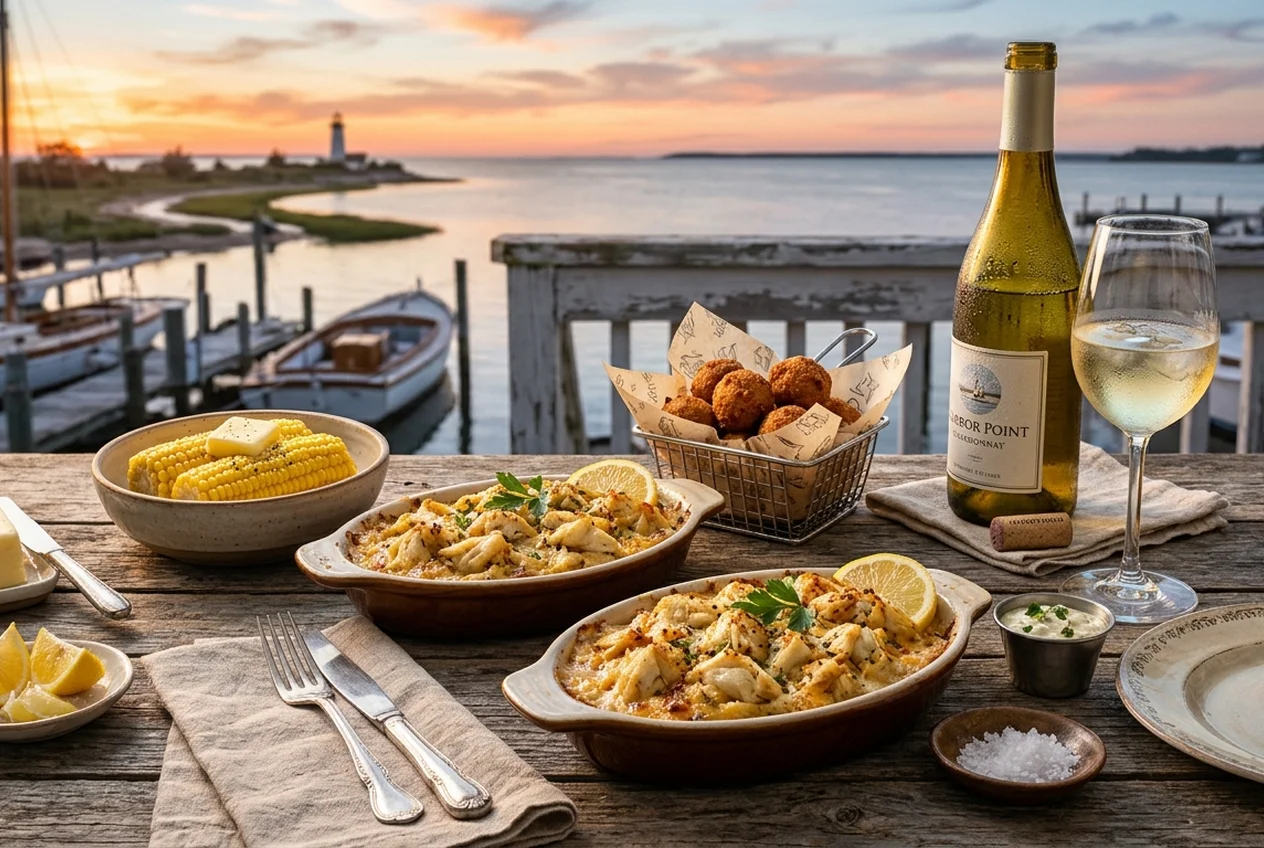
Traditional Coastal Accompaniments: Classic Eastern Shore banquet traditions call for sweet yellow corn on the cob slathered in salted butter, golden-fried sweet hushpuppies, or a crisp shaved fennel and Granny Smith apple slaw tossed in champagne vinaigrette. For an elevated vegetable pairing, serve alongside tender grilled asparagus spears or our vibrant Crispy Garlic Parmesan Roasted Green Beans Recipe.
Sommelier Wine Recommendations: The luxurious, rich dairy fats and delicate sweet crab meat require a high-acid, mineral-driven white wine that cleanses the palate without masking delicate seafood notes. Excellent pairings include an unoaked French Chablis (100 percent Chardonnay from limestone-rich soils), a crisp Sancerre (Sauvignon Blanc from the Loire Valley), or a dry vintage Champagne whose effervescent bubbles effortlessly cut through rich imperial cream.
Food Safety Protocols, Refrigeration Limits, and Reheating Instructions
Because premium blue crab meat is an exceptionally delicate, perishable seafood protein, strict temperature control and food safety protocols must be observed when preparing and storing this Maryland Crab Imperial Recipe.
Refrigeration and Advance Preparation: You can assemble the crab imperial in individual scallop shells up to 8 hours in advance of your dinner party. Cover the unbaked shells loosely with plastic wrap and store in the coldest zone of your refrigerator (34°F to 38°F / 1°C to 3°C). When ready to serve, allow the dishes to sit on the counter for 15 minutes to take off the chill before sliding into a preheated 375°F (190°C) oven.
Reheating Cooked Leftovers: Leftover baked crab imperial should be stored in an airtight glass container and consumed within 2 days. To reheat without rubberizing the crab, preheat your oven or toaster oven to 325°F (165°C). Place the leftover crab imperial in an oven-safe dish, cover loosely with foil, and warm gently for 10 to 12 minutes until heated through. Never reheat crab imperial in a microwave, which ruptures delicate crab protein cell walls, turning the meat dry, rubbery, and unpalatable.
Maryland Crab Imperial Recipe Card
Print
Maryland Crab Imperial Recipe
- Total Time: 25 mins
- Yield: 4 servings (approx. 4 loaded shells) 1x 1x
Description
Description
Master authentic Maryland Crab Imperial featuring colossal jumbo lump blue crab meat bound in a velvety, golden-glazed imperial sauce with Old Bay seasoning in just 20 minutes.
Ingredients
- 1 pound (454g) fresh jumbo lump blue crab meat, gently picked over for shells
- 1/2 cup (115g) heavy real mayonnaise
- 1 large egg yolk (room temperature)
- 1 tablespoon (15ml) freshly squeezed lemon juice
- 1 teaspoon Worcestershire sauce
- 1 teaspoon Dijon mustard or dry English mustard powder
- 3/4 teaspoon authentic Old Bay seasoning (plus extra for dusting)
- 1/4 teaspoon fine sea salt
- 2 tablespoons (30g) unsalted European butter, melted
- 1 tablespoon fresh Italian flat-leaf parsley, finely chopped
- 1 tablespoon fresh chives, finely minced (for garnish)
- Fresh lemon wedges, for serving
Instructions
- Inspect Crab Meat: Spread jumbo lump crab meat in a single layer over a baking sheet. With a feather-light touch, inspect for shell cartilage, keeping colossal lump cylinders completely unbroken.
- Whisk Imperial Emulsion: In a mixing bowl, vigorously whisk mayonnaise, egg yolk, lemon juice, Worcestershire, Dijon mustard, Old Bay seasoning, and fine sea salt until smooth, glossy, and pale yellow. Reserve 2 tablespoons of sauce for top glazing.
- Fold Crab Gently: Add crab meat and chopped parsley to the remaining sauce. Using a silicone spatula, gently fold 4 to 5 times just until crab lumps are lightly coated; do not overmix.
- Fill Baking Vessels: Preheat oven to 375°F (190°C) with rack in upper third. Butter four oven-safe scallop shells or 6-ounce shallow ramekins. Mound crab imperial mixture high into shells without compressing.
- Glaze and Season: Spoon reserved sauce over top of mounded crab. Drizzle melted butter over each portion and dust lightly with extra Old Bay and sweet paprika.
- Bake and Broil: Bake at 375°F (190°C) for 12 to 14 minutes until bubbling. Switch to High Broil (500°F / 260°C) for 2 to 3 minutes until top forms a mottled golden-brown caramelized glaze. Garnish with fresh chives and serve immediately with lemon wedges.
Notes
Always use jumbo lump or colossal blue crab for authentic texture. Drain crab meat on paper towels for 10 minutes before assembling to prevent excess moisture from watering down the velvety imperial sauce.
- Prep Time: 10 mins
- Cook Time: 15 mins
Frequently Asked Questions About Maryland Crab Imperial Recipe
What is the difference between Maryland crab cakes and this Maryland Crab Imperial Recipe?
Traditional Maryland crab cakes utilize binder fillers such as crushed saltines, breadcrumbs, or panko to form a firm patty that can be pan-fried or broiled. Authentic Maryland Crab Imperial contains zero bread fillers; colossal jumbo lump crab meat is gently folded into a velvety egg yolk and mayonnaise emulsion, mounded into scallop shells, and baked until bubbling and caramelized.
Can I make this Maryland Crab Imperial Recipe ahead of time?
Yes. You can gently pick over the crab, fold it into the imperial sauce emulsion, and portion it into oven-safe scallop shells or gratin ramekins up to 8 hours in advance. Cover loosely with plastic wrap and refrigerate. When ready to dine, remove from refrigerator for 15 minutes, drizzle with melted butter, and bake according to recipe instructions.
What type of crab meat is best for Maryland Crab Imperial?
Fresh colossal jumbo lump blue crab meat (Callinectes sapidus) is the gold standard. Jumbo lump consists of the large unbroken swimming muscles, providing majestic visual height, tender sweetness, and luxurious mouthfeel. Standard lump is also excellent, while shredded claw meat should be avoided as its dark color and strong flavor overwhelm the delicate imperial sauce.
Why did liquid water pool at the bottom of my baked crab imperial?
Water pooling occurs when commercial crab meat is not drained before mixing or when the dish is baked in deep glass casserole dishes that trap steam. To prevent this, drain the crab meat on paper towels for 10 minutes prior to folding, and bake exclusively in shallow ceramic gratin dishes or scallop shells.
Can I freeze leftover baked Maryland Crab Imperial?
Freezing is not recommended for crab imperial. Mayonnaise and egg yolk emulsions tend to separate upon thawing, resulting in an oily, broken texture, while delicate crab fibers become watery and mushy. Enjoy fresh or store in an airtight container in the refrigerator for up to 2 days.
For more extraordinary seafood dining inspiration, discover our acclaimed Branzino Crab Imperial Recipe and our 15-minute skillet Garlic Butter Shrimp Scampi Recipe. For succulent pan-seared fillets, see our crispy Pan-Seared Crispy Skin Salmon Recipe. For official seafood nutritional standards, consult the USDA FoodData Central Seafood Nutritional Database and explore seafood emulsion culinary science at Serious Eats Food Lab Crab Science Guide.
If you want more seafood recipes, Explore now
Follow us on Facebook and Pinterest for cooking tips, delicious recipes, and more ideas.