
Ultimate Garlic Confit Recipe: 4 Easy Steps to Butter-Soft Cloves
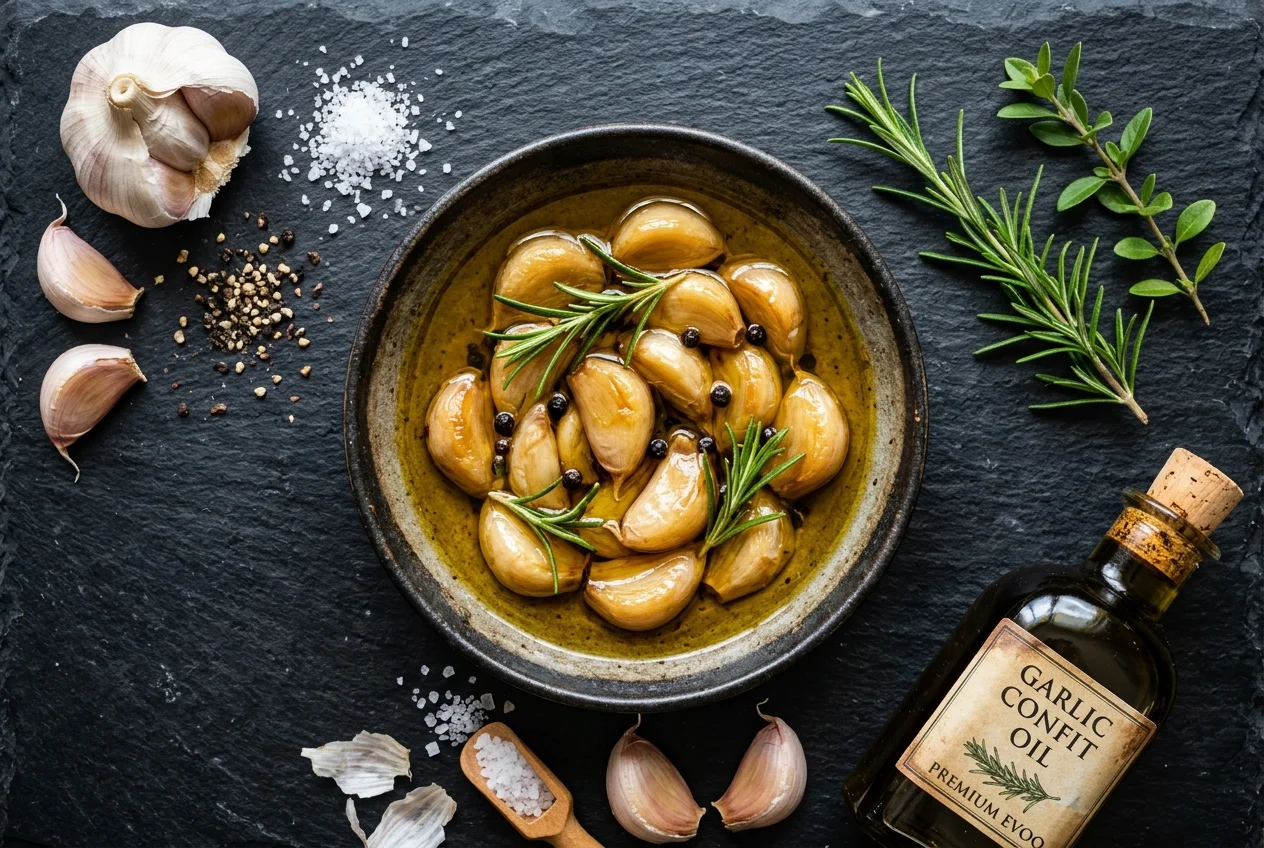
If you are looking for the best Ultimate Garlic Confit, this foolproof recipe guarantees unbeatable flavor and texture every single time. In the expansive realm of professional culinary techniques, few pantry staples possess the transformative, alchemical power of authentic Garlic Confit. Raw garlic, while undeniably bold and punchy, delivers an aggressive, sharp bite that can easily overpower delicate palate notes. However, through the gentle, patient magic of slow roasting in warm extra virgin olive oil, those pungent sulfurous compounds soften, caramelize, and metamorphose into plump, amber-hued gems with the luxurious texture of warm whipped butter and a sweet, mellow, deeply roasted flavor profile.
Whether you have witnessed the mesmerizing viral sourdough spreads on TikTok, ordered an artisan tapas board at an upscale Mediterranean bistro, or simply seek to elevate your everyday home cooking to Michelin-level standards, mastering how to make garlic confit is an indispensable kitchen milestone. The rewards are doubled: not only do you acquire jars of spreadable, melt-in-your-mouth garlic cloves, but you also produce several cups of fragrant, golden, garlic-infused olive oil that serves as culinary liquid gold for dressings, drizzling, searing, and finishing.
In this definitive masterclass, you will discover the exact science behind the confit technique, the optimal cooking temperatures to prevent scorching, essential botulism food safety protocols, and dozens of creative ways to incorporate this culinary masterpiece into your weekly meal repertoire.
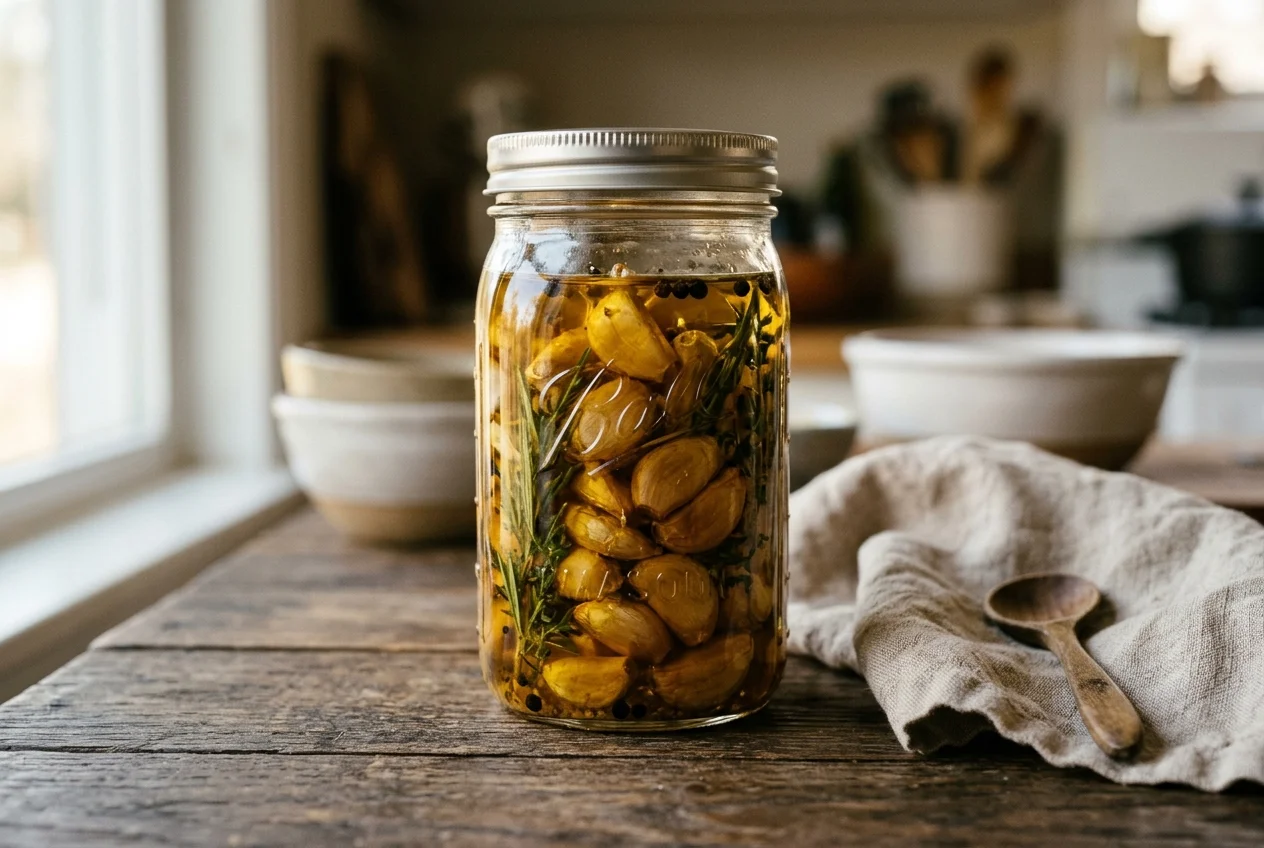
Table of Contents
- What is Ultimate Garlic Confit? The Classic Culinary Technique Explained
- Essential Ingredients and Flavor Infusions
- Ingredients Ratio and Substitution Guide
- Step-by-Step Instructions: How to Confit Garlic in the Oven
- Critical Food Safety and Botulism Prevention Guide
- Cooking Methods Compared: Oven vs. Stovetop vs. Slow Cooker
- How to Use Garlic Confit: 10 Inspiring Culinary Applications
- Nutritional Breakdown and Health Benefits
- Troubleshooting Common Garlic Confit Mistakes
- Frequently Asked Questions (FAQs)
- Conclusion: Master This Essential Culinary Technique Today
- Ultra-Rich Homemade Garlic Confit in Olive Oil
What is Ultimate Garlic Confit? The Classic Culinary Technique Explained
The term confit originates from the French verb confire, which translates literally to “to preserve.” Historically developed centuries before the advent of modern refrigeration, confit represents an ancient preservation method whereby meats (most notably duck or goose) or delicate vegetables are submerged entirely in a pure fat medium and cooked at a remarkably low, steady temperature over an extended period.
Unlike deep frying or sautéing, where high temperatures (typically between 350°F and 375°F) cause rapid moisture evaporation and vigorous crisping, confit operates in a gentle thermal zone, strictly between 200°F and 250°F (95°C to 120°C). At this precise temperature threshold, the moisture inside each garlic clove gently evaporates without causing the cell walls to rupture aggressively. Simultaneously, the natural sugars present in the allium undergo slow enzymatic caramelization, stripping away all bitterness and leaving behind a sweet, savory, umami-rich puree encased in an intact, tender clove skin.
According to the authoritative culinary research conducted by J. Kenji López-Alt on Serious Eats, maintaining the cooking temperature below 250°F is critical because garlic sugars possess a relatively low burning point. Allowing the oil to boil vigorously creates acrid, burnt notes that ruin both the cloves and the surrounding oil. Precision, patience, and gentle heat are the triad of confit perfection.
Essential Ingredients and Flavor Infusions
One of the most remarkable virtues of homemade garlic confit lies in its minimalist ingredient roster. Because there are no artificial thickeners, starches, or preservatives involved, the quality of your foundational components directly dictates the culinary excellence of the finished product.
- Fresh Whole Garlic Heads: Choose firm, heavy garlic heads with tight, papery white skins. Avoid heads that exhibit green shoots sprouting from the cloves, soft brown spots, or hollow cloves, as sprouted garlic contains bitter sulfur stems. While pre-peeled garlic cloves from the grocery store offer unmatched convenience, peeling whole heads at home yields superior plumpness, sweetness, and floral aromas.
- Extra Virgin Olive Oil: Select a high-quality, cold-pressed extra virgin olive oil with a balanced, fruity, or buttery profile. Avoid excessively peppery or intensely grassy early-harvest oils, as their intense bitterness can amplify during prolonged low-heat roasting. If you prefer a neutral culinary oil for high-heat wok cooking, avocado oil or expeller-pressed grapeseed oil serves as an admirable alternative.
- Fresh Aromatic Herbs: Woody, resinous herbs thrive during extended oil baths. Sturdy sprigs of fresh rosemary, winter thyme, and fragrant bay leaves infuse the oil with woodsy, earthy aromatics that harmonize effortlessly with the sweet garlic. Delicate leafy herbs like basil, cilantro, or parsley should be avoided during cooking as their high water content promotes scorching.
- Whole Spices and Peppercorns: Whole black Tellicherry peppercorns, pink peppercorns, coriander seeds, or a single dried red chili pepper pod impart subtle warmth, complexity, and gentle back-heat without clouding the oil.
- Flaky Sea Salt: A delicate pinch of pure sea salt or Maldon flaky crystals seasons the cloves as they soften, drawing out residual moisture and enhancing natural sweetness.
Ingredients Ratio and Substitution Guide
To help you scale this recipe effortlessly depending on the size of your baking dish or garlic harvest, refer to our comprehensive ratio and substitution reference table below:
| Component | Standard Batch | Large Chef Batch | Recommended Substitutions & Variations |
|---|---|---|---|
| Garlic Cloves | 35 to 45 cloves (3 to 4 heads) | 80 to 100 cloves (8 to 9 heads) | Shallots peeled and halved, pearl onions, or elephant garlic sliced thick. |
| Oil Medium | 1.5 cups (360 ml) extra virgin olive oil | 3.5 cups (840 ml) extra virgin olive oil | Pure avocado oil, duck fat for rich savory depth, or clarified butter (ghee). |
| Fresh Herbs | 3 rosemary sprigs, 4 thyme sprigs | 6 rosemary sprigs, 8 thyme sprigs | Fresh oregano sprigs, savory, fresh marjoram, or Turkish bay leaves. |
| Spice Accents | 1 tsp whole black peppercorns | 2 tsp whole black peppercorns, 1 star anise | Fennel seeds, crushed red pepper flakes, whole allspice berries, or strips of lemon peel. |
| Seasoning | 0.5 tsp fine sea salt | 1.25 tsp fine sea salt | Kosher salt, smoked sea salt flakes, or pink Himalayan mineral salt. |
Step-by-Step Instructions: How to Confit Garlic in the Oven
While garlic confit can be prepared on the stovetop or in a slow cooker, the oven method reigns supreme among professional chefs due to its consistent, 360-degree ambient heat distribution that prevents hot spots at the base of the pan.
Step 1: Prep and Peel the Garlic Cloves
Separate the garlic heads into individual cloves. To peel dozens of cloves rapidly without damaging the flesh, place the cloves into a large stainless steel bowl, invert a second matching bowl over the top to create a sealed dome, and shake vigorously for 20 seconds. The friction will effortlessly slip the skins off 80% of the cloves. Trim away the tough, woody root tip of each clove using a sharp paring knife. Inspect each clove carefully and discard any bruised or discolored pieces. Crucially, pat the peeled cloves completely dry with clean paper towels, as introducing surface water droplets into warm oil creates splattering and impedes even oil absorption.
Step 2: Assemble in an Oven-Safe Vessel
Transfer the clean, dry garlic cloves into an oven-safe vessel. Ideal choices include a small enamelled cast-iron cocotte, a 6-inch mini skillet, a ceramic ramekin, or a small glass pyrex baking dish. The cloves should fit snugly in a single or loose double layer. Avoid using a pan that is too wide or expansive, as this requires excessive quantities of oil to achieve proper submergence.
Step 3: Submerge in Olive Oil and Aromatics
Pour the extra virgin olive oil slowly over the garlic cloves. Ensure that every single clove is completely submerged beneath at least 0.5 to 1 inch of oil. Tuck the sprigs of fresh rosemary, thyme, whole peppercorns, and optional dried chili pod in and around the cloves. Sprinkle the fine sea salt evenly over the surface. Do not cover the dish with a tight lid, as retaining excess steam creates condensation droplets that fall back into the hot oil.
Step 4: Slow Roast at Low Heat
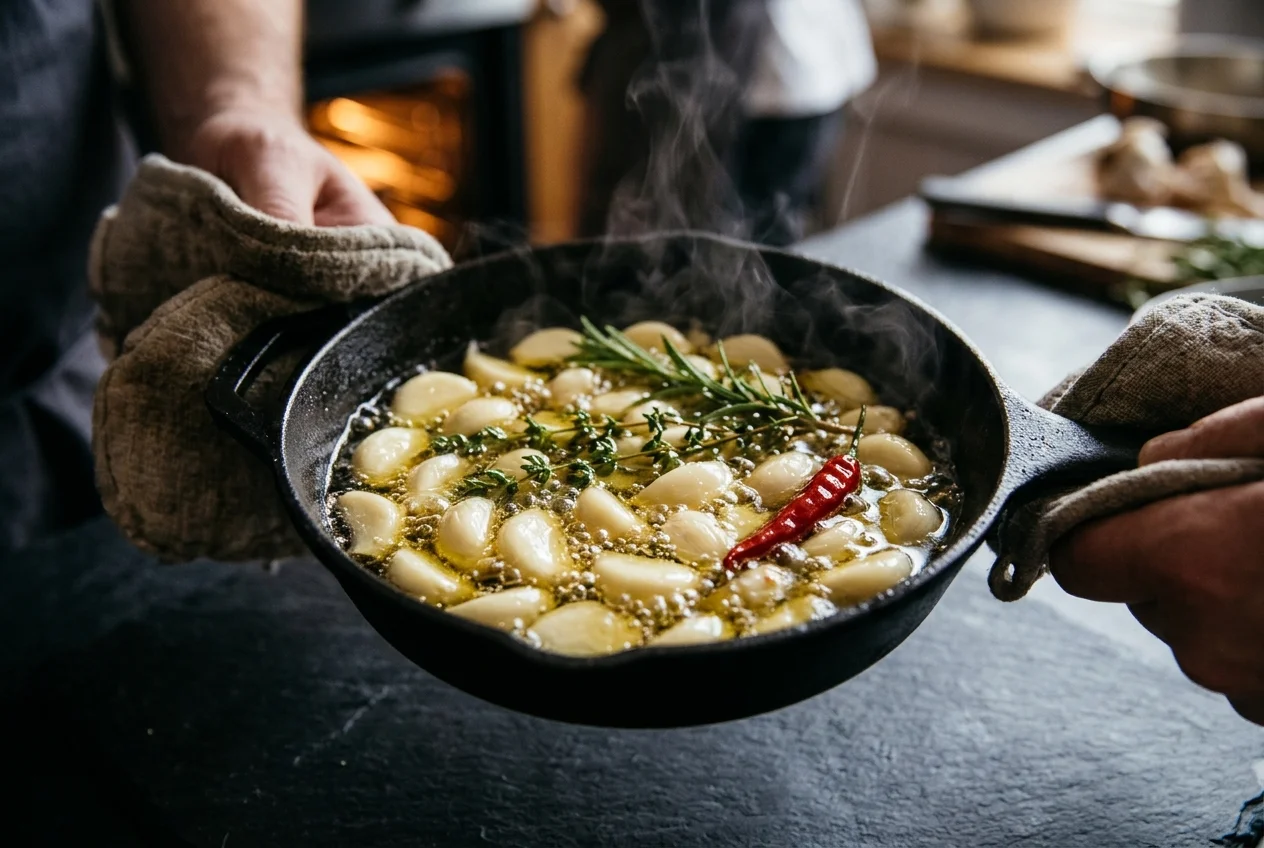
Slide the baking vessel into a preheated oven set to 225°F (110°C). Bake undisturbed for approximately 1 hour and 45 minutes to 2 hours. At the 45-minute mark, check the dish: you should observe tiny, delicate champagne-like bubbles lazily ascending from the base of the cloves. If the oil is boiling vigorously or popping loudly, reduce your oven temperature to 200°F (95°C) immediately. When fully cooked, the cloves will have transitioned from pale ivory to a stunning, radiant honey-gold hue, and a fork or cake tester should slide through the center with zero resistance.
Step 5: Safe Cooling and Storage Transfer
Carefully remove the dish from the oven using sturdy oven mitts. Allow the vessel to cool on a wire rack at room temperature for approximately 30 minutes until comfortably warm to the touch. Using a clean, sterilized slotted spoon or silicone spatula, transfer the soft cloves and aromatic oil into a freshly sanitized airtight glass jar. Ensure all cloves remain submerged below the oil level to prevent surface oxidation.
Critical Food Safety and Botulism Prevention Guide
While homemade garlic confit is undeniably one of the most delicious culinary creations imaginable, understanding the microbiology of home-infused oils is of paramount importance for the health and safety of your family and guests.
Garlic is a root vegetable that grows directly in soil, where microscopic bacterial spores of Clostridium botulinum are naturally and harmlessly present in trace amounts. Under normal atmospheric conditions with ambient oxygen, these spores remain entirely dormant and harmless. However, when garlic is submerged in oil (an entirely anaerobic, oxygen-deprived environment) and held at room temperature, it creates the ideal incubator for C. botulinum spores to germinate, multiply, and produce deadly botulinum neurotoxins.
The Centers for Disease Control and Prevention (CDC) and university food safety extension programs provide clear, non-negotiable guidelines for safe handling of home-prepared garlic-in-oil mixtures:
- Never Store at Room Temperature: Do not leave your jar of garlic confit sitting on the kitchen counter or pantry shelf. Room temperature storage between 50°F and 110°F is the high-risk danger zone for toxin production.
- Refrigerate Rapidly: As soon as the confit has cooled down from the oven (within 1 to 2 hours maximum), transfer the sealed jar directly into the refrigerator maintained at or below 40°F (4°C). The cold temperature halts bacterial germination.
- Strict 7-Day Refrigeration Rule: Consume homemade refrigerated garlic confit within 4 to 7 days maximum. Discard any remaining portions after day 7.
- Freezer Storage for Long-Term Safety: If you wish to preserve your garlic confit for up to 3 months, freeze it! Spoon the individual cloves and oil into clean silicone ice cube trays and freeze until solid, then pop the cubes into a freezer-safe zip-top bag. Thaw individual cubes in the refrigerator as needed for sauces, pastas, or marinades.
- Clean Utensils Only: Always use a clean, dry spoon to extract cloves from the jar. Introducing moisture or bread crumbs into the oil introduces unwanted bacteria.
Cooking Methods Compared: Oven vs. Stovetop vs. Slow Cooker
Depending on your available kitchen equipment and schedule, garlic confit can be executed across three distinct cooking platforms. Review our analytical comparison table below to determine the ideal method for your kitchen workflow:
| Cooking Method | Ideal Temperature | Cooking Time | Effort & Supervision | Culinary Results |
|---|---|---|---|---|
| Oven Bake (Recommended) | 225°F (110°C) | 1h 45m to 2h 00m | Low: Set timer and walk away; hands-off and even heat. | Flawless, evenly caramelized, silky soft cloves with zero scorched edges. |
| Stovetop Simmer | Lowest burner flame (approx. 200°F) | 45m to 60m | High: Requires frequent monitoring and heat diffuser to avoid boiling. | Faster cooking, but carries a higher risk of scorching the bottom cloves. |
| Slow Cooker / Crockpot | LOW setting | 3h 00m to 4h 00m | Very Low: Gentle thermal curve; perfect for bulk holiday gift batches. | Exceptionally melting texture; slightly paler golden hue due to gentle heat. |
How to Use Garlic Confit: 10 Inspiring Culinary Applications
Once you possess a gleaming jar of garlic confit in your refrigerator, you have unlocked an instant flavor amplifier that transforms ordinary weeknight meals into gourmet feasts. Here are ten chef-approved ways to utilize both the softened cloves and the infused oil:
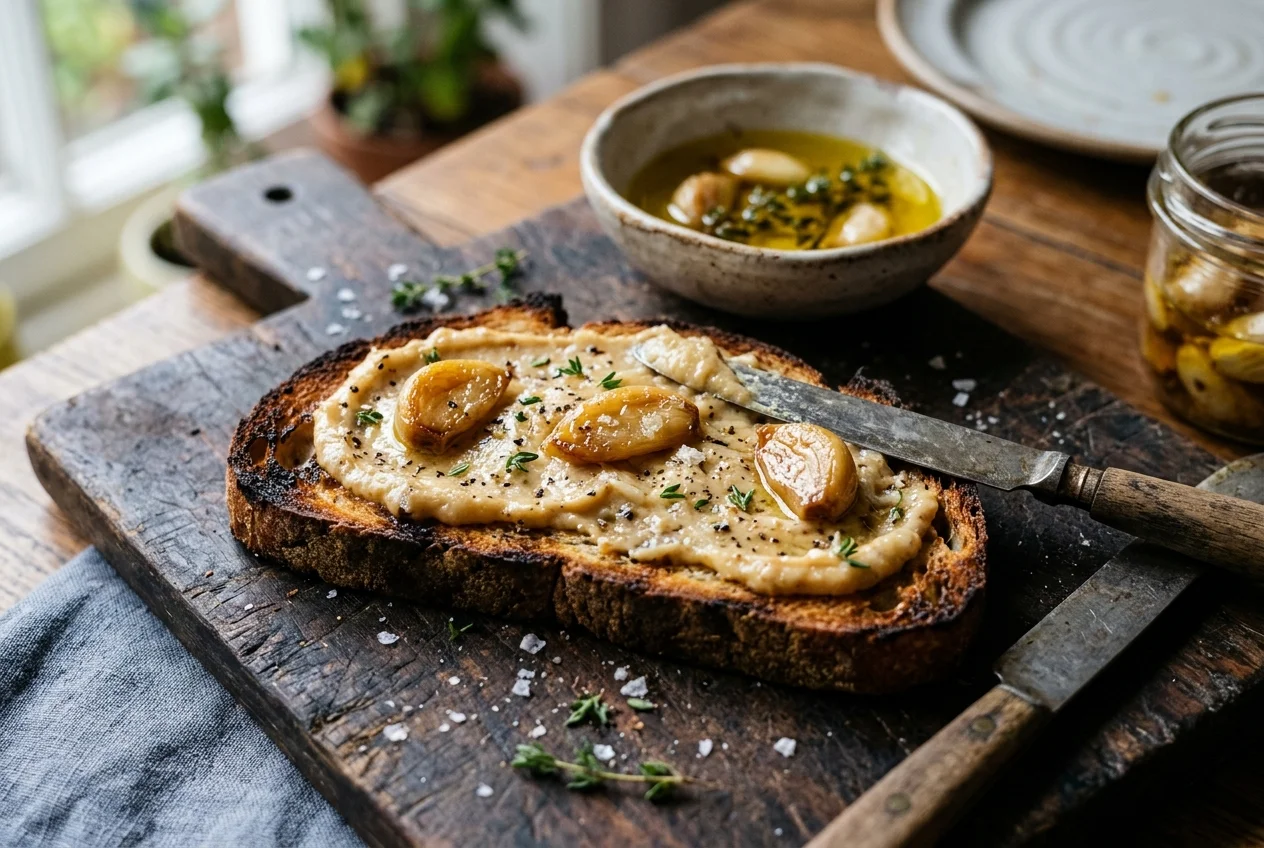
- The Viral Sourdough Toast Spread: Toast a thick slice of rustic sourdough bread until deeply charred and crisp. Take three whole cloves of warm garlic confit and smear them directly across the crumb using the back of a knife. The cloves will spread as smoothly as tempered butter. Finish with coarse Maldon flaky sea salt and freshly cracked black pepper.
- Next-Level Breakfast Eggs: Heat two tablespoons of the fragrant garlic-infused oil in a non-stick skillet. Drizzle your garlic confit oil over our viral Crispy Feta Fried Eggs on Sourdough for the ultimate weekend breakfast, allowing the egg whites to bubble into golden lace while the runny yolk blends with the garlic oil.
- Artisan Whipped Ricotta & Confit Dip: Combine 1 cup of whole-milk ricotta, 6 cloves of garlic confit, a squeeze of fresh lemon juice, and a pinch of salt in a food processor. Whip on high until velvety and airy. Swirl into a shallow bowl, drizzle with garlic oil, and serve with warm pita bread.
- Luxurious Mashed Potatoes: Instead of boiling raw minced garlic with your potatoes, mash 10 to 12 cloves of garlic confit directly into your steamed Yukon Gold potatoes along with heavy cream and European butter for an outrageously rich, sweet garlic infusion.
- Velvety Pasta Sauces: Toss freshly boiled linguine or fettuccine in a generous ladle of garlic confit oil, 8 mashed confit cloves, grated Parmigiano-Reggiano, and starchy pasta cooking water to create an effortless, glossy Roman-style Aglio e Olio.
- Steak Compound Butter: Fold 6 mashed garlic confit cloves and fresh chopped parsley into softened unsalted butter. Roll into a log using parchment paper and chill. Slice a medallion over freshly seared ribeye steaks or roast lamb chops to melt into a divine pan sauce.
- Elevated Salad Dressings: Whisk 3 tablespoons of the infused garlic oil with Dijon mustard, white wine vinegar, honey, and sea salt for a restaurant-grade vinaigrette that brings crisp greens and arugula to life.
- Pizza Crust Finishing Oil: Before baking homemade artisan pizza, brush the outer dough crust with the infused garlic oil. Once baked, the crust will emerge golden, fragrant, and irresistibly aromatic.
- Gourmet Roasted Vegetables: Toss tender cauliflower florets, Brussels sprouts, or baby carrots in garlic confit oil before roasting at 400°F. During the last 5 minutes of roasting, toss in whole confit cloves to warm through.
- Sweet and Savory Balance: After savoring this rich, savory Mediterranean spread, satisfy your sweet tooth with our viral Dubai Pistachio Knafeh Chocolate Bar for a complete gourmet dining experience.
Nutritional Breakdown and Health Benefits
Beyond its culinary versatility, garlic confit delivers a wealth of nutritional advantages. Fresh garlic contains an abundance of bioactive organosulfur compounds, most notably allicin, which is released when the garlic cells are crushed or heated.
According to nutritional analytics from the USDA FoodData Central, whole garlic cloves are exceptionally dense in vital micronutrients including vitamin C, vitamin B6, manganese, selenium, and dietary fiber, all while remaining naturally low in sodium and cholesterol. The monounsaturated fatty acids provided by the extra virgin olive oil medium further supply beneficial antioxidants, polyphenols, and oleic acid, which support cardiovascular health and reduce systemic inflammation.
| Nutrient Metric | Amount per Serving (2 Cloves + 1 tsp Oil) | Daily Value (% DV) | Health Benefit Context |
|---|---|---|---|
| Calories | 115 kcal | 6% | Sustained energy from healthy dietary monounsaturated fats. |
| Total Fat | 12.5 g | 16% | Predominantly heart-healthy oleic acid from cold-pressed olive oil. |
| Saturated Fat | 1.8 g | 9% | Naturally low saturated fat content; zero trans fats. |
| Total Carbohydrates | 2.1 g | 1% | Negligible impact on blood glucose; suitable for keto and low-carb diets. |
| Dietary Fiber | 0.3 g | 1% | Prebiotic inulin fibers supporting beneficial gut microbiome flora. |
| Vitamin B6 | 0.12 mg | 7% | Supports energy metabolism and neurotransmitter synthesis. |
| Manganese | 0.15 mg | 8% | Essential cofactor for antioxidant enzymes and bone formation. |
| Vitamin C | 1.8 mg | 2% | Cellular antioxidant protection and collagen synthesis support. |
| Sodium | 15 mg | 1% | Naturally low sodium; easily adjusted to low-salt diet requirements. |
Troubleshooting Common Garlic Confit Mistakes
To ensure your first batch turns out flawlessly, review these common culinary pitfalls and their simple remedies:
- Why did my garlic turn brown and bitter? The oil temperature was too high. If the oil boils aggressively above 250°F, garlic sugars caramelize too quickly and scorch into bitter acrid compounds. Always keep the heat low and steady at 225°F.
- Why is my garlic confit tough or rubbery? The cloves were undercooked. Confit requires at least 90 to 120 minutes of steady heat to break down structural pectin in the cloves. If a fork meets resistance, return the dish to the oven for an additional 20 to 30 minutes.
- Why did the olive oil solidify into a cloudy paste in the fridge? This is entirely natural and harmless! High-quality extra virgin olive oil contains natural waxes and monounsaturated triglycerides that solidify at refrigerator temperatures below 40°F. Simply scoop out what you need with a spoon, or allow the jar to rest on the counter for 10 minutes to return to liquid gold state.
- Why did my garlic cloves turn bluish-green? While alarming in appearance, blue or green discoloration is a completely harmless natural enzymatic reaction. It occurs when sulfur compounds in garlic react with trace minerals or natural amino acids in an acidic or warm environment. The garlic is 100% safe to consume.
Frequently Asked Questions (FAQs)
Can I use pre-peeled garlic cloves from the supermarket?
Yes, absolutely. Pre-peeled whole garlic cloves sold in bags or plastic tubs save tremendous prep time and work beautifully for confit. Inspect the bag carefully before purchasing to ensure the cloves are fresh, firm, and free of moisture or brown spots. Pat them thoroughly dry before submerging in oil.
What is the difference between roasted garlic and garlic confit?
Traditional roasted garlic involves wrapping an entire whole garlic head in foil with a drizzle of oil and baking at high heat (375°F to 400°F), producing deep, charred caramelization. Garlic confit is cooked completely submerged in a bath of oil at low heat (225°F), yielding pale golden, ultra-silky cloves and creating aromatic garlic-infused oil as a valuable culinary bonus.
Can I pressure can garlic confit for room-temperature pantry storage?
No, absolutely not. Home canning experts and university extensions strictly advise against canning garlic-in-oil mixtures at home. Garlic is an anaerobic low-acid food, and home pressure canners cannot reliably guarantee the elimination of bacterial botulinum spores in an oil suspension. Always store homemade confit in the refrigerator for up to 7 days, or freeze.
Can I reuse the leftover garlic oil after the cloves are eaten?
Yes, the infused garlic oil is perhaps the finest byproduct of this recipe. Use it for sautéing chicken, making salad dressings, frying eggs, or finishing roasted vegetables. Keep the oil refrigerated in an airtight jar alongside any remaining cloves and consume within 7 days.
What should I do if my garlic confit smells off or has surface bubbles after a few days?
When in doubt, throw it out immediately. If you notice any unusual sour odor, cloudiness accompanied by active bubbling, or mold growth, discard the entire jar immediately without tasting. Always adhere strictly to the 7-day refrigeration limit.
Conclusion: Master This Essential Culinary Technique Today
Mastering Garlic Confit is one of the most rewarding culinary skills you can introduce to your home kitchen. With modest ingredients, minimal active preparation, and gentle patience, you can create a luxurious, sweet, spreadable condiment and liquid gold infused oil that effortlessly rivals high-end restaurant fare. Remember to explore more essential culinary skills in our Cooking Tips & Culinary Techniques hub to expand your kitchen repertoire.
Prepare a fresh batch this weekend, spread it generously over crusty sourdough, and savor the unforgettable melt-in-your-mouth richness. Rate this recipe 5 stars below and leave a comment sharing your favorite ways to use garlic confit in your home cooking!
PrintUltra-Rich Homemade Garlic Confit in Olive Oil
- Total Time: 2 hrs 15 mins
- Yield: 1 large jar (approx. 24 servings / 1 clove per serving) 1x
Description
Slow-roasted whole garlic cloves cooked gently in extra virgin olive oil with fresh rosemary, thyme, and black peppercorns until butter-soft, mellow, and spreadable. Includes vital food safety and botulism prevention storage instructions.
Ingredients
- 3 to 4 whole heads of garlic, peeled (about 35 to 45 plump cloves)
- 1.5 cups (360ml) extra virgin olive oil (or enough to completely submerge cloves by 1 inch)
- 3 sprigs fresh rosemary
- 4 sprigs fresh thyme
- 1 tsp whole black peppercorns
- 1 pinch fine sea salt
- Optional: 1 small dried red chili pod or a strip of fresh lemon peel
Instructions
- Peel the Garlic: Gently smash the base of the garlic heads to separate the cloves. Peel all cloves cleanly, trimming off the hard woody root tips while keeping the cloves whole. Pat completely dry with a paper towel.
- Arrange in Baking Dish: Place the dry peeled garlic cloves into a small oven-safe baking dish, ramekin, or mini cast-iron skillet so they fit in a single or double snug layer.
- Submerge in Olive Oil: Pour the extra virgin olive oil over the cloves until they are submerged by at least 1 inch of oil. Tuck the rosemary sprigs, thyme sprigs, black peppercorns, and dried chili among the cloves. Sprinkle a pinch of fine sea salt over the top.
- Slow Roast to Perfection: Transfer to a preheated oven at 225°F (110°C). Bake uncovered for 1 hour 45 minutes to 2 hours, until the garlic cloves are deeply caramelized to a pale golden-honey hue and completely tender when pierced with a fork. The oil should only exhibit tiny, gentle champagne-like bubbles without frying aggressively.
- Rapid Cooling (Essential Food Safety): Remove from the oven and allow to cool down to room temperature for 30 minutes. Do not leave sitting at room temperature.
- Safe Refrigeration: Transfer the cloves and infused oil immediately into an airtight, sterilized glass jar. Ensure all cloves remain fully submerged beneath the oil. Seal tightly and refrigerate immediately below 40°F (4°C). Consume within 7 days, or freeze in silicone portions for up to 3 months.
Notes
Food Safety Critical Rule: Garlic is an anaerobic low-acid vegetable. Never store homemade garlic confit at room temperature to eliminate any risk of Clostridium botulinum spores producing toxins. Always store in the refrigerator below 40°F (4°C) for a maximum of 7 days, or freeze.
- Prep Time: 15 mins
- Cook Time: 2 hrs
- Category: Cooking tips
- Cuisine: French / Mediterranean
Nutrition
- Calories: 115

One Comment
Comments are closed.